












The role of the long-range tail of the potential in O2 + N2 collisional inelastic vibrational energy transfers
Literature Information
Publication Date
2017-03-29
DOI
10.1039/C7CP01340J
Impact Factor
3.676
Authors
Ernesto Garcia, Fernando Pirani, Antonio Laganà, Carles Martí
View Original
Abstract
In the study of non-reactive energy transfer between O2 and N2 molecules bearing different vibrationally excited states we have faced the problem of selecting a proper formulation of the interaction. To this end we have compared the values of the related observables computed either on a potential energy surface globally fitted to very large ab initio potential energy values [Varga et al., J. Chem. Phys., 2016, 144, 024310] or on two more traditional ones formulated as a combination of an intra- and inter-molecular model component of the interaction (and based on a different combined use of experimental and ab initio information) [Garcia et al., J. Phys. Chem. A, 2016, 120, 5208] in order to enforce an appropriate modelling of the long-range tail of the potential, crucial for the description of inelastic vibrational energy transfer. A detailed graphical analysis of the potential plus a quantitative analysis of the computed opacity functions, of the state-to-state rate coefficients, of the second virial coefficient and of the integral non-reactive cross section allowed us to conclude that the model formulation of the interaction has to be preferred for non-reactive studies of the O2 + N2 energy transfer processes in thermal and subthermal regimes.
Recommended Journals
Related Literature
New mechanistic insight into the oxygen reduction reaction on Ruddlesden–Popper cathodes for intermediate-temperature solid oxide fuel cells
Wenyuan Li, Bo Guan, Xinxin Zhang, Jianhua Yan, Yue Zhou, Xingbo Liu
2016-02-25
Paper
DOI: 10.1039/C6CP00056H
Superparamagnetic γ-Fe2O3 nanoparticles as an easily recoverable catalyst for the chemical recycling of PET
Leian Bartolome, Muhammad Imran, Kyoung G. Lee, Arvin Sangalang, Jeong Keun Ahn, Do Hyun Kim
2013-10-07
Paper
DOI: 10.1039/C3GC41834K
Signal loss in 1D magic-angle spinning exchange NMR (CODEX): radio-frequency limitations and intermediate motions
Christiane Hackel, Cornelius Franz, Anja Achilles, Kay Saalwächter, Detlef Reichert
2009-07-17
Paper
DOI: 10.1039/B906527J
ZnO nanorods on reduced graphene sheets with excellent field emission, gas sensor and photocatalytic properties
Rujia Zou, Guanjie He, Kaibing Xu, Qian Liu, Zhenyu Zhang, Junqing Hu
2013-05-16
Paper
DOI: 10.1039/C3TA11490B
Industrial feasibility of anodic hydrogen peroxide production through photoelectrochemical water splitting: a techno-economic analysis
Kasper Wenderich, Wouter Kwak, Alexa Grimm, Gert Jan Kramer, Guido Mul, Bastian Mei
2020-04-17
Paper
DOI: 10.1039/D0SE00524J
Application of tailored silica microspheres in coatings: synthesis, characterization, thermal and hydrophobic properties
Meng Wang, Qiqi Zeng, Bin Zhao
2013-07-29
Paper
DOI: 10.1039/C3TA12024D
A gene-activating skin substitute comprising PLLA/POSS nanofibers and plasmid DNA encoding ANG and bFGF promotes in vivo revascularization and epidermalization
Dongwei Wu, Jianwang Tan, Zhibin Liu
2018-09-28
Paper
DOI: 10.1039/C8TB02006J
Solar light assisted green synthesis of palladium nanoparticle decorated nitrogen doped graphene for hydrogen storage application
B. P. Vinayan, Rupali Nagar, S. Ramaprabhu
2013-07-12
Paper
DOI: 10.1039/C3TA12016C
A tough and self-healing poly(l-glutamic acid)-based composite hydrogel for tissue engineering
Weijun Zhang, Kunxi Zhang, Shifeng Yan, Jie Wu, Jingbo Yin
2018-09-27
Paper
DOI: 10.1039/C8TB01981A
Isoreticular zirconium-based metal–organic frameworks: discovering mechanical trends and elastic anomalies controlling chemical structure stability
Matthew R. Ryder, Bartolomeo Civalleri, Jin-Chong Tan
2016-03-04
Paper
DOI: 10.1039/C6CP00864J
You might also like
Compound Q&A
Are there alternatives to 1-(4-Chlorophenyl)-N-hydroxymethanimine (CAS: 3848-36-0) in synthesis?
When considering alternatives to 1-(4-Chlorophenyl)-N-hydroxymethanimine (CAS: 3...
3848-36-01-(4-Chlorophenyl)-N...
Compound Q&A
How should (1R,9S,10S,12S,14E,16S,19R,20R,21S,22R)-3,9,21-Trihydroxy-5,10,12,14,16,20,22-heptamethyl-23,24-dioxatetracyclo[17.3.1.1~6,9~.0~2,7~]tetracosa-2,5,7,14-tetraen-4-one (CAS: 183202-73-5) be stored?
This compound should be stored in a cool, dry place away from direct sunlight. I...
183202-73-5(1R,9S,10S,12S,14E,1...
Compound Q&A
How is 3-(4-Bromophenyl)-5-(2-fluorophenyl)-1,2,4-oxadiazole (CAS: 419553-16-5) typically synthesized?
3-(4-Bromophenyl)-5-(2-fluorophenyl)-1,2,4-oxadiazole is synthesized through a m...
419553-16-53-(4-Bromophenyl)-5-...
Compound Q&A
How is 5-Chloro-2-(4-chlorophenyl)-4-methyl-6-[3-(1-piperidinyl)propoxy]pyrimidine (CAS: 1639220-19-1) typically synthesized?
5-Chloro-2-(4-chlorophenyl)-4-methyl-6-[3-(1-piperidinyl)propoxy]pyrimidine (CAS...
1639220-19-15-Chloro-2-(4-chloro...
Compound Q&A
What industries use 2-Chloro-4-(difluoromethoxy)pyridine (CAS: 1206978-15-5)?
2-Chloro-4-(difluoromethoxy)pyridine is used in the pharmaceutical industry for ...
1206978-15-52-Chloro-4-(difluoro...
Compound Q&A
What regulatory guidelines apply to 3-Chloro-6-methylpyridazine (CAS: 1121-79-5)?
3-Chloro-6-methylpyridazine (CAS: 1121-79-5) is classified under the Globally Ha...
1121-79-53-Chloro-6-methylpyr...
Compound Q&A
Are there alternatives to Methyl 4,5-dimethyl-2-nitrobenzoate in synthesis?
Several alternatives can be used in the synthesis of Methyl 4,5-dimethyl-2-nitro...
90922-74-0Methyl 4,5-dimethyl-...
Compound Q&A
Are there alternatives to (2E,2'E)-3,3'-(1,4-Phenylene)bisacrylaldehyde in synthesis?
Alternatives to (2E,2'E)-3,3'-(1,4-Phenylene)bisacrylaldehyde include other acry...
63405-68-5(2E,2'E)-3,3'-(1,4-P...
Compound Q&A
What is 3-Amino-5-chloropyridin-2-ol hydrochloride (CAS: 1261906-29-9)?
3-Amino-5-chloropyridin-2-ol hydrochloride is an organic compound with the CAS n...
1261906-29-93-Amino-5-chloropyri...
Compound Q&A
What precautions should be taken when handling 6,7-Difluoro-2,3-dihydro-4H-chromen-4-one (CAS: 1092349-93-3)?
When handling 6,7-Difluoro-2,3-dihydro-4H-chromen-4-one, it is essential to wear...
1092349-93-36,7-Difluoro-2,3-dih...
Source Journal
Physical Chemistry Chemical Physics

CiteScore:
5.5
Self-citation Rate:
10.3%
Articles per Year:
3036
Physical Chemistry Chemical Physics (PCCP) is an international journal co-owned by 19 physical chemistry and physics societies from around the world. This journal publishes original, cutting-edge research in physical chemistry, chemical physics and biophysical chemistry. To be suitable for publication in PCCP, articles must include significant innovation and/or insight into physical chemistry; this is the most important criterion that reviewers and Editors will judge against when evaluating submissions. The journal has a broad scope and welcomes contributions spanning experiment, theory, computation and data science. Topical coverage includes spectroscopy, dynamics, kinetics, statistical mechanics, thermodynamics, electrochemistry, catalysis, surface science, quantum mechanics, quantum computing and machine learning. Interdisciplinary research areas such as polymers and soft matter, materials, nanoscience, energy, surfaces/interfaces, and biophysical chemistry are welcomed if they demonstrate significant innovation and/or insight into physical chemistry. Joined experimental/theoretical studies are particularly appreciated when complementary and based on up-to-date approaches.
Recommended Compounds
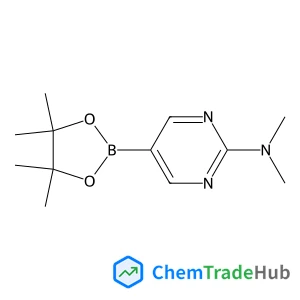
N,N-Dimethyl-5-(4,4,5,5-tetramethyl-1,3,2-dioxaborolan-2-yl)-2-pyrimidinamine
CAS Number:
1032759-30-0
Molecular Formula:
C12H20BN3O2

Recommended Suppliers







Disclaimer
This page provides academic journal information for reference and research purposes only. We are not affiliated with any journal publishers and do not handle publication submissions. For publication-related inquiries, please contact the respective journal publishers directly.
If you notice any inaccuracies in the information displayed, please contact us at support@chemtradehub.com. We will promptly review and address your concerns.