












Dissociative electron attachment to abasic DNA
Literature Information
Publication Date
2007-02-12
DOI
10.1039/B616619A
Impact Factor
3.676
Authors
Sylwia Ptasińska, Léon Sanche
View Original
Abstract
Thin films of the short single DNA strand, GCAT, in which one of the bases has been removed were bombarded with 3 to 15 eV electrons. The yield functions of the H−, O− and OH− ions desorbed from these films exhibit a broad peak near 9 eV, which is attributed to dissociative electron attachment to the basic molecules. Whereas removal of any one of the bases considerably decreases N-glycosidic and backbone C–O bond scission, the creation of basic sites does not appreciably modify bond rupture leading to anion electron stimulated desorption. These seemingly contradictory results make it possible to propose a detailed mechanism leading to the transfer of electrons in the range 5–13 eV within DNA.
Recommended Journals
Related Literature
Detection of Escherichia coli bacteria by impact electrochemistry
Rosa A. S. Couto, Lifu Chen, Sabine Kuss, Richard G. Compton
2018-09-17
Communication
DOI: 10.1039/C8AN01675E
Optimal voltage for nanoparticle detection with thin nanopores
2018-08-16
Paper
DOI: 10.1039/C8AN01270A
Label-free imaging of epidermal growth factor receptor-induced response in single living cells
Zanying Peng, Jin Lu, Ling Zhang, Yang Liu, Jinghong Li
2018-09-19
Paper
DOI: 10.1039/C8AN01534A
Simple construction of ratiometric fluorescent probe for the detection of dopamine and tyrosinase by the naked eye
Guobin Mao, Mingyuan Du, Xinxin Wang, Xinghu Ji, Zhike He
2018-09-21
Paper
DOI: 10.1039/C8AN01640B
A ratiometric Raman probe for live-cell imaging of hydrogen sulfide in mitochondria by stimulated Raman scattering
Chen Zeng, Fanghao Hu, Rong Long, Wei Min
2018-09-03
Communication
DOI: 10.1039/C8AN00910D
Interactions of Hg(ii) with oligonucleotides having thymine–thymine mispairs. Optimization of an impedimetric Hg(ii) sensor
Ajar Kamal, Zhe She, Renu Sharma, Heinz-Bernhard Kraatz
2017-04-19
Paper
DOI: 10.1039/C7AN00238F
A dual chemosensor for Cu2+ and Hg2+ based on a rhodamine-terminated water-soluble polymer in 100% aqueous solution
Guang Li, Liping Bai, Farong Tao, Aixia Deng, Liping Wang
2018-09-17
Paper
DOI: 10.1039/C8AN01130C
Sensitive fluorescence detection of heparin based on self-assembly of mesoporous silica nanoparticle–gold nanoclusters with emission enhancement characteristics
Lin Ma, Mengyue Zhang, Aijun Yang, Qin Wang, Fei Qu, Fengli Qu, Rong-Mei Kong
2018-09-18
Paper
DOI: 10.1039/C8AN01556B
Ultra-filtration of human serum for improved quantitative analysis of low molecular weight biomarkers using ATR-IR spectroscopy
Franck Bonnier, Clément Wasselet, Guillaume Brachet, Renaud Respaud, Luis Felipe C. S. Carvalho, Dominique Bertrand, Matthew J. Baker, Hugh J. Byrne, Igor Chourpa
2016-12-08
Paper
DOI: 10.1039/C6AN01888B
Interaction study of cancer cells and fibroblasts on a spatially confined oxygen gradient microfluidic chip to investigate the tumor microenvironment
Wei Sun, Yuqing Chen, Yuerong Wang, Pei Luo, Min Zhang, Hongyang Zhang, Ping Hu
2018-10-01
Paper
DOI: 10.1039/C8AN01216D
You might also like
Compound Q&A
What is the market or research trend for N-(4-Methoxybenzyl)-2-pyridinamine (CAS: 52818-63-0)?
N-(4-Methoxybenzyl)-2-pyridinamine (CAS: 52818-63-0) is increasingly being used ...
52818-63-0N-(4-Methoxybenzyl)-...
Compound Q&A
What precautions should be taken when handling Ethyl 4-(2-chlorophenyl)-1,3-thiazole-2-carboxylate (CAS: 1050507-06-6)?
When handling Ethyl 4-(2-chlorophenyl)-1,3-thiazole-2-carboxylate, appropriate p...
1050507-06-6Ethyl 4-(2-chlorophe...
Compound Q&A
What regulatory guidelines apply to diethyldiselane (CAS: 628-39-7)?
Diethyldiselane (CAS: 628-39-7) is classified under the Globally Harmonized Syst...
628-39-7Diethyldiselane
Compound Q&A
What is the market or research trend for oxocopper (CAS: 12053-18-8)?
The market for oxocopper (CAS: 12053-18-8) is primarily driven by its use in cat...
12053-18-8oxocopper; oxo-(oxoc...
Compound Q&A
What is the market or research trend for 5-{[(2-Methyl-2-propanyl)oxy]carbonyl}-5-azaspiro[2.4]heptane-7-carboxylic acid?
The market for 5-{[(2-Methyl-2-propanyl)oxy]carbonyl}-5-azaspiro[2.4]heptane-7-c...
1268519-54-55-{[(2-Methyl-2-prop...
Compound Q&A
What is 2-(1-Pyrrolidinyl)-4-pyridinamine (CAS: 35981-63-6)?
2-(1-Pyrrolidinyl)-4-pyridinamine is a chemical compound with the CAS number 359...
35981-63-62-(1-Pyrrolidinyl)-4...
Compound Q&A
What are the physical and chemical properties of 2-(3-Pyridinyl)-1-azabicyclo[2.2.2]octane (CAS: 91556-75-1)?
2-(3-Pyridinyl)-1-azabicyclo[2.2.2]octane (CAS: 91556-75-1) is a crystalline sol...
91556-75-12-(3-Pyridinyl)-1-az...
Compound Q&A
How is (S)-Alpha-allyl-proline hydrochloride (CAS: 129704-91-2) typically synthesized?
(S)-Alpha-allyl-proline hydrochloride is usually synthesized via a Wittig reacti...
129704-91-2(S)-Alpha-allyl-prol...
Compound Q&A
What is 3-Methyl-1,2-oxazole-5-carboxylic acid (CAS: 4857-42-5)?
3-Methyl-1,2-oxazole-5-carboxylic acid (CAS: 4857-42-5) is an organic compound w...
4857-42-53-Methyl-1,2-oxazole...
Compound Q&A
How is Lys-SMCC-DM1 (CAS: 1281816-04-3) typically synthesized?
Lys-SMCC-DM1 is synthesized via a multi-step process involving the coupling of S...
1281816-04-3Lys-SMCC-DM1
Source Journal
Physical Chemistry Chemical Physics

CiteScore:
5.5
Self-citation Rate:
10.3%
Articles per Year:
3036
Physical Chemistry Chemical Physics (PCCP) is an international journal co-owned by 19 physical chemistry and physics societies from around the world. This journal publishes original, cutting-edge research in physical chemistry, chemical physics and biophysical chemistry. To be suitable for publication in PCCP, articles must include significant innovation and/or insight into physical chemistry; this is the most important criterion that reviewers and Editors will judge against when evaluating submissions. The journal has a broad scope and welcomes contributions spanning experiment, theory, computation and data science. Topical coverage includes spectroscopy, dynamics, kinetics, statistical mechanics, thermodynamics, electrochemistry, catalysis, surface science, quantum mechanics, quantum computing and machine learning. Interdisciplinary research areas such as polymers and soft matter, materials, nanoscience, energy, surfaces/interfaces, and biophysical chemistry are welcomed if they demonstrate significant innovation and/or insight into physical chemistry. Joined experimental/theoretical studies are particularly appreciated when complementary and based on up-to-date approaches.
Recommended Compounds
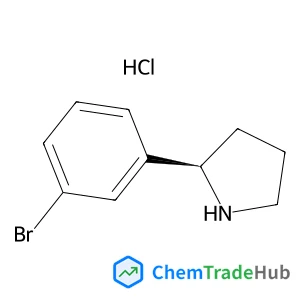
(2R)-2-(3-Bromophenyl)pyrrolidine hydrochloride (1:1)
CAS Number:
1391550-13-2
Molecular Formula:
C10H13BrClN
Recommended Suppliers





Disclaimer
This page provides academic journal information for reference and research purposes only. We are not affiliated with any journal publishers and do not handle publication submissions. For publication-related inquiries, please contact the respective journal publishers directly.
If you notice any inaccuracies in the information displayed, please contact us at support@chemtradehub.com. We will promptly review and address your concerns.