












A dual chemosensor for Cu2+ and Hg2+ based on a rhodamine-terminated water-soluble polymer in 100% aqueous solution
Literature Information
Publication Date
2018-09-17
DOI
10.1039/C8AN01130C
Impact Factor
4.616
Authors
Guang Li, Liping Bai, Farong Tao, Aixia Deng, Liping Wang
View Original
Abstract
A novel water-soluble polymer bearing a rhodamine receptor (PEGSRh) was synthesized as a dual chemosensor for the recognition of Cu2+ and Hg2+ in 100% aqueous solution. PEGSRh not only exhibited a sensitive colorimetric response towards Cu2+ and Hg2+ but also showed a selective turn-on fluorescence response towards Hg2+ over other metal ions. The binding stoichiometry for the complexation of PEGSRh with Cu2+ and Hg2+ was confirmed to be 1 : 1 by Job plot analysis. The low detection limits were found to be 5.92 × 10⁻⁷ M for Cu2+ and 2.85 × 10⁻⁶ M for Hg2+. The responses of PEGSRh to Cu2+ and Hg2+ were both stable over wide pH ranges. In addition, the fluorescence intensity changes of PEGSRh solution by the inputs of Hg2+, Cu2+ and EDTA have been used to construct a combinational logic gate. Again, an INHIBIT logic gate was also obtained by employing Cu2+ and EDTA as the chemical inputs and the absorbance signal as the output. Moreover, test papers were prepared facilely using PEGSRh for practical on-site detection of Cu2+ and Hg2+.
Related Literature
Low temperature synthesis of wurtzite zinc sulfide (ZnS) thin films by chemical spray pyrolysis
Xin Zeng, Stevin S. Pramana, Sudip K. Batabyal, Xiaodong Chen, K. B. Jinesh
2013-01-17
Communication
DOI: 10.1039/C3CP43470B
A novel method for automatic single molecule tracking of blinking molecules at low intensities
Christoph Kölbl, Beate Stempfle
2013-02-06
Paper
DOI: 10.1039/C3CP44693J
Origin of electrolyte-dopant dependent sulfur poisoning of SOFC anodes
ZhenHua Zeng, Mårten E. Björketun, Sune Ebbesen, Mogens B. Mogensen, Jan Rossmeisl
2013-03-14
Communication
DOI: 10.1039/C3CP51099A
Thermal evaporation-induced anhydrous synthesis of Fe3O4–graphene composite with enhanced rate performance and cyclic stability for lithium ion batteries
Ruguang Ma, Mingjun Hu, Hua Cheng, Yang Yang Li
2013-03-15
Paper
DOI: 10.1039/C3CP50588J
Mesoscopic modelling of frustration in microemulsions
Magali Duvail, Jean-François Dufrêche, Lise Arleth, Thomas Zemb
2013-03-18
Paper
DOI: 10.1039/C3CP43981J
Potential energy surfaces for ground and excited electronic states of the CF3I molecule and their relevance to its A-band photodissociation
Aleksey B. Alekseyev, Heinz-Peter Liebermann, Robert J. Buenker
2013-02-15
Paper
DOI: 10.1039/C3CP44237C
“Benzation” of graphene upon addition of monovalent chemical species
Ivan A. Popov, Yafei Li, Zhongfang Chen, Alexander I. Boldyrev
2013-03-08
Paper
DOI: 10.1039/C3CP43921F
Chelating ionic liquids for reversible zinc electrochemistry
Mega Kar, Bjorn Winther-Jensen, Maria Forsyth, Douglas R. MacFarlane
2013-03-22
Paper
DOI: 10.1039/C3CP51102B
You might also like
Compound Q&A
What is the market or research trend for N-(4-Methoxybenzyl)-2-pyridinamine (CAS: 52818-63-0)?
N-(4-Methoxybenzyl)-2-pyridinamine (CAS: 52818-63-0) is increasingly being used ...
52818-63-0N-(4-Methoxybenzyl)-...
Compound Q&A
What precautions should be taken when handling Ethyl 4-(2-chlorophenyl)-1,3-thiazole-2-carboxylate (CAS: 1050507-06-6)?
When handling Ethyl 4-(2-chlorophenyl)-1,3-thiazole-2-carboxylate, appropriate p...
1050507-06-6Ethyl 4-(2-chlorophe...
Compound Q&A
What regulatory guidelines apply to diethyldiselane (CAS: 628-39-7)?
Diethyldiselane (CAS: 628-39-7) is classified under the Globally Harmonized Syst...
628-39-7Diethyldiselane
Compound Q&A
What is the market or research trend for oxocopper (CAS: 12053-18-8)?
The market for oxocopper (CAS: 12053-18-8) is primarily driven by its use in cat...
12053-18-8oxocopper; oxo-(oxoc...
Compound Q&A
What is the market or research trend for 5-{[(2-Methyl-2-propanyl)oxy]carbonyl}-5-azaspiro[2.4]heptane-7-carboxylic acid?
The market for 5-{[(2-Methyl-2-propanyl)oxy]carbonyl}-5-azaspiro[2.4]heptane-7-c...
1268519-54-55-{[(2-Methyl-2-prop...
Compound Q&A
What is 2-(1-Pyrrolidinyl)-4-pyridinamine (CAS: 35981-63-6)?
2-(1-Pyrrolidinyl)-4-pyridinamine is a chemical compound with the CAS number 359...
35981-63-62-(1-Pyrrolidinyl)-4...
Compound Q&A
What are the physical and chemical properties of 2-(3-Pyridinyl)-1-azabicyclo[2.2.2]octane (CAS: 91556-75-1)?
2-(3-Pyridinyl)-1-azabicyclo[2.2.2]octane (CAS: 91556-75-1) is a crystalline sol...
91556-75-12-(3-Pyridinyl)-1-az...
Compound Q&A
How is (S)-Alpha-allyl-proline hydrochloride (CAS: 129704-91-2) typically synthesized?
(S)-Alpha-allyl-proline hydrochloride is usually synthesized via a Wittig reacti...
129704-91-2(S)-Alpha-allyl-prol...
Compound Q&A
What is 3-Methyl-1,2-oxazole-5-carboxylic acid (CAS: 4857-42-5)?
3-Methyl-1,2-oxazole-5-carboxylic acid (CAS: 4857-42-5) is an organic compound w...
4857-42-53-Methyl-1,2-oxazole...
Compound Q&A
How is Lys-SMCC-DM1 (CAS: 1281816-04-3) typically synthesized?
Lys-SMCC-DM1 is synthesized via a multi-step process involving the coupling of S...
1281816-04-3Lys-SMCC-DM1
Source Journal
Analyst

CiteScore:
7.8
Self-citation Rate:
5.6%
Articles per Year:
653
Analyst publishes analytical and bioanalytical research that reports premier fundamental discoveries and inventions, and the applications of those discoveries, unconfined by traditional discipline barriers.
Recommended Compounds
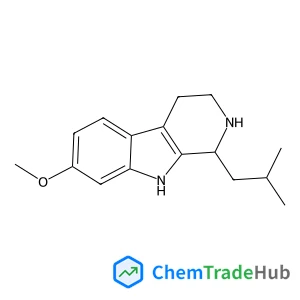
1-Isobutyl-7-methoxy-2,3,4,9-tetrahydro-1H-beta-carboline
CAS Number:
175975-76-5
Molecular Formula:
C16H22N2O


N-Methyl-3-(1-naphthyloxy)-3-(2-thienyl)-1-propanamine hydrochloride (1:1)
CAS Number:
1188266-11-6
Molecular Formula:
C18H20ClNOS
Recommended Suppliers






Disclaimer
This page provides academic journal information for reference and research purposes only. We are not affiliated with any journal publishers and do not handle publication submissions. For publication-related inquiries, please contact the respective journal publishers directly.
If you notice any inaccuracies in the information displayed, please contact us at support@chemtradehub.com. We will promptly review and address your concerns.