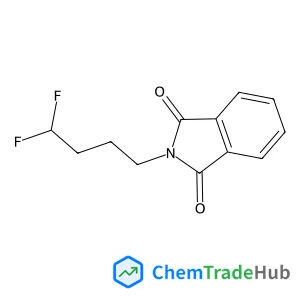
2-(4,4-Difluorobutyl)-1H-isoindole-1,3(2H)-dione
CAS Number:
1265341-14-7
Molecular Formula:
C12H11F2NO2
Ajar Kamal, Zhe She, Renu Sharma, Heinz-Bernhard Kraatz
The present work describes the effect of the number of thymine–thymine mispairs in single strand DNA probes on Hg(II) interactions and further to develop a highly sensitive DNA based impedimetric sensor for Hg(II) detection. To achieve this goal, the influence of the number of T–T mispairs on the signal response prompted by DNA–Hg(II) binding interactions was examined on three designed DNA probes: 5′-OH-(CH2)6-S-S-(CH2)6-AGTCCACACGTTCCTTACGC-3′, 5′-OH-(CH2)6-S-S-(CH2)6-AGTCCACATTTTCCTTTTGC-3′, 5′-OH-(CH2)6-S-S-(CH2)6-AGTCCATTTTTTCCTTTTTT-3′ having 2T–T, 4T–T and 6T–T mispairs with identical length, respectively. This study revealed that the number of T–T mispairs plays a critical role in maximizing the signal intensity of DNA–Hg(II) binding interactions. Based on these results, DNA comprising maximum number of T–T mispairs was further utilized for construction of the Hg(II) sensor, which exhibited a linear correlation between the change in charge transfer resistance (ΔRCT) and the concentration of Hg(II) over the range of 1.0 × 10⁻⁵ M to 1.0 × 10⁻¹⁰ M with a lower detection limit of 3.2 × 10⁻¹¹ M. The selectivity was tested against 12 different metal ions including Hg(II). The ΔRCT response from Hg(II) is 3 times higher than the nearest competitor Pb(II) and approximately 10 times than other ions. The potential application of such a robust and label-free DNA sensor was demonstrated by analyzing environmental samples collected from Lake Ontario.
DOI: 10.1039/C3CP44283G
Ying Dai, Baibiao Huang, Timo Jacob
DOI: 10.1039/C3CP51078F
Alexander Clout, Jonathan C. Burley
DOI: 10.1039/C3CP44339F
Ling Chen, Wan Guo, Yuxin Yang, Ang Zhang, Shengqu Zhang, Yihang Guo, Yingna Guo
DOI: 10.1039/C3CP00084B
Jonathon Duay, Eleanor Gillette, Junkai Hu
DOI: 10.1039/C3CP50724F
Jan Rongé, Dorien Nijs, Stef Kerkhofs, Kasper Masschaele, Johan A. Martens
DOI: 10.1039/C3CP50890K
Christophe Dehon, Satchin Soorkia, Mélanie Pedrazzani, Christophe Jouvet, Michel Barat, Jacqueline A. Fayeton, Bruno Lucas
DOI: 10.1039/C3CP50720C
Chuan Liu, Yun Li, Michael V. Lee, Akichika Kumatani, Kazuhito Tsukagoshi
DOI: 10.1039/C3CP44715D
Vankayala Kiran, Kancharlapalli Srinivasu, Srinivasan Sampath
DOI: 10.1039/C3CP50731A
Maxim F. Gelin, Dassia Egorova, Wolfgang Domcke
DOI: 10.1039/C3CP44454F
N-(4-Methoxybenzyl)-2-pyridinamine (CAS: 52818-63-0) is increasingly being used ...
When handling Ethyl 4-(2-chlorophenyl)-1,3-thiazole-2-carboxylate, appropriate p...
Diethyldiselane (CAS: 628-39-7) is classified under the Globally Harmonized Syst...
The market for oxocopper (CAS: 12053-18-8) is primarily driven by its use in cat...
The market for 5-{[(2-Methyl-2-propanyl)oxy]carbonyl}-5-azaspiro[2.4]heptane-7-c...
2-(1-Pyrrolidinyl)-4-pyridinamine is a chemical compound with the CAS number 359...
2-(3-Pyridinyl)-1-azabicyclo[2.2.2]octane (CAS: 91556-75-1) is a crystalline sol...
(S)-Alpha-allyl-proline hydrochloride is usually synthesized via a Wittig reacti...
3-Methyl-1,2-oxazole-5-carboxylic acid (CAS: 4857-42-5) is an organic compound w...
Lys-SMCC-DM1 is synthesized via a multi-step process involving the coupling of S...

Analyst publishes analytical and bioanalytical research that reports premier fundamental discoveries and inventions, and the applications of those discoveries, unconfined by traditional discipline barriers.