












Direct observation of the solvent reorientation dynamics in the “twisted” intramolecular charge-transfer process of cyanophenyldisilane–water cluster by transient infrared spectroscopy‡
Literature Information
Publication Date
2006-11-17
DOI
10.1039/B612758D
Impact Factor
3.676
Authors
Haruki Ishikawa, Masuyuki Sugiyama, Wataru Setaka, Mitsuo Kira, Naohiko Mikami
View Original
Abstract
The solvent reorientation dynamics of the intramolecular charge-transfer (ICT) process of the (p-cyanophenyl)pentamethyldisilane–H2O (CPDS–H2O) cluster was investigated by transient infrared (IR) absorption spectroscopy. Transient IR bands of two distinct charge-transfer (CT) states appeared in both the OH and the CN-stretching vibration regions. Analyses of the IR spectra and the time profiles of the transient bands revealed that the ICT process of the CPDS–H2O cluster proceeds in two steps. The first step is a transition from a photo-prepared locally excited (LE) state to the CT state, which is accompanied by a minor reorientation of the H2O moiety. In contrast, the second step is an extensive reorientation process of the H2O molecule in the CT state. These two reorientation processes exhibit very distinct pico- and nano-second time scales. In the latter case, a relatively slow time constant of 2 ns was related to a large geometric change in the orientation.
Related Literature
Thermoresponsive polymers as macromolecular coordination ligands: complexation-dependence of thermally induced aggregation in aqueous solution
Maximilian Felix Toni Meier, Franck Thetiot, Narsimhulu Pittala, Ingo Lieberwirth, Cleiton Kunzler, Smail Triki, Ulrich Jonas
2021-08-13
Paper
DOI: 10.1039/D1PY00847A
Dicarboxylic acid-epoxy vitrimers: influence of the off-stoichiometric acid content on cure reactions and thermo-mechanical properties
Jonny J. Blaker, Constantinos Soutis, François Tournilhac, Matthieu Gresil
2020-06-17
Paper
DOI: 10.1039/D0PY00342E
Sequence regulation in living anionic terpolymerization of styrene and two categories of 1,1-diphenylethylene (DPE) derivatives
Lincan Yang, Heyu Shen, Li Han, Hongwei Ma, Chao Li, Lan Lei, Songbo Zhang, Pibo Liu, Yang Li
2020-07-14
Paper
DOI: 10.1039/D0PY00731E
Balancing the transesterification reactivity of isosorbide with diphenyl carbonate: preferential activation of exo-OH
Ming Zhang, Yifei Tu, Zibo Zhou, Guozhang Wu
2020-07-23
Paper
DOI: 10.1039/D0PY00764A
Post-polymerization modification of polybenzoxazines with boronic acids supported by B–N interactions
Yuki Tsukamoto, Jumpei Kida, Daisuke Aoki, Hideyuki Otsuka
2021-09-01
Communication
DOI: 10.1039/D1PY00657F
Development of physical, mechanical, antibacterial and cell growth properties of poly(glycerol sebacate urethane) (PGSU) with helping of curcumin and hydroxyapatite nanoparticles
Vafa Fakhri, Aliakbar Jafari, Mir Alireza Shafiei, Mohammad Vahid Ehteshamfar, Shima Khalighiyan, Hadi Hosseini, Vahabodin Goodarzi, Frederik R. Wurm, Mehrdad Moosazadeh Moghaddam
2021-10-19
Paper
DOI: 10.1039/D1PY01040A
Aqueous copper-mediated reversible deactivation radical polymerization (RDRP) utilizing polyetheramine derived initiators‡
Jirui Zhang, Evelina Liarou, James Town, Yongguang Li, Alan M. Wemyss, David M. Haddleton
2020-08-03
Paper
DOI: 10.1039/D0PY00555J
Anion-induced thermoresponsiveness in cationic polycysteine and DNA binding
Mahammad Anas, Priyanka Dinda, Mahuya Kar, Tarun K. Mandal
2021-10-12
Paper
DOI: 10.1039/D1PY01187A
Effects of various Cu(0), Fe(0), and proanthocyanidin reducing agents on Fe(iii)-catalysed ATRP for the synthesis of PMMA block copolymers and their self-assembly behaviours
Yi-Shen Huang, Han-Yu Hsueh, Junko Aimi, Li-Chieh Chou, Yu-Chi Lu, Chung-Chi Wang, Kuo-Yu Chen, Chih-Feng Huang
2020-06-18
Paper
DOI: 10.1039/D0PY00658K
You might also like
Compound Q&A
What is the market or research trend for N-(4-Methoxybenzyl)-2-pyridinamine (CAS: 52818-63-0)?
N-(4-Methoxybenzyl)-2-pyridinamine (CAS: 52818-63-0) is increasingly being used ...
52818-63-0N-(4-Methoxybenzyl)-...
Compound Q&A
What precautions should be taken when handling Ethyl 4-(2-chlorophenyl)-1,3-thiazole-2-carboxylate (CAS: 1050507-06-6)?
When handling Ethyl 4-(2-chlorophenyl)-1,3-thiazole-2-carboxylate, appropriate p...
1050507-06-6Ethyl 4-(2-chlorophe...
Compound Q&A
What regulatory guidelines apply to diethyldiselane (CAS: 628-39-7)?
Diethyldiselane (CAS: 628-39-7) is classified under the Globally Harmonized Syst...
628-39-7Diethyldiselane
Compound Q&A
What is the market or research trend for oxocopper (CAS: 12053-18-8)?
The market for oxocopper (CAS: 12053-18-8) is primarily driven by its use in cat...
12053-18-8oxocopper; oxo-(oxoc...
Compound Q&A
What is the market or research trend for 5-{[(2-Methyl-2-propanyl)oxy]carbonyl}-5-azaspiro[2.4]heptane-7-carboxylic acid?
The market for 5-{[(2-Methyl-2-propanyl)oxy]carbonyl}-5-azaspiro[2.4]heptane-7-c...
1268519-54-55-{[(2-Methyl-2-prop...
Compound Q&A
What is 2-(1-Pyrrolidinyl)-4-pyridinamine (CAS: 35981-63-6)?
2-(1-Pyrrolidinyl)-4-pyridinamine is a chemical compound with the CAS number 359...
35981-63-62-(1-Pyrrolidinyl)-4...
Compound Q&A
What are the physical and chemical properties of 2-(3-Pyridinyl)-1-azabicyclo[2.2.2]octane (CAS: 91556-75-1)?
2-(3-Pyridinyl)-1-azabicyclo[2.2.2]octane (CAS: 91556-75-1) is a crystalline sol...
91556-75-12-(3-Pyridinyl)-1-az...
Compound Q&A
How is (S)-Alpha-allyl-proline hydrochloride (CAS: 129704-91-2) typically synthesized?
(S)-Alpha-allyl-proline hydrochloride is usually synthesized via a Wittig reacti...
129704-91-2(S)-Alpha-allyl-prol...
Compound Q&A
What is 3-Methyl-1,2-oxazole-5-carboxylic acid (CAS: 4857-42-5)?
3-Methyl-1,2-oxazole-5-carboxylic acid (CAS: 4857-42-5) is an organic compound w...
4857-42-53-Methyl-1,2-oxazole...
Compound Q&A
How is Lys-SMCC-DM1 (CAS: 1281816-04-3) typically synthesized?
Lys-SMCC-DM1 is synthesized via a multi-step process involving the coupling of S...
1281816-04-3Lys-SMCC-DM1
Source Journal
Physical Chemistry Chemical Physics

CiteScore:
5.5
Self-citation Rate:
10.3%
Articles per Year:
3036
Physical Chemistry Chemical Physics (PCCP) is an international journal co-owned by 19 physical chemistry and physics societies from around the world. This journal publishes original, cutting-edge research in physical chemistry, chemical physics and biophysical chemistry. To be suitable for publication in PCCP, articles must include significant innovation and/or insight into physical chemistry; this is the most important criterion that reviewers and Editors will judge against when evaluating submissions. The journal has a broad scope and welcomes contributions spanning experiment, theory, computation and data science. Topical coverage includes spectroscopy, dynamics, kinetics, statistical mechanics, thermodynamics, electrochemistry, catalysis, surface science, quantum mechanics, quantum computing and machine learning. Interdisciplinary research areas such as polymers and soft matter, materials, nanoscience, energy, surfaces/interfaces, and biophysical chemistry are welcomed if they demonstrate significant innovation and/or insight into physical chemistry. Joined experimental/theoretical studies are particularly appreciated when complementary and based on up-to-date approaches.
Recommended Compounds
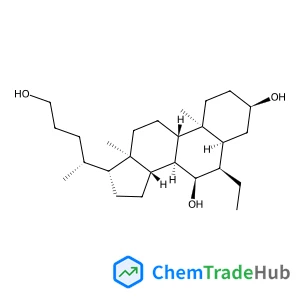
(3alpha,5beta,6alpha,7alpha)-6-Ethylcholane-3,7,24-triol
CAS Number:
1537866-49-1
Molecular Formula:
C26H46O3
![1-{3-[4-Amino-3-(4-phenoxyphenyl)-1H-pyrazolo[3,4-d]pyrimidin-1-yl]-1-piperidinyl}-2,3-dihydroxy-1-propanone structure](https://static.chemtradehub.com/structs/122/1226872-27-0-e037.webp "1-{3-[4-Amino-3-(4-phenoxyphenyl)-1H-pyrazolo[3,4-d]pyrimidin-1-yl]-1-piperidinyl}-2,3-dihydroxy-1-propanone structure")
1-{3-[4-Amino-3-(4-phenoxyphenyl)-1H-pyrazolo[3,4-d]pyrimidin-1-yl]-1-piperidinyl}-2,3-dihydroxy-1-propanone
CAS Number:
1226872-27-0
Molecular Formula:
C25H26N6O4
![N-{[(2-Methyl-2-propanyl)oxy]carbonyl}-L-methionylglycine structure](https://static.chemtradehub.com/structs/234/23446-03-9-e1e5.webp "N-{[(2-Methyl-2-propanyl)oxy]carbonyl}-L-methionylglycine structure")
N-{[(2-Methyl-2-propanyl)oxy]carbonyl}-L-methionylglycine
CAS Number:
23446-03-9
Molecular Formula:
C12H22N2O5S
Recommended Suppliers





Disclaimer
This page provides academic journal information for reference and research purposes only. We are not affiliated with any journal publishers and do not handle publication submissions. For publication-related inquiries, please contact the respective journal publishers directly.
If you notice any inaccuracies in the information displayed, please contact us at support@chemtradehub.com. We will promptly review and address your concerns.