












Sequence regulation in living anionic terpolymerization of styrene and two categories of 1,1-diphenylethylene (DPE) derivatives
Literature Information
Publication Date
2020-07-14
DOI
10.1039/D0PY00731E
Impact Factor
5.582
Authors
Lincan Yang, Heyu Shen, Li Han, Hongwei Ma, Chao Li, Lan Lei, Songbo Zhang, Pibo Liu, Yang Li
View Original
Abstract
Synthesis of functionalized sequence-controlled polymers by utilizing 1,1-diphenylethylene (DPE) derivatives in living anionic polymerization is an effective method. Considering the capacity of sequence information and the diversity of functionalization, further progress of this method may provide a deep understanding of the copolymerization behavior of various DPE derivatives with commercial monomers. In this paper, we introduced two categories of DPE derivatives in anionic polymerization to enrich a variety of sequence-controlled polymers. The kinetics and monomer sequences of the terpolymerizations of St with two DPE derivatives through a one-step and multi-step feeding process were carefully studied. The results show that the terpolymer sequence displayed intriguing transformations by precisely controlling the reactivity difference between DPE derivatives, and facilely regulating the feed strategies of monomer pairs. The gradient, block and random distributions of two categories of DPE derivative units in the chain can be easily generated. The diversity of Tg values of these terpolymers with similar chemical compositions could prove that the various sequences have distinct effects on polymer properties.
Related Literature
Quantitative NMR of quadrupolar nucleus as a novel analytical method: hydrolysis behaviour analysis of aluminum ion
Genki Sakata, Minoru Mizuhata
2017-04-19
Paper
DOI: 10.1039/C7AN00067G
Determination of the transfer function of an atmospheric pressure drift tube ion mobility spectrometer for nanoparticle measurements
David T. Buckley, Christopher J. Hogan, Jr.
2017-04-25
Paper
DOI: 10.1039/C7AN00328E
Spectrophotometric analysis at the single-cell level: elucidating dispersity within melanic immortalized cell populations
Gerardo Gutiérrez-Juárez, David Cywiak, Rafael Pérez-Solano, Gary A. Baker
2017-03-13
Paper
DOI: 10.1039/C6AN02662A
Infrared imaging of high density protein arrays
Joëlle De Meutter, Julie Vandenameele, André Matagne, Erik Goormaghtigh
2016-11-28
Paper
DOI: 10.1039/C6AN02048H
Ion mobility mass spectrometry provides novel insights into the expression and structure of gangliosides in the normal adult human hippocampus
Mirela Sarbu, Željka Vukelić, David E. Clemmer
2018-09-06
Paper
DOI: 10.1039/C8AN01118D
In vivo detection of drug-induced apoptosis in tumors using Raman spectroscopy
Oliver Jonas, Jeon Woong Kang, Surya P. Singh, Alex Lammers, Freddy T. Nguyen, Ramachandra R. Dasari, Peter T. C. So, Robert Langer
2018-07-30
Communication
DOI: 10.1039/C8AN00913A
Digital de-waxing on FTIR images
Fabrício Augusto de Lima, Cyril Gobinet, Ganesh Sockalingum, Sérgio Britto Garcia, Michel Manfait, Valérie Untereiner, Olivier Piot, Luciano Bachmann
2016-12-07
Paper
DOI: 10.1039/C6AN01975G
Rapid infrared mapping for highly accurate automated histology in Barrett's oesophagus
G. R. Lloyd, J. Nallala, M. Isabelle, L. M. Almond, N. A. Shepherd, C. A. Kendall, A. C. Shore, N. Stone
2016-10-03
Paper
DOI: 10.1039/C6AN01871H
Logical MS/MS scans: a new set of operations for tandem mass spectrometry
Dalton T. Snyder, Lucas J. Szalwinski, J. Mitchell Wells, R. Graham Cooks
2018-10-08
Paper
DOI: 10.1039/C8AN01661E
Raman spectroscopy in microsurgery: impact of operating microscope illumination sources on data quality and tissue classification
Joannie Desroches, Audrey Laurence, Michael Pinto, Marie-Andrée Tremblay, Kevin Petrecca, Frédéric Leblond
2016-10-31
Paper
DOI: 10.1039/C6AN02061E
You might also like
Compound Q&A
What is the market or research trend for N-(4-Methoxybenzyl)-2-pyridinamine (CAS: 52818-63-0)?
N-(4-Methoxybenzyl)-2-pyridinamine (CAS: 52818-63-0) is increasingly being used ...
52818-63-0N-(4-Methoxybenzyl)-...
Compound Q&A
What precautions should be taken when handling Ethyl 4-(2-chlorophenyl)-1,3-thiazole-2-carboxylate (CAS: 1050507-06-6)?
When handling Ethyl 4-(2-chlorophenyl)-1,3-thiazole-2-carboxylate, appropriate p...
1050507-06-6Ethyl 4-(2-chlorophe...
Compound Q&A
What regulatory guidelines apply to diethyldiselane (CAS: 628-39-7)?
Diethyldiselane (CAS: 628-39-7) is classified under the Globally Harmonized Syst...
628-39-7Diethyldiselane
Compound Q&A
What is the market or research trend for oxocopper (CAS: 12053-18-8)?
The market for oxocopper (CAS: 12053-18-8) is primarily driven by its use in cat...
12053-18-8oxocopper; oxo-(oxoc...
Compound Q&A
What is the market or research trend for 5-{[(2-Methyl-2-propanyl)oxy]carbonyl}-5-azaspiro[2.4]heptane-7-carboxylic acid?
The market for 5-{[(2-Methyl-2-propanyl)oxy]carbonyl}-5-azaspiro[2.4]heptane-7-c...
1268519-54-55-{[(2-Methyl-2-prop...
Compound Q&A
What is 2-(1-Pyrrolidinyl)-4-pyridinamine (CAS: 35981-63-6)?
2-(1-Pyrrolidinyl)-4-pyridinamine is a chemical compound with the CAS number 359...
35981-63-62-(1-Pyrrolidinyl)-4...
Compound Q&A
What are the physical and chemical properties of 2-(3-Pyridinyl)-1-azabicyclo[2.2.2]octane (CAS: 91556-75-1)?
2-(3-Pyridinyl)-1-azabicyclo[2.2.2]octane (CAS: 91556-75-1) is a crystalline sol...
91556-75-12-(3-Pyridinyl)-1-az...
Compound Q&A
How is (S)-Alpha-allyl-proline hydrochloride (CAS: 129704-91-2) typically synthesized?
(S)-Alpha-allyl-proline hydrochloride is usually synthesized via a Wittig reacti...
129704-91-2(S)-Alpha-allyl-prol...
Compound Q&A
What is 3-Methyl-1,2-oxazole-5-carboxylic acid (CAS: 4857-42-5)?
3-Methyl-1,2-oxazole-5-carboxylic acid (CAS: 4857-42-5) is an organic compound w...
4857-42-53-Methyl-1,2-oxazole...
Compound Q&A
How is Lys-SMCC-DM1 (CAS: 1281816-04-3) typically synthesized?
Lys-SMCC-DM1 is synthesized via a multi-step process involving the coupling of S...
1281816-04-3Lys-SMCC-DM1
Source Journal
Polymer Chemistry

CiteScore:
8.6
Self-citation Rate:
7.3%
Articles per Year:
457
Polymer Chemistry welcomes submissions in all areas of polymer science that have a strong focus on macromolecular chemistry. Manuscripts may cover a broad range of fields, yet no direct application focus is required.
Recommended Compounds
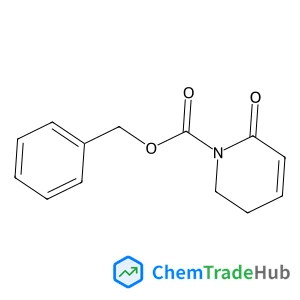
Benzyl 6-oxo-3,6-dihydro-1(2H)-pyridinecarboxylate
CAS Number:
725746-35-0
Molecular Formula:
C13H13NO3
![1-(1-Benzyl-1,2,3,6-tetrahydropyridin-4-yl)-1H-benzo[d]imidazol-2(3H)-one structure](https://static.chemtradehub.com/structs/603/60373-71-9-7dfb.webp "1-(1-Benzyl-1,2,3,6-tetrahydropyridin-4-yl)-1H-benzo[d]imidazol-2(3H)-one structure")
1-(1-Benzyl-1,2,3,6-tetrahydropyridin-4-yl)-1H-benzo[d]imidazol-2(3H)-one
CAS Number:
60373-71-9
Molecular Formula:
C19H19N3O

(2R)-2-(3-Bromophenyl)pyrrolidine hydrochloride (1:1)
CAS Number:
1391550-13-2
Molecular Formula:
C10H13BrClN
Recommended Suppliers





Disclaimer
This page provides academic journal information for reference and research purposes only. We are not affiliated with any journal publishers and do not handle publication submissions. For publication-related inquiries, please contact the respective journal publishers directly.
If you notice any inaccuracies in the information displayed, please contact us at support@chemtradehub.com. We will promptly review and address your concerns.