












Mechanically robust and reprocessable imine exchange networks from modular polyester pre-polymers
Literature Information
Publication Date
2020-02-27
DOI
10.1039/C9PY01957J
Impact Factor
5.582
Authors
Rachel L. Snyder, Claire A. L. Lidston, Guilhem X. De Hoe, Maria J. S. Parvulescu, Marc A. Hillmyer, Geoffrey W. Coates
View Original
Abstract
Covalent adaptable networks (CANs) containing reversible cross-links impart recyclability to thermoset materials without sacrificing their desirable properties (e.g. high tensile strength and solvent resistance). In addition to thermal recycling, the sustainability of these materials may be further improved by incorporating bio-sourced monomers or by enabling alternate end-of-life fates, such as biodegradation or recovery of starting materials. The alternating ring-opening copolymerisation of epoxides and cyclic anhydrides permits the modular synthesis of polyester pre-polymers that can then be cross-linked to form dynamic imine-linked networks. We report the synthesis and characterisation of five imine exchange polyester CANs with varied cross-linking densities and pre-polymer architectures. While the materials exhibit characteristic thermoset properties at service temperatures, differences in pre-polymer architecture produce distinct dynamic mechanical effects at elevated temperatures. The networks may be thermally reprocessed with full recovery of their tensile strengths and cross-linking densities, dissociated to pre-polymer, or hydrolytically degraded.
Related Literature
DNA methylation detection: recent developments in bisulfite free electrochemical and optical approaches
Sofia Moriam, Muhammad Umer, Nam-Trung Nguyen
2018-08-22
Critical Review
DOI: 10.1039/C8AN01348A
An up-converting phosphor technology-based lateral flow assay for point-of-collection detection of morphine and methamphetamine in saliva
Qiushi Hu, Qiaozhen Wei, Pingping Zhang, Shuang Li, Lei Xue, Ruifu Yang, Lei Zhou
2018-08-01
Paper
DOI: 10.1039/C8AN00651B
Two new quinoline-based regenerable fluorescent probes with AIE characteristics for selective recognition of Cu2+ in aqueous solution and test strips
Jingwen Xiong, Zongzhi Li, Jihua Tan, Shaomin Ji, Jianwei Sun, Xianwei Li, Yanping Huo
2018-08-01
Paper
DOI: 10.1039/C8AN00940F
2D europium coordination polymer as a regenerable fluorescence probe for efficiently detecting fipronil
Shuai-Liang Yang, Jiu-Nan Lu, Sai-Jun Zhang
2018-08-27
Paper
DOI: 10.1039/C8AN00701B
Quantitative NMR of quadrupolar nucleus as a novel analytical method: hydrolysis behaviour analysis of aluminum ion
Genki Sakata, Minoru Mizuhata
2017-04-19
Paper
DOI: 10.1039/C7AN00067G
Raman spectroscopy and multivariate analysis for the non invasive diagnosis of clinically inconclusive vulval lichen sclerosus
Linmarie Ludeman, Kathryn Hillaby, Robert Gornall, Gavin Lloyd, Catherine Kendall, Angela C. Shore, Nick Stone
2016-11-03
Paper
DOI: 10.1039/C6AN02009G
Microcontact printing with aminosilanes: creating biomolecule micro- and nanoarrays for multiplexed microfluidic bioassays
Shivani Sathish, Sébastien G. Ricoult, Kazumi Toda-Peters, Amy Q. Shen
2017-04-05
Paper
DOI: 10.1039/C7AN00273D
Infrared spectral histopathology using haematoxylin and eosin (H&E) stained glass slides: a major step forward towards clinical translation
Michael J. Pilling, Alex Henderson, Jonathan H. Shanks, Michael D. Brown, Noel W. Clarke, Peter Gardner
2016-11-28
Paper
DOI: 10.1039/C6AN02224C
Development of a high throughput (HT) Raman spectroscopy method for rapid screening of liquid blood plasma from prostate cancer patients
Jane Bryant, John Armstrong, Mary Dunne, Marie Finn
2016-12-13
Paper
DOI: 10.1039/C6AN02100J
Dicarboxylic acids as pH sensors for hyperpolarized 13C magnetic resonance spectroscopic imaging
C. Taglang, C. von Morze, J. E. Blecha, J. W. Gordon, R. Sriram, D. B. Vigneron, H. F. VanBrocklin, D. M. Wilson, R. R. Flavell
2017-03-13
Communication
DOI: 10.1039/C7AN00076F
You might also like
Compound Q&A
What is the market or research trend for N-(4-Methoxybenzyl)-2-pyridinamine (CAS: 52818-63-0)?
N-(4-Methoxybenzyl)-2-pyridinamine (CAS: 52818-63-0) is increasingly being used ...
52818-63-0N-(4-Methoxybenzyl)-...
Compound Q&A
What precautions should be taken when handling Ethyl 4-(2-chlorophenyl)-1,3-thiazole-2-carboxylate (CAS: 1050507-06-6)?
When handling Ethyl 4-(2-chlorophenyl)-1,3-thiazole-2-carboxylate, appropriate p...
1050507-06-6Ethyl 4-(2-chlorophe...
Compound Q&A
What regulatory guidelines apply to diethyldiselane (CAS: 628-39-7)?
Diethyldiselane (CAS: 628-39-7) is classified under the Globally Harmonized Syst...
628-39-7Diethyldiselane
Compound Q&A
What is the market or research trend for oxocopper (CAS: 12053-18-8)?
The market for oxocopper (CAS: 12053-18-8) is primarily driven by its use in cat...
12053-18-8oxocopper; oxo-(oxoc...
Compound Q&A
What is the market or research trend for 5-{[(2-Methyl-2-propanyl)oxy]carbonyl}-5-azaspiro[2.4]heptane-7-carboxylic acid?
The market for 5-{[(2-Methyl-2-propanyl)oxy]carbonyl}-5-azaspiro[2.4]heptane-7-c...
1268519-54-55-{[(2-Methyl-2-prop...
Compound Q&A
What is 2-(1-Pyrrolidinyl)-4-pyridinamine (CAS: 35981-63-6)?
2-(1-Pyrrolidinyl)-4-pyridinamine is a chemical compound with the CAS number 359...
35981-63-62-(1-Pyrrolidinyl)-4...
Compound Q&A
What are the physical and chemical properties of 2-(3-Pyridinyl)-1-azabicyclo[2.2.2]octane (CAS: 91556-75-1)?
2-(3-Pyridinyl)-1-azabicyclo[2.2.2]octane (CAS: 91556-75-1) is a crystalline sol...
91556-75-12-(3-Pyridinyl)-1-az...
Compound Q&A
How is (S)-Alpha-allyl-proline hydrochloride (CAS: 129704-91-2) typically synthesized?
(S)-Alpha-allyl-proline hydrochloride is usually synthesized via a Wittig reacti...
129704-91-2(S)-Alpha-allyl-prol...
Compound Q&A
What is 3-Methyl-1,2-oxazole-5-carboxylic acid (CAS: 4857-42-5)?
3-Methyl-1,2-oxazole-5-carboxylic acid (CAS: 4857-42-5) is an organic compound w...
4857-42-53-Methyl-1,2-oxazole...
Compound Q&A
How is Lys-SMCC-DM1 (CAS: 1281816-04-3) typically synthesized?
Lys-SMCC-DM1 is synthesized via a multi-step process involving the coupling of S...
1281816-04-3Lys-SMCC-DM1
Source Journal
Polymer Chemistry

CiteScore:
8.6
Self-citation Rate:
7.3%
Articles per Year:
457
Polymer Chemistry welcomes submissions in all areas of polymer science that have a strong focus on macromolecular chemistry. Manuscripts may cover a broad range of fields, yet no direct application focus is required.
Recommended Compounds
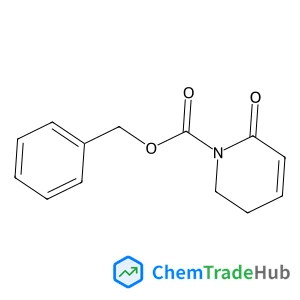
Benzyl 6-oxo-3,6-dihydro-1(2H)-pyridinecarboxylate
CAS Number:
725746-35-0
Molecular Formula:
C13H13NO3

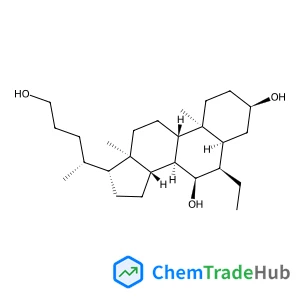
(3alpha,5beta,6alpha,7alpha)-6-Ethylcholane-3,7,24-triol
CAS Number:
1537866-49-1
Molecular Formula:
C26H46O3
![N-{[(2-Methyl-2-propanyl)oxy]carbonyl}-L-methionylglycine structure](https://static.chemtradehub.com/structs/234/23446-03-9-e1e5.webp "N-{[(2-Methyl-2-propanyl)oxy]carbonyl}-L-methionylglycine structure")
N-{[(2-Methyl-2-propanyl)oxy]carbonyl}-L-methionylglycine
CAS Number:
23446-03-9
Molecular Formula:
C12H22N2O5S
Recommended Suppliers



Disclaimer
This page provides academic journal information for reference and research purposes only. We are not affiliated with any journal publishers and do not handle publication submissions. For publication-related inquiries, please contact the respective journal publishers directly.
If you notice any inaccuracies in the information displayed, please contact us at support@chemtradehub.com. We will promptly review and address your concerns.