












Crystallization behavior, structure, morphology, and thermal properties of crystalline and amorphous stereo diblock copolymers, poly(l-lactide)-b-poly(dl-lactide)
Literature Information
Publication Date
2020-08-28
DOI
10.1039/D0PY01115K
Impact Factor
5.582
Authors
Hideto Tsuji, Kazumasa Iguchi, Kohji Tashiro, Yuki Arakawa
View Original
Abstract
We investigated the crystallization behavior, structure, morphology, and thermal properties of stereo diblock poly(lactide) (PLA) copolymers of crystalline poly(L-lactide) (PLLA) and amorphous poly(DL-lactide) (PLLA-b-PDLLA) having different molecular weights of the PLLA block, as representative and typical examples of crystalline and amorphous block copolymers. PLLA-b-PDLLA polymers were crystallizable for PLLA fractions down to 25.4%. The transition temperature from the δ-form to the α-form decreased with a decrease in the PLLA fraction and finally only α-form crystallites were formed for PLLA-b-PDLLA with a PLLA fraction of 25.4%. The melting temperature (Tm), radial growth rate of spherulites, and total crystallization rate decreased with decreasing PLLA fraction. Surprisingly, the long period, the mean lamellar thickness (dc), and the mean thickness of the amorphous layer increased with decreasing PLLA fraction. The contradiction between the dependence of Tm and dc on the PLLA fraction can be explained by the fact that the degree of disorder in the crystalline lattice increased and the crystalline surface area along the direction perpendicular to the c-axis became small with decreasing PLLA fraction, and their synergy effect. Some fractions of PDLLA chains were confined in the amorphous regions between the crystalline regions, but the remaining parts of the PDLLA chains should have been excluded from the amorphous regions between the crystalline regions and, as a result, located outside of the alternately layered crystalline and amorphous regions. Confinement of PDLLA chains in the amorphous regions between the crystalline regions is in marked contrast with the result reported for PLLA/PDLLA blends, wherein PDLLA molecules were excluded from the amorphous regions between the crystalline regions.
Related Literature
Determination of the illegal adulteration of natural healthcare products with chemical drugs using surface-enhanced Raman scattering
Jiawei Wu, Lixia Zhang, Xiangfeng Bu, Peng Li, Bing Zhao, Yuan Tian
2018-09-18
Paper
DOI: 10.1039/C8AN01286E
NIR two-photon fluorescent probe for biothiol detection and imaging of living cells in vivo
Xiang Xia, Ying Qian
2018-09-20
Paper
DOI: 10.1039/C8AN01605D
Recent advances in boronic acid-based optical chemosensors
Xuan-Xuan Chen, Yun-Bao Jiang
2017-04-04
Minireview
DOI: 10.1039/C7AN00439G
Surface plasmon resonance imaging for ABH antigen detection on red blood cells and in saliva: secretor status-related ABO subgroup identification
Krisda Sudprasert, Ratthasart Amarit, Armote Somboonkaew, Boonsong Sutapun, Apirom Vongsakulyanon, Wuttigrai Seedacoon, Pimpun Kitpoka, Mongkol Kunakorn
2017-03-13
Paper
DOI: 10.1039/C7AN00027H
Probing glycosaminoglycan spectral signatures in live cells and their conditioned media by Raman microspectroscopy
H. T. Mohamed
2017-03-20
Paper
DOI: 10.1039/C6AN01951J
Infrared imaging of high density protein arrays
Joëlle De Meutter, Julie Vandenameele, André Matagne, Erik Goormaghtigh
2016-11-28
Paper
DOI: 10.1039/C6AN02048H
Label-free imaging of epidermal growth factor receptor-induced response in single living cells
Zanying Peng, Jin Lu, Ling Zhang, Yang Liu, Jinghong Li
2018-09-19
Paper
DOI: 10.1039/C8AN01534A
Detection of chemical warfare agent simulants and hydrolysis products in biological samples by paper spray mass spectrometry
Josiah McKenna, Elizabeth S. Dhummakupt, Theresa Connell, Paul S. Demond, Dennis B. Miller, J. Michael Nilles, Nicholas E. Manicke, Trevor Glaros
2017-03-17
Paper
DOI: 10.1039/C7AN00144D
You might also like
Compound Q&A
What is the market or research trend for N-(4-Methoxybenzyl)-2-pyridinamine (CAS: 52818-63-0)?
N-(4-Methoxybenzyl)-2-pyridinamine (CAS: 52818-63-0) is increasingly being used ...
52818-63-0N-(4-Methoxybenzyl)-...
Compound Q&A
What precautions should be taken when handling Ethyl 4-(2-chlorophenyl)-1,3-thiazole-2-carboxylate (CAS: 1050507-06-6)?
When handling Ethyl 4-(2-chlorophenyl)-1,3-thiazole-2-carboxylate, appropriate p...
1050507-06-6Ethyl 4-(2-chlorophe...
Compound Q&A
What regulatory guidelines apply to diethyldiselane (CAS: 628-39-7)?
Diethyldiselane (CAS: 628-39-7) is classified under the Globally Harmonized Syst...
628-39-7Diethyldiselane
Compound Q&A
What is the market or research trend for oxocopper (CAS: 12053-18-8)?
The market for oxocopper (CAS: 12053-18-8) is primarily driven by its use in cat...
12053-18-8oxocopper; oxo-(oxoc...
Compound Q&A
What is the market or research trend for 5-{[(2-Methyl-2-propanyl)oxy]carbonyl}-5-azaspiro[2.4]heptane-7-carboxylic acid?
The market for 5-{[(2-Methyl-2-propanyl)oxy]carbonyl}-5-azaspiro[2.4]heptane-7-c...
1268519-54-55-{[(2-Methyl-2-prop...
Compound Q&A
What is 2-(1-Pyrrolidinyl)-4-pyridinamine (CAS: 35981-63-6)?
2-(1-Pyrrolidinyl)-4-pyridinamine is a chemical compound with the CAS number 359...
35981-63-62-(1-Pyrrolidinyl)-4...
Compound Q&A
What are the physical and chemical properties of 2-(3-Pyridinyl)-1-azabicyclo[2.2.2]octane (CAS: 91556-75-1)?
2-(3-Pyridinyl)-1-azabicyclo[2.2.2]octane (CAS: 91556-75-1) is a crystalline sol...
91556-75-12-(3-Pyridinyl)-1-az...
Compound Q&A
How is (S)-Alpha-allyl-proline hydrochloride (CAS: 129704-91-2) typically synthesized?
(S)-Alpha-allyl-proline hydrochloride is usually synthesized via a Wittig reacti...
129704-91-2(S)-Alpha-allyl-prol...
Compound Q&A
What is 3-Methyl-1,2-oxazole-5-carboxylic acid (CAS: 4857-42-5)?
3-Methyl-1,2-oxazole-5-carboxylic acid (CAS: 4857-42-5) is an organic compound w...
4857-42-53-Methyl-1,2-oxazole...
Compound Q&A
How is Lys-SMCC-DM1 (CAS: 1281816-04-3) typically synthesized?
Lys-SMCC-DM1 is synthesized via a multi-step process involving the coupling of S...
1281816-04-3Lys-SMCC-DM1
Source Journal
Polymer Chemistry

CiteScore:
8.6
Self-citation Rate:
7.3%
Articles per Year:
457
Polymer Chemistry welcomes submissions in all areas of polymer science that have a strong focus on macromolecular chemistry. Manuscripts may cover a broad range of fields, yet no direct application focus is required.
Recommended Compounds
![(2R,6S)-6-[(Benzyloxy)methyl]-4-{[(2-methyl-2-propanyl)oxy]carbonyl}-2-morpholinecarboxylic acid structure](https://static.chemtradehub.com/structs/109/1093085-91-6-3382.webp "(2R,6S)-6-[(Benzyloxy)methyl]-4-{[(2-methyl-2-propanyl)oxy]carbonyl}-2-morpholinecarboxylic acid structure")
(2R,6S)-6-[(Benzyloxy)methyl]-4-{[(2-methyl-2-propanyl)oxy]carbonyl}-2-morpholinecarboxylic acid
CAS Number:
1093085-91-6
Molecular Formula:
C18H25NO6
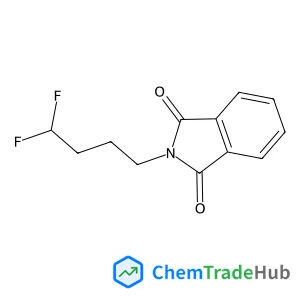
2-(4,4-Difluorobutyl)-1H-isoindole-1,3(2H)-dione
CAS Number:
1265341-14-7
Molecular Formula:
C12H11F2NO2
Recommended Suppliers




Disclaimer
This page provides academic journal information for reference and research purposes only. We are not affiliated with any journal publishers and do not handle publication submissions. For publication-related inquiries, please contact the respective journal publishers directly.
If you notice any inaccuracies in the information displayed, please contact us at support@chemtradehub.com. We will promptly review and address your concerns.