













A kinetic study of the reactions FeO+ + O, Fe+·N2 + O, Fe+·O2 + O and FeO+ + CO: implications for sporadic E layers in the upper atmosphere
Literature Information
Publication Date
2006-03-06
DOI
10.1039/B518155K
Impact Factor
3.676
Authors
K. R. S. Woodcock, T. Vondrak, S. R. Meech, J. M. C. Plane
View Original
Abstract
These gas-phase reactions were studied by pulsed laser ablation of an iron target to produce Fe+ in a fast flow tube, with detection of the ions by quadrupole mass spectrometry. Fe+·N2 and Fe+·O2 were produced by injecting N2 and O2, respectively, into the flow tube. FeO+ was produced from Fe+ by addition of N2O, or by ligand-switching from Fe+·N2 following the addition of atomic O. The following rate coefficients were measured: k(FeO+ + O → Fe+ + O2, 186–294 K) = (3.2 ± 1.5) × 10−11; k(Fe+·N2 + O → FeO++ N2, 294 K) = (4.6 ± 2.5) × 10−10; k(Fe+·O2 + O → FeO+ + O2, 294 K) = (6.3 ± 2.7) × 10−11; and k(FeO+ + CO → Fe+ + CO2, 294 K) = (1.59 ± 0.34) × 10−10 cm3 molecule−1 s−1, where the quoted uncertainties are a combination of the 1σ standard errors in the kinetic data and the systematic experimental errors. The surprisingly slow reaction between FeO+ and O is examined using ab initio quantum calculations of the relevant potential energy surfaces. The importance of this reaction for controlling the lifetime of sporadic E layers is then demonstrated using a model of the upper mesosphere and lower thermosphere.
Recommended Journals
Related Literature
A stereodivergent, two-directional synthesis of stereoisomeric C-linked disaccharide mimetics
Michael Harding, Robert Hodgson, Tahir Majid, Kenneth J. McDowall
2002-12-17
Paper
DOI: 10.1039/B208781B
Reactions of 5-mercaptoazoles and pyridine-2-thiones with acetylenic esters. Selectivity of the formation of novel fused thiazin-4-ones and thiazolidin-4-ones
Vasiliy A. Bakulev, Vera S. Berseneva, Natalia P. Belskaia, Yury Yu. Morzherin, Andreiy Zaitsev, Wim Dehaen, Ingrid Luyten, Suzanne Toppet
2002-12-05
Paper
DOI: 10.1039/B207854F
Copper-catalyzed oxidative multicomponent reaction: synthesis of imidazo fused heterocycles with molecular oxygen
Xianwei Li, Tianzhang Wang, Yu-Jing Lu, Shaomin Ji, Yanping Huo, Bifu Liu
2018-08-02
Paper
DOI: 10.1039/C8OB01532E
Diastereoselective construction of structurally diverse 2,3-dihydroquinolin-4-one scaffolds via redox neutral cascade [1,7]-hydride transfer/cyclization
Ronghao Xie, Shixiao Chen, Xianping Xiang, Xiangcong Yin, Lubin Xu, Shuai-Shuai Li, Liang Wang, Fengying Dong
2021-12-07
Research Article
DOI: 10.1039/D1QO01530C
Catalytic asymmetric Henry reactions of silyl nitronates with aldehydes
Tine Risgaard, Kurt V. Gothelf, Karl Anker Jørgensen
2002-12-03
Paper
DOI: 10.1039/B208859M
Ruthenium-catalyzed enantioselective hydrogenation of quinoxalinones and quinazolinones
Chenghao Li, Shuxin Zhang, Shan Li, Yu Feng, Qing-Hua Fan
2021-12-03
Research Article
DOI: 10.1039/D1QO01598B
Ni(ii)-Catalyzed intermolecular selective Heck-type arylation of unactivated alkenes with arylboronic acids
Cong Lin, Sai Chen, Yihua Wang, Fei Gao, Liang Shen
2021-12-01
Research Article
DOI: 10.1039/D1QO01579F
Synthesis of meso-substituted porphyrins carrying carboranes and oligo(ethylene glycol) units for potential applications in boron neutron capture therapy
Christophe Frixa, Mary F. Mahon, Andrew S. Thompson, Michael D. Threadgill
2002-12-19
Paper
DOI: 10.1039/B209534C
Facile synthesis of triphenylenes and triphenylene/phenanthrene fused heteroaromatics
Vijay Gupta, Satish K. Pandey, Ravi P. Singh
2018-09-14
Communication
DOI: 10.1039/C8OB01930D
You might also like
Compound Q&A
Is 6-(3-Fluorophenyl)picolinic acid (CAS: 887982-40-3) safe?
6-(3-Fluorophenyl)picolinic acid is generally considered safe for laboratory use...
887982-40-36-(3-Fluorophenyl)pi...
Compound Q&A
What industries use (3R)-3-Pyrrolidinol (CAS: 2799-21-5)?
(3R)-3-Pyrrolidinol is used in the pharmaceutical industry as a precursor for dr...
2799-21-5(3R)-3-Pyrrolidinol
Compound Q&A
What precautions should be taken when handling (4R,5R)-4,5-Diethoxycarbonyl-2,2-dimethyldioxolane (CAS: 59779-75-8)?
When handling (4R,5R)-4,5-Diethoxycarbonyl-2,2-dimethyldioxolane (CAS: 59779-75-...
59779-75-8(4R,5R)-4,5-Diethoxy...
Compound Q&A
How is 1-(6-Chloroimidazo[1,2-b]pyridazin-3-yl)ethanone (CAS: 90734-71-7) typically synthesized?
1-(6-Chloroimidazo[1,2-b]pyridazin-3-yl)ethanone is often synthesized via a mult...
90734-71-71-(6-Chloroimidazo[1...
Compound Q&A
What is the market or research trend for N-Ethyl-3,4-dimethylbenzylamine (CAS: 39180-83-1)?
The market for N-Ethyl-3,4-dimethylbenzylamine (CAS: 39180-83-1) remains steady,...
39180-83-1N-Ethyl-3,4-dimethyl...
Compound Q&A
What is Tert-butyl 3-(pyrrolidin-1-yl)azetidine-1-carboxylate (CAS: 1019008-21-9)?
Tert-butyl 3-(pyrrolidin-1-yl)azetidine-1-carboxylate is a chemical compound wit...
1019008-21-9Tert-butyl 3-(pyrrol...
Compound Q&A
What regulatory guidelines apply to 1-Bromo-3-chloro-2,4-dimethoxybenzene (CAS: 1228956-93-1)?
1-Bromo-3-chloro-2,4-dimethoxybenzene (CAS: 1228956-93-1) falls under the classi...
1228956-93-11-Bromo-3-chloro-2,4...
Compound Q&A
Is 8-Bromo-2-methyl-3,4-dihydroisoquinolin-1(2H)-one (CAS: 1368622-07-4) safe?
The safety of 8-Bromo-2-methyl-3,4-dihydroisoquinolin-1(2H)-one (CAS: 1368622-07...
1368622-07-48-Bromo-2-methyl-3,4...
Compound Q&A
Is Benzyl [(3S)-2,6-dioxo-3-piperidinyl]carbamate (CAS: 22785-43-9) safe?
Benzyl [(3S)-2,6-dioxo-3-piperidinyl]carbamate is generally safe when handled wi...
22785-43-9Benzyl [(3S)-2,6-dio...
Compound Q&A
How should 1-{[4-(4,4,5,5-Tetramethyl-1,3,2-dioxaborolan-2-yl)phenyl]sulfonyl}pyrrolidine (CAS: 928657-21-0) be stored?
1-{[4-(4,4,5,5-Tetramethyl-1,3,2-dioxaborolan-2-yl)phenyl]sulfonyl}pyrrolidine s...
928657-21-01-{[4-(4,4,5,5-Tetra...
Source Journal
Physical Chemistry Chemical Physics

CiteScore:
5.5
Self-citation Rate:
10.3%
Articles per Year:
3036
Physical Chemistry Chemical Physics (PCCP) is an international journal co-owned by 19 physical chemistry and physics societies from around the world. This journal publishes original, cutting-edge research in physical chemistry, chemical physics and biophysical chemistry. To be suitable for publication in PCCP, articles must include significant innovation and/or insight into physical chemistry; this is the most important criterion that reviewers and Editors will judge against when evaluating submissions. The journal has a broad scope and welcomes contributions spanning experiment, theory, computation and data science. Topical coverage includes spectroscopy, dynamics, kinetics, statistical mechanics, thermodynamics, electrochemistry, catalysis, surface science, quantum mechanics, quantum computing and machine learning. Interdisciplinary research areas such as polymers and soft matter, materials, nanoscience, energy, surfaces/interfaces, and biophysical chemistry are welcomed if they demonstrate significant innovation and/or insight into physical chemistry. Joined experimental/theoretical studies are particularly appreciated when complementary and based on up-to-date approaches.
Recommended Compounds

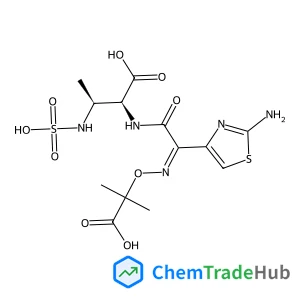
Aztreonam USP Related Compound A (Open-ring Aztreonam)
CAS Number:
87500-74-1
Molecular Formula:
C13H19N5O9S2
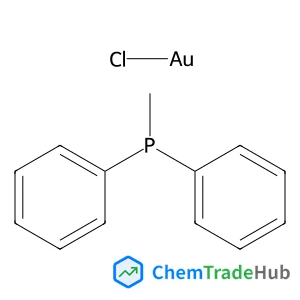
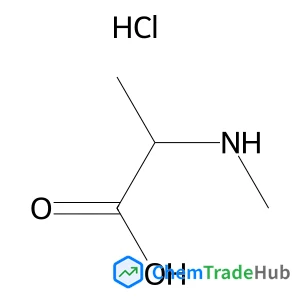
(R)-2-(Methylamino)propanoic acid hydrochloride
CAS Number:
1155878-14-0
Molecular Formula:
C4H10ClNO2
Recommended Suppliers




Disclaimer
This page provides academic journal information for reference and research purposes only. We are not affiliated with any journal publishers and do not handle publication submissions. For publication-related inquiries, please contact the respective journal publishers directly.
If you notice any inaccuracies in the information displayed, please contact us at support@chemtradehub.com. We will promptly review and address your concerns.