












Synthesis of meso-substituted porphyrins carrying carboranes and oligo(ethylene glycol) units for potential applications in boron neutron capture therapy
Literature Information
Publication Date
2002-12-19
DOI
10.1039/B209534C
Impact Factor
3.876
Authors
Christophe Frixa, Mary F. Mahon, Andrew S. Thompson, Michael D. Threadgill
View Original
Abstract
Selective delivery of 10B to tumours is one of the major remaining problems in boron neutron capture therapy (BNCT) of cancer. Porphyrins are selectively accumulated in tumours. Thus two series of carborane-carrying porphyrins were constructed, with additional functionality for attachment of uncharged potentially water-solubilising polyethers. 3-(1,2-Dicarbaclosododecaboran(12)-1-ylmethoxy)benzaldehyde was prepared by protection of the aldehyde of 3-(prop-2-ynyloxy)benzaldehyde as a dithioacetal, treatment with decaborane(14) and deprotection. Condensation with a 3-nitrophenyldipyrromethane gave a separable mixture of meso-(3-nitrophenyl)-meso-(3-carboranylmethoxyphenyl)porphyrins, resulting from extensive scrambling at the porphyrinogen stage. Similarly, condensation of 3-(1,2-dicarbaclosododecaboran(12)-1-yl)benzaldehyde with this dipyrromethane gave an analogous mixture of meso-(3-nitrophenyl)-meso-(3-carboranylphenyl)porphyrins. In this second series, the two regioisomeric bis(nitrophenyl)bis(carboranylphenyl)porphyrins could only be distinguished by X-ray crystallography, their NMR spectra being identical. The nitro groups of the mono(nitrophenyl)porphyrins and the bis(nitrophenyl)porphyrins were reduced to the corresponding amines with tin(II) chloride and the monoamines were coupled with a ω-methoxy poly(ethylene glycol) chloroformate of mean MW 600 to give the MeOPEGylated tricarboranyl porphyrins.
Related Literature
Phase-transfer catalytic aza-Michael addition of tert-butyl benzyloxycarbamate to electron-deficient olefins
Jihoon Lee, Mi-hyun Kim, Sang-sup Jew, Hyeung-geun Park, Byeong-Seon Jeong
2008-03-03
Communication
DOI: 10.1039/B800130H
Single microbead SELEX for efficient ssDNA aptamer generation against botulinum neurotoxin‡
Jeffrey B.-H. Tok, Nicholas O. Fischer
2008-03-18
Communication
DOI: 10.1039/B717936G
Rigid cyanine dyenucleic acid labels‡
Adrian Fegan, Pravin S. Shirude, Shankar Balasubramanian
2008-03-26
Communication
DOI: 10.1039/B801629A
Fluorescence microscopy coupled to electrochemistry: a powerful tool for the controlled electrochemical switch of fluorescent molecules
Fabien Miomandre, Rachel Meallet-Renault, Jean-Jacques Vachon, Robert Bernard Pansu, Pierre Audebert
2008-02-19
Communication
DOI: 10.1039/B718899D
Nucleophilicities and carbon basicities of DBU and DBN‡
M. Baidya, Herbert Mayr
2008-03-13
Communication
DOI: 10.1039/B801811A
A design concept of long-wavelength fluorescent analogs of rhodamine dyes: replacement of oxygen with silicon atom
Meiyan Fu, Yi Xiao, Xuhong Qian, Defeng Zhao, Yufang Xu
2008-02-14
Communication
DOI: 10.1039/B718544H
Interpenetrating single helical capsules
Emanuela Berni, Joachim Garric, Corinne Lamit, Brice Kauffmann, Jean-Michel Léger, Ivan Huc
2008-02-28
Communication
DOI: 10.1039/B719712H
Isolation and X-ray structural characterization of tetraisopropylpyrene cation radical
Moloy Banerjee, Vijay S. Vyas, Sergey V. Lindeman, Rajendra Rathore
2008-02-28
Communication
DOI: 10.1039/B800168E
You might also like
Compound Q&A
What is the market or research trend for N-(4-Methoxybenzyl)-2-pyridinamine (CAS: 52818-63-0)?
N-(4-Methoxybenzyl)-2-pyridinamine (CAS: 52818-63-0) is increasingly being used ...
52818-63-0N-(4-Methoxybenzyl)-...
Compound Q&A
What precautions should be taken when handling Ethyl 4-(2-chlorophenyl)-1,3-thiazole-2-carboxylate (CAS: 1050507-06-6)?
When handling Ethyl 4-(2-chlorophenyl)-1,3-thiazole-2-carboxylate, appropriate p...
1050507-06-6Ethyl 4-(2-chlorophe...
Compound Q&A
What regulatory guidelines apply to diethyldiselane (CAS: 628-39-7)?
Diethyldiselane (CAS: 628-39-7) is classified under the Globally Harmonized Syst...
628-39-7Diethyldiselane
Compound Q&A
What is the market or research trend for oxocopper (CAS: 12053-18-8)?
The market for oxocopper (CAS: 12053-18-8) is primarily driven by its use in cat...
12053-18-8oxocopper; oxo-(oxoc...
Compound Q&A
What is the market or research trend for 5-{[(2-Methyl-2-propanyl)oxy]carbonyl}-5-azaspiro[2.4]heptane-7-carboxylic acid?
The market for 5-{[(2-Methyl-2-propanyl)oxy]carbonyl}-5-azaspiro[2.4]heptane-7-c...
1268519-54-55-{[(2-Methyl-2-prop...
Compound Q&A
What is 2-(1-Pyrrolidinyl)-4-pyridinamine (CAS: 35981-63-6)?
2-(1-Pyrrolidinyl)-4-pyridinamine is a chemical compound with the CAS number 359...
35981-63-62-(1-Pyrrolidinyl)-4...
Compound Q&A
What are the physical and chemical properties of 2-(3-Pyridinyl)-1-azabicyclo[2.2.2]octane (CAS: 91556-75-1)?
2-(3-Pyridinyl)-1-azabicyclo[2.2.2]octane (CAS: 91556-75-1) is a crystalline sol...
91556-75-12-(3-Pyridinyl)-1-az...
Compound Q&A
How is (S)-Alpha-allyl-proline hydrochloride (CAS: 129704-91-2) typically synthesized?
(S)-Alpha-allyl-proline hydrochloride is usually synthesized via a Wittig reacti...
129704-91-2(S)-Alpha-allyl-prol...
Compound Q&A
What is 3-Methyl-1,2-oxazole-5-carboxylic acid (CAS: 4857-42-5)?
3-Methyl-1,2-oxazole-5-carboxylic acid (CAS: 4857-42-5) is an organic compound w...
4857-42-53-Methyl-1,2-oxazole...
Compound Q&A
How is Lys-SMCC-DM1 (CAS: 1281816-04-3) typically synthesized?
Lys-SMCC-DM1 is synthesized via a multi-step process involving the coupling of S...
1281816-04-3Lys-SMCC-DM1
Source Journal
Organic & Biomolecular Chemistry

CiteScore:
3.4
Self-citation Rate:
10.3%
Articles per Year:
1041
Organic & Biomolecular Chemistry (OBC) publishes original and high impact research and reviews in organic chemistry. We welcome research that shows new or significantly improved protocols or methodologies in total synthesis, synthetic methodology or physical and theoretical organic chemistry as well as research that shows a significant advance in the organic chemistry or molecular design aspects of chemical biology, catalysis, supramolecular and macromolecular chemistry, theoretical chemistry, mechanism-oriented physical organic chemistry, medicinal chemistry or natural products. Articles published in the journal should report new work which makes a highly-significant impact in the field. Routine and incremental work is generally not suitable for publication in the journal. More details about key areas of our scope are below. In all cases authors should include in their article clear rationale for why their research has been carried out.
Recommended Compounds
![1,10-bis(3,5-dimethylphenyl)-12-hydroxy-4,5,6,7-tetrahydroiindeno[7,1-de:1',7'-fg][1,3,2]dioxaphosphocine 12-oxide structure](https://static.chemtradehub.com/structs/141/1412439-82-7-b9a9.webp "1,10-bis(3,5-dimethylphenyl)-12-hydroxy-4,5,6,7-tetrahydroiindeno[7,1-de:1',7'-fg][1,3,2]dioxaphosphocine 12-oxide structure")
1,10-bis(3,5-dimethylphenyl)-12-hydroxy-4,5,6,7-tetrahydroiindeno[7,1-de:1',7'-fg][1,3,2]dioxaphosphocine 12-oxide
CAS Number:
1412439-82-7
Molecular Formula:
C33H31O4P
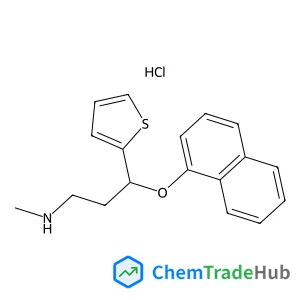
N-Methyl-3-(1-naphthyloxy)-3-(2-thienyl)-1-propanamine hydrochloride (1:1)
CAS Number:
1188266-11-6
Molecular Formula:
C18H20ClNOS
Recommended Suppliers








Disclaimer
This page provides academic journal information for reference and research purposes only. We are not affiliated with any journal publishers and do not handle publication submissions. For publication-related inquiries, please contact the respective journal publishers directly.
If you notice any inaccuracies in the information displayed, please contact us at support@chemtradehub.com. We will promptly review and address your concerns.