












Ruthenium-catalyzed enantioselective hydrogenation of quinoxalinones and quinazolinones
Literature Information
Publication Date
2021-12-03
DOI
10.1039/D1QO01598B
Impact Factor
5.281
Authors
Chenghao Li, Shuxin Zhang, Shan Li, Yu Feng, Qing-Hua Fan
View Original
Abstract
An efficient Ru-catalyzed enantioselective hydrogenation of quinoxalinone and quinazolinone derivatives has been successfully developed, providing a straightforward and facile access to chiral dihydroquinoxalinones and dihydroquinazolinones with excellent results (89–98% yields, up to 98% ee). Importantly, the key enantiopure dihydroquinoxalinone intermediate towards the synthesis of a bioactive BRD4 inhibitor was conveniently synthesized by this catalytic hydrogenation methodology.
Related Literature
One-step solid-state thermolysis of a metal–organic framework: a simple and facile route to large-scale of multiwalled carbon nanotubes
Linyun Chen, Junfeng Bai, Chunzhao Wang, Yi Pan, Manfred Scheer, Xiaozeng You
2008-01-31
Communication
DOI: 10.1039/B718476J
Highly efficient quenching of excimer fluorescence by perylene diimide in DNA
Nicolas Bouquin, Vladimir L. Malinovskii, Robert Häner
2008-03-28
Communication
DOI: 10.1039/B802193G
Role and substrate specificity of the Streptomyces coelicolor RedH enzyme in undecylprodiginine biosynthesis
Stuart W. Haynes, Paulina K. Sydor, Anna E. Stanley, Lijiang Song, Gregory L. Challis
2008-03-14
Communication
DOI: 10.1039/B801677A
Clean and efficient synthesis of O-silylcarbamates and ureas in supercritical carbon dioxide
Matthew J. Fuchter, Catherine J. Smith, Alistair Boyer, Simon Saubern, John H. Ryan, Andrew B. Holmes
2008-04-02
Communication
DOI: 10.1039/B801537F
Size matters—strong binding of the terephthalate dianion by thiourea functionalised fused [n]polynorbornane hosts
Adam J. Lowe, Frederick M. Pfeffer
2008-03-18
Communication
DOI: 10.1039/B801798K
One-pot synthesis of reverse type-I In2O3@In2S3 core–shell nanoparticles
Zhaoyong Sun, Amar Kumbhar, Kai Sun, Qingsheng Liu
2008-03-18
Communication
DOI: 10.1039/B719176F
Chiral dinuclear vanadium(v) catalysts for oxidative coupling of 2-naphthols‡
Shinobu Takizawa, Tomomi Katayama, Chiaki Kameyama, Kiyotaka Onitsuka, Takeyuki Suzuki, Takeshi Yanagida, Tomoji Kawai, Hiroaki Sasai
2008-02-14
Communication
DOI: 10.1039/B717068H
Layer-by-layer assembly of single-charged ions with a rigid polyampholyte
Suobo Zhang, Zhaohui Su
2008-03-14
Communication
DOI: 10.1039/B801784K
A mechanistic study on the oxidation of hydrazides: application to the tuberculosis drug isoniazid‡
Ruth I. J. Amos, Brendon S. Gourlay, Brian F. Yates
2008-02-08
Communication
DOI: 10.1039/B719570B
Unique intermolecular reaction of simple porphyrins at a metal surface gives covalent nanostructures
Mendel In’t Veld, Patrizia Iavicoli, Sam Haq, David B. Amabilino, Rasmita Raval
2008-02-20
Communication
DOI: 10.1039/B718865J
You might also like
Compound Q&A
What is the market or research trend for N-(4-Methoxybenzyl)-2-pyridinamine (CAS: 52818-63-0)?
N-(4-Methoxybenzyl)-2-pyridinamine (CAS: 52818-63-0) is increasingly being used ...
52818-63-0N-(4-Methoxybenzyl)-...
Compound Q&A
What precautions should be taken when handling Ethyl 4-(2-chlorophenyl)-1,3-thiazole-2-carboxylate (CAS: 1050507-06-6)?
When handling Ethyl 4-(2-chlorophenyl)-1,3-thiazole-2-carboxylate, appropriate p...
1050507-06-6Ethyl 4-(2-chlorophe...
Compound Q&A
What regulatory guidelines apply to diethyldiselane (CAS: 628-39-7)?
Diethyldiselane (CAS: 628-39-7) is classified under the Globally Harmonized Syst...
628-39-7Diethyldiselane
Compound Q&A
What is the market or research trend for oxocopper (CAS: 12053-18-8)?
The market for oxocopper (CAS: 12053-18-8) is primarily driven by its use in cat...
12053-18-8oxocopper; oxo-(oxoc...
Compound Q&A
What is the market or research trend for 5-{[(2-Methyl-2-propanyl)oxy]carbonyl}-5-azaspiro[2.4]heptane-7-carboxylic acid?
The market for 5-{[(2-Methyl-2-propanyl)oxy]carbonyl}-5-azaspiro[2.4]heptane-7-c...
1268519-54-55-{[(2-Methyl-2-prop...
Compound Q&A
What is 2-(1-Pyrrolidinyl)-4-pyridinamine (CAS: 35981-63-6)?
2-(1-Pyrrolidinyl)-4-pyridinamine is a chemical compound with the CAS number 359...
35981-63-62-(1-Pyrrolidinyl)-4...
Compound Q&A
What are the physical and chemical properties of 2-(3-Pyridinyl)-1-azabicyclo[2.2.2]octane (CAS: 91556-75-1)?
2-(3-Pyridinyl)-1-azabicyclo[2.2.2]octane (CAS: 91556-75-1) is a crystalline sol...
91556-75-12-(3-Pyridinyl)-1-az...
Compound Q&A
How is (S)-Alpha-allyl-proline hydrochloride (CAS: 129704-91-2) typically synthesized?
(S)-Alpha-allyl-proline hydrochloride is usually synthesized via a Wittig reacti...
129704-91-2(S)-Alpha-allyl-prol...
Compound Q&A
What is 3-Methyl-1,2-oxazole-5-carboxylic acid (CAS: 4857-42-5)?
3-Methyl-1,2-oxazole-5-carboxylic acid (CAS: 4857-42-5) is an organic compound w...
4857-42-53-Methyl-1,2-oxazole...
Compound Q&A
How is Lys-SMCC-DM1 (CAS: 1281816-04-3) typically synthesized?
Lys-SMCC-DM1 is synthesized via a multi-step process involving the coupling of S...
1281816-04-3Lys-SMCC-DM1
Source Journal
Organic Chemistry Frontiers

CiteScore:
7.8
Self-citation Rate:
8.7%
Articles per Year:
724
Organic Chemistry Frontiers publishes high-quality research from across organic chemistry. Emphases are placed on studies that make significant contributions to the field of organic chemistry by reporting either new or significantly improved protocols or methodologies. Topics include, but are not limited to the following: Organic synthesis Development of synthetic methodologies Catalysis Natural products Functional organic materials Supramolecular and macromolecular chemistry Physical and computational organic chemistry
Recommended Compounds
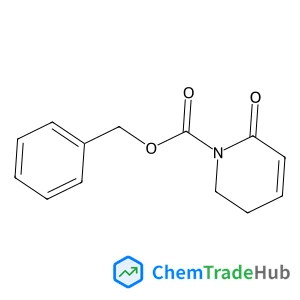
Benzyl 6-oxo-3,6-dihydro-1(2H)-pyridinecarboxylate
CAS Number:
725746-35-0
Molecular Formula:
C13H13NO3
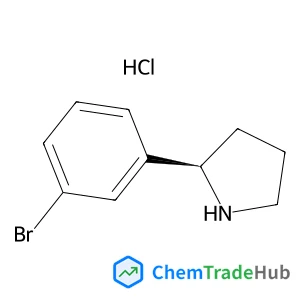
(2R)-2-(3-Bromophenyl)pyrrolidine hydrochloride (1:1)
CAS Number:
1391550-13-2
Molecular Formula:
C10H13BrClN

N-Methyl-3-(1-naphthyloxy)-3-(2-thienyl)-1-propanamine hydrochloride (1:1)
CAS Number:
1188266-11-6
Molecular Formula:
C18H20ClNOS
Recommended Suppliers






Disclaimer
This page provides academic journal information for reference and research purposes only. We are not affiliated with any journal publishers and do not handle publication submissions. For publication-related inquiries, please contact the respective journal publishers directly.
If you notice any inaccuracies in the information displayed, please contact us at support@chemtradehub.com. We will promptly review and address your concerns.