


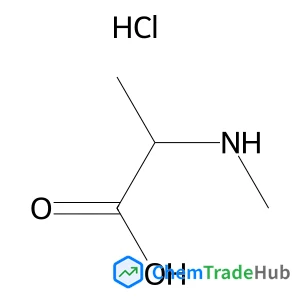
(R)-2-(Methylamino)propanoic acid hydrochloride
CAS Number:
1155878-14-0
Molecular Formula:
C4H10ClNO2
Evgenii V. Kondratenko, Norbert Steinfeldt, Manfred Baerns
Mechanistic aspects of the formation of C3H6, CO and CO2 in the oxidative dehydrogenation of propane over VOx/γ-Al2O3 materials have been investigated by means of steady state and transient isotopic tests. The materials possessed highly dispersed and polymerised VOx species as well as bulk-like V2O5. Propene was primarily formed via oxidative dehydrogenation of propane by lattice oxygen of VOx species. It was suggested that non-selective consecutive propene oxidation is initiated by the breaking of the C–C bond in the molecule by the lattice oxygen, forming formaldehyde as a side product, which is further oxidised to CO and CO2. The following order of initial steady state propene selectivity (at a zero degree of propane conversion) as a function of the nature of VOx species was established: a mixture of bulk-like V2O5 and polymerised VOx > polymerised VOx > highly dispersed VOx species. The low propene selectivity over highly dispersed VOx species was explained by the fact that these species do not fully cover the bare acidic surface of γ-Al2O3 where propene adsorption and further oxidation take place. Thus, two different locations of COx formation were considered: (i) in the vicinity of acidic sites of the support and (ii) on VOx species. The propene selectivity over samples possessing polymerised VOx species and bulk-like V2O5 strongly decreased with an increasing degree of propane conversion. Contrarily, highly dispersed VOx species showed the lowest ability for consecutive propene oxidation.

Journal of Medicinal Chemistry

Science Progress

European Journal of Wood and Wood Products

Helvetica Chimica Acta

Fibre Chemistry

Journal of Physics and Chemistry of Solids

Pure and Applied Chemistry

Proceedings of the National Academy of Sciences of the United States of America

Molecular Pharmacology

Planta Medica
Daniela Künzel, Thomas Markert, Axel Groß, David M. Benoit
DOI: 10.1039/B907443K
Torsten Gutmann, Martin Sellin, Hergen Breitzke, Annegret Stark, Gerd Buntkowsky
DOI: 10.1039/B908198D
Alexey Deyko, Kevin R. J. Lovelock, Jo-Anne Corfield, Alasdair W. Taylor, Peter N. Gooden, Ignacio J. Villar-Garcia, Peter Licence, Robert G. Jones, Vladimir G. Krasovskiy, Elena A. Chernikova, Leonid M. Kustov
DOI: 10.1039/B908209C
Jose C. Corchado, Joaquin Espinosa-Garcia
DOI: 10.1039/B912948K
Mausumi Goswami, E. Arunan
DOI: 10.1039/B907708A
Roberto Olivares-Amaya, Dmitrij Rappoport, Michael Stopa, Alán Aspuru-Guzik
DOI: 10.1039/B906885F
D. A. MacLaren, J. Johnston, D. A. Duncan, S. S. Dhesi, N. Gadegaard, M. Kadodwala
DOI: 10.1039/B911447E
Changwei Pan, Jingxuan Xie, Yu Xia, Irving R. Epstein
DOI: 10.1039/B904445K
Maarten M. M. Jansen, Jose Gracia, Ben E. Nieuwenhuys, (Hans) J. W. Niemantsverdriet
DOI: 10.1039/B910497F
6-(3-Fluorophenyl)picolinic acid is generally considered safe for laboratory use...
(3R)-3-Pyrrolidinol is used in the pharmaceutical industry as a precursor for dr...
When handling (4R,5R)-4,5-Diethoxycarbonyl-2,2-dimethyldioxolane (CAS: 59779-75-...
1-(6-Chloroimidazo[1,2-b]pyridazin-3-yl)ethanone is often synthesized via a mult...
The market for N-Ethyl-3,4-dimethylbenzylamine (CAS: 39180-83-1) remains steady,...
Tert-butyl 3-(pyrrolidin-1-yl)azetidine-1-carboxylate is a chemical compound wit...
1-Bromo-3-chloro-2,4-dimethoxybenzene (CAS: 1228956-93-1) falls under the classi...
The safety of 8-Bromo-2-methyl-3,4-dihydroisoquinolin-1(2H)-one (CAS: 1368622-07...
Benzyl [(3S)-2,6-dioxo-3-piperidinyl]carbamate is generally safe when handled wi...
1-{[4-(4,4,5,5-Tetramethyl-1,3,2-dioxaborolan-2-yl)phenyl]sulfonyl}pyrrolidine s...

Physical Chemistry Chemical Physics (PCCP) is an international journal co-owned by 19 physical chemistry and physics societies from around the world. This journal publishes original, cutting-edge research in physical chemistry, chemical physics and biophysical chemistry. To be suitable for publication in PCCP, articles must include significant innovation and/or insight into physical chemistry; this is the most important criterion that reviewers and Editors will judge against when evaluating submissions. The journal has a broad scope and welcomes contributions spanning experiment, theory, computation and data science. Topical coverage includes spectroscopy, dynamics, kinetics, statistical mechanics, thermodynamics, electrochemistry, catalysis, surface science, quantum mechanics, quantum computing and machine learning. Interdisciplinary research areas such as polymers and soft matter, materials, nanoscience, energy, surfaces/interfaces, and biophysical chemistry are welcomed if they demonstrate significant innovation and/or insight into physical chemistry. Joined experimental/theoretical studies are particularly appreciated when complementary and based on up-to-date approaches.
![Benzyl spiro[indole-3,4'-piperidine]-1(2H)-carboxylate hydrochloride (1:1) structure](https://static.chemtradehub.com/structs/159/159635-46-8-8de0.webp "Benzyl spiro[indole-3,4'-piperidine]-1(2H)-carboxylate hydrochloride (1:1) structure")







