











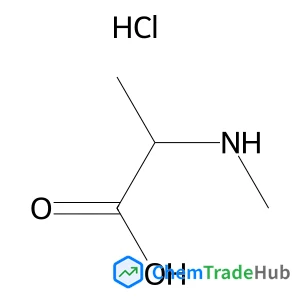
(R)-2-(Methylamino)propanoic acid hydrochloride
CAS Number:
1155878-14-0
Molecular Formula:
C4H10ClNO2
Daniela Künzel, Thomas Markert, Axel Groß, David M. Benoit
Host–guest networks formed by ordered organic layers are promising candidates for applications in molecular storage and quantum computing. We have studied 2-dimensionally ordered surface template structures of bis(terpyridine)-derived molecules (BTPs) on graphite using force field and DFT methods and compared the results to recent experimental observations. In order to determine the force field best suited for surface calculations, bond lengths and angles, torsional potentials, adsorption and stacking energies of smaller aromatic molecules were calculated with different force fields (Compass, UFF, Dreiding and CVFF). Density functional perturbation theory calculations were used to study the intermolecular interactions between 3,3′-BTP molecules. Structural properties, adsorption energies and rotational barriers of the 3,3′-BTP surface structure and its host–guest systems with phthalocyanine (PcH2) or excess 3,3′-BTP as guest molecules have been addressed. In addition, STM images of oligopyridine and phthalocyanine molecules were simulated based on periodic and local density functional theory calculations.
Alex Borgoo, David J. Tozer, Paul Geerlings, Frank De Proft
DOI: 10.1039/B820114E
Pawel Rejmak, Mariusz Mitoraj, Ewa Broclawik
DOI: 10.1039/B920551A
Wladimir Thiessen, Aliaksei Dubavik, Vladimir Lesnyak, Nikolai Gaponik, Alexander Eychmüller, Thomas Wolff
DOI: 10.1039/B917276A
Takashi Nakamura, Keiji Yashiro, Kazuhisa Sato, Junichiro Mizusaki
DOI: 10.1039/B823364K
Céline Merlet, Paul A. Madden, Mathieu Salanne
DOI: 10.1039/C0CP01412E
Christian W. Müller, Josh J. Newby, Ching-Ping Liu, Chirantha P. Rodrigo, Timothy S. Zwier
DOI: 10.1039/B919912H
Rachel Edwards, Jillian Madine, Lee Fielding, David A. Middleton
DOI: 10.1039/C0CP00326C
Gregory Favaro, Anna Radko, Abraham Jacob Domb, Daniel Mandler
DOI: 10.1039/C0CP00601G
Gernot Füchsel, Tillmann Klamroth, Jean Christophe Tremblay, Peter Saalfrank
DOI: 10.1039/C0CP00895H
6-(3-Fluorophenyl)picolinic acid is generally considered safe for laboratory use...
(3R)-3-Pyrrolidinol is used in the pharmaceutical industry as a precursor for dr...
When handling (4R,5R)-4,5-Diethoxycarbonyl-2,2-dimethyldioxolane (CAS: 59779-75-...
1-(6-Chloroimidazo[1,2-b]pyridazin-3-yl)ethanone is often synthesized via a mult...
The market for N-Ethyl-3,4-dimethylbenzylamine (CAS: 39180-83-1) remains steady,...
Tert-butyl 3-(pyrrolidin-1-yl)azetidine-1-carboxylate is a chemical compound wit...
1-Bromo-3-chloro-2,4-dimethoxybenzene (CAS: 1228956-93-1) falls under the classi...
The safety of 8-Bromo-2-methyl-3,4-dihydroisoquinolin-1(2H)-one (CAS: 1368622-07...
Benzyl [(3S)-2,6-dioxo-3-piperidinyl]carbamate is generally safe when handled wi...
1-{[4-(4,4,5,5-Tetramethyl-1,3,2-dioxaborolan-2-yl)phenyl]sulfonyl}pyrrolidine s...

Physical Chemistry Chemical Physics (PCCP) is an international journal co-owned by 19 physical chemistry and physics societies from around the world. This journal publishes original, cutting-edge research in physical chemistry, chemical physics and biophysical chemistry. To be suitable for publication in PCCP, articles must include significant innovation and/or insight into physical chemistry; this is the most important criterion that reviewers and Editors will judge against when evaluating submissions. The journal has a broad scope and welcomes contributions spanning experiment, theory, computation and data science. Topical coverage includes spectroscopy, dynamics, kinetics, statistical mechanics, thermodynamics, electrochemistry, catalysis, surface science, quantum mechanics, quantum computing and machine learning. Interdisciplinary research areas such as polymers and soft matter, materials, nanoscience, energy, surfaces/interfaces, and biophysical chemistry are welcomed if they demonstrate significant innovation and/or insight into physical chemistry. Joined experimental/theoretical studies are particularly appreciated when complementary and based on up-to-date approaches.
![(2E)-4-[(1R,2S,8R,19S,21R)-14-Hydroxy-11-isopropenyl-8,23,23-trimethyl-5-(3-methyl-2-buten-1-yl)-16,20-dioxo-3,7,22-trioxaheptacyclo[17.4.1.1~8,12~.0~2,17~.0~2,21~.0~4,15~.0~6,13~]pentacosa-4(15),5,13
,17-tetraen-21-yl]-2-methyl-2-butenoic acid structure](https://static.chemtradehub.com/structs/173/173867-04-4-d2d3.webp "(2E)-4-[(1R,2S,8R,19S,21R)-14-Hydroxy-11-isopropenyl-8,23,23-trimethyl-5-(3-methyl-2-buten-1-yl)-16,20-dioxo-3,7,22-trioxaheptacyclo[17.4.1.1~8,12~.0~2,17~.0~2,21~.0~4,15~.0~6,13~]pentacosa-4(15),5,13
,17-tetraen-21-yl]-2-methyl-2-butenoic acid structure")




