


Collisional ‘heating’ of molecular rotations by positron impact: a computational analysis of the quantum dynamics
Literature Information
Publication Date
2004-10-27
DOI
10.1039/B411035H
Impact Factor
3.676
Authors
J. A. Sabin del Valle, F. A. Gianturco
View Original
Abstract
Low-energy collisional excitation of rotational levels by impact with slow positron beams is considered by carrying out a space-frame (SF) dynamical calculation at energies well below the positronium formation threshold. The close-coupled quantum equations are solved exactly, using a recently developed modified variable phase approximation (MVPA) and the interaction forces include static interaction exactly and a local, DFT modelling of correlation–polarisation effects. The results are employed to obtain heating and quenching efficiency coefficients for a series of linear molecules in the gas phase and at low collision energies.
Recommended Journals

Main Group Chemistry

NDT & E International

Journal of Chemical Sciences

Atomization and Sprays

Journal of the Indian Institute of Science

Polycyclic Aromatic Compounds

Chinese Journal of Chemistry

Critical Reviews in Solid State and Materials Sciences

Herald of the Russian Academy of Sciences

Medicinal Chemistry Research
Related Literature
Role of the organic linker in the early stages of the templated synthesis of PMOs
Ryusuke Futamura, Miguel Jorge, José R. B. Gomes
2013-03-06
Communication
DOI: 10.1039/C3CP50193K
In situ high pressure NMR study of the direct synthesis of NaAlH4
Terry D. Humphries, Derek Birkmire, Bjørn C. Hauback, G. Sean McGrady, Craig M. Jensen
2013-03-04
Communication
DOI: 10.1039/C3CP50777G
On the signature of the hydrophobic effect at a single molecule level
Giuseppe Graziano
2013-03-25
Paper
DOI: 10.1039/C3CP50616A
Origin of electrolyte-dopant dependent sulfur poisoning of SOFC anodes
ZhenHua Zeng, Mårten E. Björketun, Sune Ebbesen, Mogens B. Mogensen, Jan Rossmeisl
2013-03-14
Communication
DOI: 10.1039/C3CP51099A
Benchmark quantum-chemical calculations on a complete set of rotameric families of the DNA sugar–phosphate backbone and their comparison with modern density functional theory
Arnošt Mládek, Miroslav Krepl, Michal Otyepka, Pavel Banáš, Marie Zgarbová, Petr Jurečka
2013-03-18
Paper
DOI: 10.1039/C3CP44383C
Photovoltaic devices and characterization of a dodecyloxybenzothiadiazole-based copolymer
Purna P. Maharjan, Qiliang Chen, Lianjie Zhang, Olusegun Adebanjo, Nirmal Adhikari, Swaminathan Venkatesan, Prajwal Adhikary, Bjorn Vaagensmith, Qiquan Qiao
2013-03-14
Paper
DOI: 10.1039/C3CP51070K
Changed reactivity of the 1-bromo-4-nitrobenzene radical anion in a room temperature ionic liquid
Sven Ernst, Kristopher R. Ward, Sarah E. Norman, Christopher Hardacre, Richard G. Compton
2013-03-15
Paper
DOI: 10.1039/C3CP51004B
Microscopic effects of the bonding configuration of nitrogen-doped graphene on its reactivity toward hydrogen peroxide reduction reaction
Ping Wu, Pan Du, Hui Zhang, Chenxin Cai
2013-03-15
Paper
DOI: 10.1039/C3CP50900A
In situ determination of the surface excess upon electrochemical sulfate adsorption on Au(111) films by surface plasmon resonance
2013-02-14
Paper
DOI: 10.1039/C3CP44303E
Ultrafast photoinduced dynamics of halogenated cyclopentadienes: observation of geminate charge-transfer complexes in solution
T. J. A. Wolf, R. Radloff, P. Lang, A. Stolow, A.-N. Unterreiner
2013-02-11
Paper
DOI: 10.1039/C3CP44295K
You might also like
Compound Q&A
What precautions should be taken when handling 4-(2-Furylmethyl)thiomorpholine 1,1-dioxide (CAS: 79206-94-3)?
When handling 4-(2-Furylmethyl)thiomorpholine 1,1-dioxide (CAS: 79206-94-3), it ...
79206-94-34-(2-Furylmethyl)thi...
Compound Q&A
What precautions should be taken when handling 4-Chloro-N-[2-(4-morpholinyl)ethyl]benzamide (CAS: 71320-77-9)?
When handling 4-Chloro-N-[2-(4-morpholinyl)ethyl]benzamide (CAS: 71320-77-9), it...
71320-77-94-Chloro-N-[2-(4-mor...
Compound Q&A
How should waste containing 2-[2-(2-Methoxyethoxy)ethoxy]ethyl 4-methylbenzenesulfonate (CAS: 62921-74-8) be handled?
Waste containing this compound (CAS: 62921-74-8) should be handled according to ...
62921-74-82-[2-(2-Methoxyethox...
Compound Q&A
How should waste containing (S)-Methyl 2-amino-3-cyclohexylpropanoate be handled?
Waste containing (S)-Methyl 2-amino-3-cyclohexylpropanoate should be collected i...
40056-18-6(S)-Methyl 2-amino-3...
Compound Q&A
How is 5-({4-[(2S,4R)-4-Hydroxy-2-methyltetrahydro-2H-pyran-4-yl]-2-thienyl}sulfanyl)-1-methyl-1,3-dihydro-2H-indol-2-one (CAS: 166882-70-8) typically synthesized?
This compound can be synthesized using a multi-step process involving the conjug...
166882-70-85-({4-[(2S,4R)-4-Hyd...
Compound Q&A
Are there alternatives to (2E)-3-(3,4-Dichlorophenyl)acrylic acid (CAS: 7312-27-8) in synthesis?
There are several alternatives to (2E)-3-(3,4-Dichlorophenyl)acrylic acid in syn...
7312-27-8(2E)-3-(3,4-Dichloro...
Compound Q&A
How should Ethyl 6-(2-nitrophenyl)imidazo[2,1-b][1,3]thiazole-3-carboxylate (CAS: 925437-84-9) be stored?
Ethyl 6-(2-nitrophenyl)imidazo[2,1-b][1,3]thiazole-3-carboxylate (CAS: 925437-84...
925437-84-9Ethyl 6-(2-nitrophen...
Compound Q&A
How should waste containing 2-(1,3-Thiazol-2-yl)ethanamine (CAS: 18453-07-1) be handled?
Waste containing 2-(1,3-Thiazol-2-yl)ethanamine (CAS: 18453-07-1) should be coll...
18453-07-12-(1,3-Thiazol-2-yl)...
Compound Q&A
How is Methyl 5-iodo-2-methylbenzoate (CAS: 103440-54-6) typically synthesized?
Methyl 5-iodo-2-methylbenzoate can be synthesized through the iodination of meth...
103440-54-6Methyl 5-iodo-2-meth...
Compound Q&A
How is 5-Chloro[1,2,4]triazolo[1,5-a]pyridine (CAS: 1427399-34-5) typically synthesized?
5-Chloro[1,2,4]triazolo[1,5-a]pyridine is commonly synthesized via the condensat...
1427399-34-55-Chloro[1,2,4]triaz...
Source Journal
Physical Chemistry Chemical Physics

CiteScore:
5.5
Self-citation Rate:
10.3%
Articles per Year:
3036
Physical Chemistry Chemical Physics (PCCP) is an international journal co-owned by 19 physical chemistry and physics societies from around the world. This journal publishes original, cutting-edge research in physical chemistry, chemical physics and biophysical chemistry. To be suitable for publication in PCCP, articles must include significant innovation and/or insight into physical chemistry; this is the most important criterion that reviewers and Editors will judge against when evaluating submissions. The journal has a broad scope and welcomes contributions spanning experiment, theory, computation and data science. Topical coverage includes spectroscopy, dynamics, kinetics, statistical mechanics, thermodynamics, electrochemistry, catalysis, surface science, quantum mechanics, quantum computing and machine learning. Interdisciplinary research areas such as polymers and soft matter, materials, nanoscience, energy, surfaces/interfaces, and biophysical chemistry are welcomed if they demonstrate significant innovation and/or insight into physical chemistry. Joined experimental/theoretical studies are particularly appreciated when complementary and based on up-to-date approaches.
Recommended Compounds
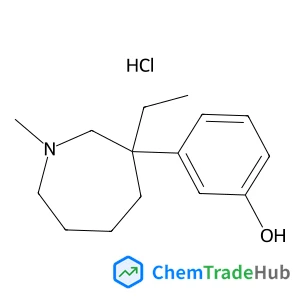
3-(3-Ethyl-1-methyl-3-azepanyl)phenol hydrochloride (1:1)
CAS Number:
59263-76-2
Molecular Formula:
C15H24ClNO

Methyl 2-cyano-3,12-dioxooleana-1,9(11)-dien-28-oate
CAS Number:
218600-53-4
Molecular Formula:
C32H43NO4
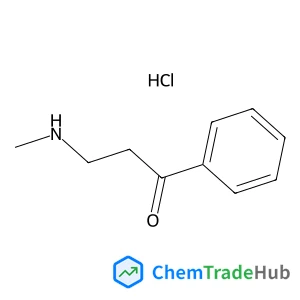
3-(Methylamino)-1-phenyl-1-propanone hydrochloride (1:1)
CAS Number:
2538-50-3
Molecular Formula:
C10H14ClNO
Recommended Suppliers






Disclaimer
This page provides academic journal information for reference and research purposes only. We are not affiliated with any journal publishers and do not handle publication submissions. For publication-related inquiries, please contact the respective journal publishers directly.
If you notice any inaccuracies in the information displayed, please contact us at support@chemtradehub.com. We will promptly review and address your concerns.