












Ammonia-modified Co(ii) sites in zeolites: IR spectroscopy and spin-resolved charge transfer analysis of NO adsorption complexes
Literature Information
Publication Date
2014-09-11
DOI
10.1039/C4CP03350G
Impact Factor
3.676
Authors
Kinga Góra-Marek, Adam Stępniewski, Mariusz Radoń, Ewa Broclawik
View Original
Abstract
IR spectroscopic studies and quantum chemical modeling (aided by the analysis of charge transfer processes between co-adsorbed ammonia and the Co(II)–NO adduct) evidence that donor ammonia molecules, ligated to extraframework Co2+ centers in zeolites, vitally affect the strength of the N–O bond. Calculations indicate that versatility of ammine nitrosyl complexes, differing in the number of NH3 ligands as well as in the geometry and electronic structure of the Co–N–O unit (showing variable activation of NO) may co-exist in zeolite frameworks. However, only combined analysis of experimental and calculation results points to the adducts with three or five NH3 coligands as decisive. The novel finding concerning the interpretation of discussed IR spectra is the assignment of the most down-shifted bands at 1600–1615 cm−1 to the N–O stretch in the singlet [Co(NH3)3(NO)]2+ adduct, in place of tentative ascription to pentaammine adducts. Theory indicates also that the Co(II) center (with manifold of close-lying electronic and spin states) acts as a tunable electron donor where the spin state may open or close specific channels transferring electron density from the donor ligands (treated as the part of environment) to the NO molecule.
Related Literature
A regioregular polyalkylthiophene bearing covalently-linked biotin, and its interaction with avidin in solution and in thin films
Fouzi Mouffouk, Simon J. Higgins, Stewart J. Brown, Naser Sedghi, Bill Eccleston, Stuart Reeman
2004-09-06
Communication
DOI: 10.1039/B408935A
Estimates of internal energies of vaporisation of some room temperature ionic liquids
Konrad Swiderski, Andrew McLean, Charles M. Gordon, D. Huw Vaughan
2004-09-07
Communication
DOI: 10.1039/B408334B
Electrodeposition of monodispersed Fe nanocrystals from an ionic liquid
C. L. Aravinda, W. Freyland
2004-10-19
Communication
DOI: 10.1039/B409861G
Advanced selective optical sensors based on periodically organized mesoporous hybrid silica thin films
Lionel Nicole, Cédric Boissière, David Grosso, Peter Hesemann, Joël Moreau, Clément Sanchez
2004-09-06
Communication
DOI: 10.1039/B408869G
Synthesis and electropolymerization of novel oligothiophene-functionalized perylene bisimides
Chang-Cheng You, Chantu R. Saha-Möller, Frank Würthner
2004-08-06
Communication
DOI: 10.1039/B407551J
Polystyryl-supported TBD as an efficient and reusable catalyst under solvent-free conditions
Francesco Fringuelli, Ferdinando Pizzo, Carla Vittoriani, Luigi Vaccaro
2004-10-19
Communication
DOI: 10.1039/B409808K
Stereoelective polymerization of d,l-lactide using N-heterocyclic carbene based compounds
Tryg R. Jensen, Laurie E. Breyfogle, Marc A. Hillmyer, William B. Tolman
2004-09-08
Communication
DOI: 10.1039/B405362A
Mechanism of hydrogen transfer to imines from a hydroxycyclopentadienyl ruthenium hydride. Support for a stepwise mechanism
Joseph S. M. Samec, Alida H. Éll, Jan-E. Bäckvall
2004-10-06
Communication
DOI: 10.1039/B410698A
Metal-chelating nanoparticles as selective fluorescent sensor for Cu2+
Rachel Méallet-Renault, Robert Pansu, Sonia Amigoni-Gerbier, Chantal Larpent
2004-09-07
Communication
DOI: 10.1039/B407766K
Efficient boron removal by using mesoporous matrices grafted with saccharides
Gertrudis Rodríguez-López, M. Dolores Marcos, Ramón Martínez-Máñez, Félix Sancenón, Juan Soto, Luis A. Villaescusa, Danile Beltrán, Pedro Amorós
2004-08-19
Communication
DOI: 10.1039/B406611A
You might also like
Compound Q&A
What is the market or research trend for N-(4-Methoxybenzyl)-2-pyridinamine (CAS: 52818-63-0)?
N-(4-Methoxybenzyl)-2-pyridinamine (CAS: 52818-63-0) is increasingly being used ...
52818-63-0N-(4-Methoxybenzyl)-...
Compound Q&A
What precautions should be taken when handling Ethyl 4-(2-chlorophenyl)-1,3-thiazole-2-carboxylate (CAS: 1050507-06-6)?
When handling Ethyl 4-(2-chlorophenyl)-1,3-thiazole-2-carboxylate, appropriate p...
1050507-06-6Ethyl 4-(2-chlorophe...
Compound Q&A
What regulatory guidelines apply to diethyldiselane (CAS: 628-39-7)?
Diethyldiselane (CAS: 628-39-7) is classified under the Globally Harmonized Syst...
628-39-7Diethyldiselane
Compound Q&A
What is the market or research trend for oxocopper (CAS: 12053-18-8)?
The market for oxocopper (CAS: 12053-18-8) is primarily driven by its use in cat...
12053-18-8oxocopper; oxo-(oxoc...
Compound Q&A
What is the market or research trend for 5-{[(2-Methyl-2-propanyl)oxy]carbonyl}-5-azaspiro[2.4]heptane-7-carboxylic acid?
The market for 5-{[(2-Methyl-2-propanyl)oxy]carbonyl}-5-azaspiro[2.4]heptane-7-c...
1268519-54-55-{[(2-Methyl-2-prop...
Compound Q&A
What is 2-(1-Pyrrolidinyl)-4-pyridinamine (CAS: 35981-63-6)?
2-(1-Pyrrolidinyl)-4-pyridinamine is a chemical compound with the CAS number 359...
35981-63-62-(1-Pyrrolidinyl)-4...
Compound Q&A
What are the physical and chemical properties of 2-(3-Pyridinyl)-1-azabicyclo[2.2.2]octane (CAS: 91556-75-1)?
2-(3-Pyridinyl)-1-azabicyclo[2.2.2]octane (CAS: 91556-75-1) is a crystalline sol...
91556-75-12-(3-Pyridinyl)-1-az...
Compound Q&A
How is (S)-Alpha-allyl-proline hydrochloride (CAS: 129704-91-2) typically synthesized?
(S)-Alpha-allyl-proline hydrochloride is usually synthesized via a Wittig reacti...
129704-91-2(S)-Alpha-allyl-prol...
Compound Q&A
What is 3-Methyl-1,2-oxazole-5-carboxylic acid (CAS: 4857-42-5)?
3-Methyl-1,2-oxazole-5-carboxylic acid (CAS: 4857-42-5) is an organic compound w...
4857-42-53-Methyl-1,2-oxazole...
Compound Q&A
How is Lys-SMCC-DM1 (CAS: 1281816-04-3) typically synthesized?
Lys-SMCC-DM1 is synthesized via a multi-step process involving the coupling of S...
1281816-04-3Lys-SMCC-DM1
Source Journal
Physical Chemistry Chemical Physics

CiteScore:
5.5
Self-citation Rate:
10.3%
Articles per Year:
3036
Physical Chemistry Chemical Physics (PCCP) is an international journal co-owned by 19 physical chemistry and physics societies from around the world. This journal publishes original, cutting-edge research in physical chemistry, chemical physics and biophysical chemistry. To be suitable for publication in PCCP, articles must include significant innovation and/or insight into physical chemistry; this is the most important criterion that reviewers and Editors will judge against when evaluating submissions. The journal has a broad scope and welcomes contributions spanning experiment, theory, computation and data science. Topical coverage includes spectroscopy, dynamics, kinetics, statistical mechanics, thermodynamics, electrochemistry, catalysis, surface science, quantum mechanics, quantum computing and machine learning. Interdisciplinary research areas such as polymers and soft matter, materials, nanoscience, energy, surfaces/interfaces, and biophysical chemistry are welcomed if they demonstrate significant innovation and/or insight into physical chemistry. Joined experimental/theoretical studies are particularly appreciated when complementary and based on up-to-date approaches.
Recommended Compounds
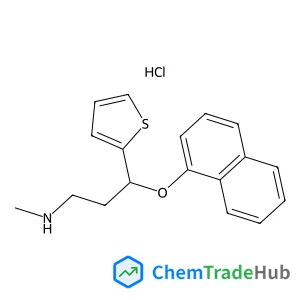
N-Methyl-3-(1-naphthyloxy)-3-(2-thienyl)-1-propanamine hydrochloride (1:1)
CAS Number:
1188266-11-6
Molecular Formula:
C18H20ClNOS
![N-{[(2-Methyl-2-propanyl)oxy]carbonyl}-L-methionylglycine structure](https://static.chemtradehub.com/structs/234/23446-03-9-e1e5.webp "N-{[(2-Methyl-2-propanyl)oxy]carbonyl}-L-methionylglycine structure")
N-{[(2-Methyl-2-propanyl)oxy]carbonyl}-L-methionylglycine
CAS Number:
23446-03-9
Molecular Formula:
C12H22N2O5S

Recommended Suppliers




Disclaimer
This page provides academic journal information for reference and research purposes only. We are not affiliated with any journal publishers and do not handle publication submissions. For publication-related inquiries, please contact the respective journal publishers directly.
If you notice any inaccuracies in the information displayed, please contact us at support@chemtradehub.com. We will promptly review and address your concerns.