












![5'-Fluoro-[2,3'-biindolinylidene]-2',3-dione structure](https://static.chemtradehub.com/structs/251/251903-00-1-9cb1.webp "5'-Fluoro-[2,3'-biindolinylidene]-2',3-dione structure")
Photochemistry of aldehyde clusters: cross-molecular versus unimolecular reaction dynamics
Literature Information
Publication Date
2014-09-16
DOI
10.1039/C4CP03130J
Impact Factor
3.676
Authors
Dorit Shemesh, Sandra L. Blair, Sergey A. Nizkorodov
View Original
Abstract
The unimolecular photochemistry of aldehydes has been extensively studied, both experimentally and computationally. However, less is known about the role of cross-molecular photochemical processes in the condensed-phase photolysis of aldehydes. The triplet-state photochemistry of pentanal in its pentameric (n = 5) cluster was investigated as a model for photochemical reactions of aliphatic aldehydes in atmospheric aerosols. This study employs “on the fly” dynamics simulations using a semi-empirical MRCI electronic code for the singlet and triplet states involved. Previous studies have shown that the triplet-state photochemistry of an isolated pentanal molecule is dominated by Norrish I and II reactions. The main findings for the cluster are: (1) 55% of the trajectories lead to a unimolecular or cross-molecular reaction within a timescale of 100 ps; (2) cross-molecular reactions occur in over 70% of the reactive trajectories; (3) the main cross-molecular processes involve an H-atom transfer from the CHO group of the excited pentanal to an O atom of a nearby pentanal; and (4) the unimolecular Norrish II reaction is suppressed by the cluster environment. The predictions are qualitatively supported by experimental results on the condensed-phase photolysis of an aliphatic aldehyde, undecanal. The computational approach should be useful for predicting the mechanisms of other condensed-phase organic photochemical reactions. These results demonstrate a major role of cross-molecular processes in the condensed-phase photolysis of carbonyls. The cross-molecular reactions discussed in this work are relevant to photolysis-driven processes in atmospheric organic aerosols. It is expected that the condensed-phase environment of an organic aerosol particle should support a multitude of similar cross-molecular photochemical processes.
Related Literature
Low-temperature synthetic method for size-controlled CdSe nanocrystals: utilization of boron selenide
Nora Iancu, Renu Sharma, Dong-Kyun Seo
2004-09-01
Communication
DOI: 10.1039/B408702J
Mono- and bis(tetrathiafulvaleno)hexadehydro[12]annulenes
Kenji Hara, Masashi Hasegawa, Yoshiyuki Kuwatani, Hideo Enozawa, Masahiko Iyoda
2004-08-13
Communication
DOI: 10.1039/B407200F
Biomimetic thermo-responsive star diblock gelators
Yuting Li, Ravin Narain, Yinghua Ma, Andrew L. Lewis, Steven P. Armes
2004-10-18
Communication
DOI: 10.1039/B410150B
Unexpected oxidative C–C cleavage in the metallation of 2-substituted imidazolium salts to give N-heterocyclic carbene complexes
Anthony R. Chianese, Brian M. Zeglis, Robert H. Crabtree
2004-08-25
Communication
DOI: 10.1039/B409672J
Metal-chelating nanoparticles as selective fluorescent sensor for Cu2+
Rachel Méallet-Renault, Robert Pansu, Sonia Amigoni-Gerbier, Chantal Larpent
2004-09-07
Communication
DOI: 10.1039/B407766K
A novel strategy for the preparation of arylhydroxylamines: chemoselective reduction of aromatic nitro compounds using bakers' yeast
Feng Li, Jingnan Cui, Rong Zhang
2004-09-07
Communication
DOI: 10.1039/B408566C
A mixed ladderane/n-alkyl glycerol diether membrane lipid in an anaerobic ammonium-oxidizing bacterium
Jaap S. Sinninghe Damsté, W. Irene C. Rijpstra, Marc Strous, Mike S. M. Jetten, Olivier R. P. David, Jan A. J. Geenevasen, Jan H. van Maarseveen
2004-09-30
Communication
DOI: 10.1039/B409806D
Racemic d,l-asparagine causes enantiomeric excess of other coexisting racemic d,l-amino acids during recrystallization: a hypothesis accounting for the origin of l-amino acids in the biosphere
Shosuke Kojo, Hiromi Uchino, Mayu Yoshimura, Kyoko Tanaka
2004-09-07
Communication
DOI: 10.1039/B409941A
Unsaturated 1,2-amino alcohols and ethers from aziridines and organolithiums
David M. Hodgson, Bogdan Štefane, Timothy J. Miles, Jason Witherington
2004-08-24
Communication
DOI: 10.1039/B409486G
Isolation and structural characterization of an optically active intermediate in the oxidative addition of methyl iodide on a rhodium(i) centre
Angelino Doppiu, Ulli Englert, Albrecht Salzer
2004-08-25
Communication
DOI: 10.1039/B409134E
You might also like
Compound Q&A
What is the market or research trend for N-(4-Methoxybenzyl)-2-pyridinamine (CAS: 52818-63-0)?
N-(4-Methoxybenzyl)-2-pyridinamine (CAS: 52818-63-0) is increasingly being used ...
52818-63-0N-(4-Methoxybenzyl)-...
Compound Q&A
What precautions should be taken when handling Ethyl 4-(2-chlorophenyl)-1,3-thiazole-2-carboxylate (CAS: 1050507-06-6)?
When handling Ethyl 4-(2-chlorophenyl)-1,3-thiazole-2-carboxylate, appropriate p...
1050507-06-6Ethyl 4-(2-chlorophe...
Compound Q&A
What regulatory guidelines apply to diethyldiselane (CAS: 628-39-7)?
Diethyldiselane (CAS: 628-39-7) is classified under the Globally Harmonized Syst...
628-39-7Diethyldiselane
Compound Q&A
What is the market or research trend for oxocopper (CAS: 12053-18-8)?
The market for oxocopper (CAS: 12053-18-8) is primarily driven by its use in cat...
12053-18-8oxocopper; oxo-(oxoc...
Compound Q&A
What is the market or research trend for 5-{[(2-Methyl-2-propanyl)oxy]carbonyl}-5-azaspiro[2.4]heptane-7-carboxylic acid?
The market for 5-{[(2-Methyl-2-propanyl)oxy]carbonyl}-5-azaspiro[2.4]heptane-7-c...
1268519-54-55-{[(2-Methyl-2-prop...
Compound Q&A
What is 2-(1-Pyrrolidinyl)-4-pyridinamine (CAS: 35981-63-6)?
2-(1-Pyrrolidinyl)-4-pyridinamine is a chemical compound with the CAS number 359...
35981-63-62-(1-Pyrrolidinyl)-4...
Compound Q&A
What are the physical and chemical properties of 2-(3-Pyridinyl)-1-azabicyclo[2.2.2]octane (CAS: 91556-75-1)?
2-(3-Pyridinyl)-1-azabicyclo[2.2.2]octane (CAS: 91556-75-1) is a crystalline sol...
91556-75-12-(3-Pyridinyl)-1-az...
Compound Q&A
How is (S)-Alpha-allyl-proline hydrochloride (CAS: 129704-91-2) typically synthesized?
(S)-Alpha-allyl-proline hydrochloride is usually synthesized via a Wittig reacti...
129704-91-2(S)-Alpha-allyl-prol...
Compound Q&A
What is 3-Methyl-1,2-oxazole-5-carboxylic acid (CAS: 4857-42-5)?
3-Methyl-1,2-oxazole-5-carboxylic acid (CAS: 4857-42-5) is an organic compound w...
4857-42-53-Methyl-1,2-oxazole...
Compound Q&A
How is Lys-SMCC-DM1 (CAS: 1281816-04-3) typically synthesized?
Lys-SMCC-DM1 is synthesized via a multi-step process involving the coupling of S...
1281816-04-3Lys-SMCC-DM1
Source Journal
Physical Chemistry Chemical Physics

CiteScore:
5.5
Self-citation Rate:
10.3%
Articles per Year:
3036
Physical Chemistry Chemical Physics (PCCP) is an international journal co-owned by 19 physical chemistry and physics societies from around the world. This journal publishes original, cutting-edge research in physical chemistry, chemical physics and biophysical chemistry. To be suitable for publication in PCCP, articles must include significant innovation and/or insight into physical chemistry; this is the most important criterion that reviewers and Editors will judge against when evaluating submissions. The journal has a broad scope and welcomes contributions spanning experiment, theory, computation and data science. Topical coverage includes spectroscopy, dynamics, kinetics, statistical mechanics, thermodynamics, electrochemistry, catalysis, surface science, quantum mechanics, quantum computing and machine learning. Interdisciplinary research areas such as polymers and soft matter, materials, nanoscience, energy, surfaces/interfaces, and biophysical chemistry are welcomed if they demonstrate significant innovation and/or insight into physical chemistry. Joined experimental/theoretical studies are particularly appreciated when complementary and based on up-to-date approaches.
Recommended Compounds
![1,10-bis(3,5-dimethylphenyl)-12-hydroxy-4,5,6,7-tetrahydroiindeno[7,1-de:1',7'-fg][1,3,2]dioxaphosphocine 12-oxide structure](https://static.chemtradehub.com/structs/141/1412439-82-7-b9a9.webp "1,10-bis(3,5-dimethylphenyl)-12-hydroxy-4,5,6,7-tetrahydroiindeno[7,1-de:1',7'-fg][1,3,2]dioxaphosphocine 12-oxide structure")
1,10-bis(3,5-dimethylphenyl)-12-hydroxy-4,5,6,7-tetrahydroiindeno[7,1-de:1',7'-fg][1,3,2]dioxaphosphocine 12-oxide
CAS Number:
1412439-82-7
Molecular Formula:
C33H31O4P
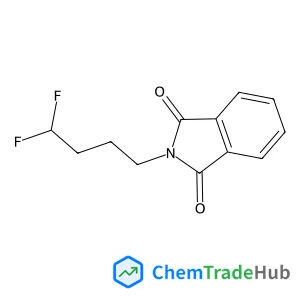
2-(4,4-Difluorobutyl)-1H-isoindole-1,3(2H)-dione
CAS Number:
1265341-14-7
Molecular Formula:
C12H11F2NO2
Recommended Suppliers





Disclaimer
This page provides academic journal information for reference and research purposes only. We are not affiliated with any journal publishers and do not handle publication submissions. For publication-related inquiries, please contact the respective journal publishers directly.
If you notice any inaccuracies in the information displayed, please contact us at support@chemtradehub.com. We will promptly review and address your concerns.