












A novel synthesis of tetrahydrofuranvia alkoxy radical cyclisation
Literature Information
Publication Date
2003-01-14
DOI
10.1039/B211568A
Impact Factor
6.222
Authors
Masahiro Yokota, Masahiro Toyota, Masataka Ihara
View Original
Abstract
Tetrahydrofurans were synthesised via 5-exo-trig cyclisation of alkoxy radical generated by unprecedented 1,5-hydrogen shift from hydroxyl group to vinyl radical.
Recommended Journals
Related Literature
Quantitative analysis of multiple high-resolution mass spectrometry images using chemometric methods: quantitation of chlordecone in mouse liver
Saeedeh Mohammadi, Hadi Parastar
2018-04-05
Paper
DOI: 10.1039/C7AN02059G
PEGylated nanographene-mediated metallic nanoparticle clusters for surface enhanced Raman scattering-based biosensing
Ahmed Ali, Eun Young Hwang, Jaebum Choo, Dong Woo Lim
2018-04-10
Paper
DOI: 10.1039/C8AN00329G
Mapping phosphate modifications of substituted lipid A via a targeted MS3 CID/UVPD strategy
Christopher M. Crittenden, Carmen M. Herrera, Peggy E. Williams, Dante P. Ricci, Lee R. Swem, M. Stephen Trent, Jennifer S. Brodbelt
2018-06-01
Paper
DOI: 10.1039/C8AN00561C
Novel chemiluminescent immunochromatographic assay using a dual-readout signal probe for multiplexed detection of pesticide residues
Hui Ouyang, Wenwen Wang, Qi Shu, Zhifeng Fu
2018-04-30
Paper
DOI: 10.1039/C8AN00661J
Correction: Noncompetitive homogeneous immunodetection of small molecules based on beta-glucuronidase complementation
Jiulong Su, Tetsuya Kitaguchi, Yuki Ohmuro-Matsuyama, Hiroshi Ueda
2018-06-28
Correction
DOI: 10.1039/C8AN90057D
The utility of polarization modulation infrared reflection absorption spectroscopy (PM-IRRAS) in surface and in situ studies: new data processing and presentation approach
Vlad Zamlynny, Tom K. Woo, Elena A. Baranova
2018-04-06
Paper
DOI: 10.1039/C8AN00572A
ATR-IR coupled to partial least squares regression (PLSR) for monitoring an encapsulated active molecule in complex semi-solid formulations
Lynda Miloudi, Franck Bonnier, Kevin Barreau, Dominique Bertrand, Xavier Perse, Florent Yvergnaux, Hugh J. Byrne, Igor Chourpa, Emilie Munnier
2018-04-26
Paper
DOI: 10.1039/C8AN00547H
Wettability alteration in a functional capillary tube for visual quantitative point of care testing
Yansheng Li, Xiangyu Jiao, Xin Du, Fang Wang, Qianhui Wei, Yongqiang Wen, Xueji Zhang
2018-05-18
Communication
DOI: 10.1039/C8AN00735G
Enantioselective Raman spectroscopy (esR) for distinguishing between the enantiomers of 2-butanol
Claudia C. Rullich
2018-05-16
Paper
DOI: 10.1039/C8AN00705E
A sensitive fluorescence assay of organophosphorus pesticides using acetylcholinesterase and copper-catalyzed click chemistry
Nian Huang, Yingfeng Qin, Ming Li, Tianxing Chen, Meijie Lu, Jingjin Zhao
2019-04-08
Paper
DOI: 10.1039/C9AN00260J
You might also like
Compound Q&A
What is the market or research trend for N-(4-Methoxybenzyl)-2-pyridinamine (CAS: 52818-63-0)?
N-(4-Methoxybenzyl)-2-pyridinamine (CAS: 52818-63-0) is increasingly being used ...
52818-63-0N-(4-Methoxybenzyl)-...
Compound Q&A
What precautions should be taken when handling Ethyl 4-(2-chlorophenyl)-1,3-thiazole-2-carboxylate (CAS: 1050507-06-6)?
When handling Ethyl 4-(2-chlorophenyl)-1,3-thiazole-2-carboxylate, appropriate p...
1050507-06-6Ethyl 4-(2-chlorophe...
Compound Q&A
What regulatory guidelines apply to diethyldiselane (CAS: 628-39-7)?
Diethyldiselane (CAS: 628-39-7) is classified under the Globally Harmonized Syst...
628-39-7Diethyldiselane
Compound Q&A
What is the market or research trend for oxocopper (CAS: 12053-18-8)?
The market for oxocopper (CAS: 12053-18-8) is primarily driven by its use in cat...
12053-18-8oxocopper; oxo-(oxoc...
Compound Q&A
What is the market or research trend for 5-{[(2-Methyl-2-propanyl)oxy]carbonyl}-5-azaspiro[2.4]heptane-7-carboxylic acid?
The market for 5-{[(2-Methyl-2-propanyl)oxy]carbonyl}-5-azaspiro[2.4]heptane-7-c...
1268519-54-55-{[(2-Methyl-2-prop...
Compound Q&A
What is 2-(1-Pyrrolidinyl)-4-pyridinamine (CAS: 35981-63-6)?
2-(1-Pyrrolidinyl)-4-pyridinamine is a chemical compound with the CAS number 359...
35981-63-62-(1-Pyrrolidinyl)-4...
Compound Q&A
What are the physical and chemical properties of 2-(3-Pyridinyl)-1-azabicyclo[2.2.2]octane (CAS: 91556-75-1)?
2-(3-Pyridinyl)-1-azabicyclo[2.2.2]octane (CAS: 91556-75-1) is a crystalline sol...
91556-75-12-(3-Pyridinyl)-1-az...
Compound Q&A
How is (S)-Alpha-allyl-proline hydrochloride (CAS: 129704-91-2) typically synthesized?
(S)-Alpha-allyl-proline hydrochloride is usually synthesized via a Wittig reacti...
129704-91-2(S)-Alpha-allyl-prol...
Compound Q&A
What is 3-Methyl-1,2-oxazole-5-carboxylic acid (CAS: 4857-42-5)?
3-Methyl-1,2-oxazole-5-carboxylic acid (CAS: 4857-42-5) is an organic compound w...
4857-42-53-Methyl-1,2-oxazole...
Compound Q&A
How is Lys-SMCC-DM1 (CAS: 1281816-04-3) typically synthesized?
Lys-SMCC-DM1 is synthesized via a multi-step process involving the coupling of S...
1281816-04-3Lys-SMCC-DM1
Source Journal
Chemical Communications

CiteScore:
8.6
Self-citation Rate:
4.7%
Articles per Year:
2458
ChemComm publishes urgent research which is of outstanding significance and interest to experts in the field, while also appealing to the journal’s broad chemistry readership. Our communication format is ideally suited to short, urgent studies that are of such importance that they require accelerated publication. Our scope covers all topics in chemistry, and research at the interface of chemistry and other disciplines (such as materials science, nanoscience, physics, engineering and biology) where there is a significant novelty in the chemistry aspects. Major topic areas covered include: Analytical Chemistry Catalysis Chemical Biology and medicinal chemistry Computational Chemistry and Machine Learning Energy and sustainable chemistry Environmental Chemistry Green Chemistry Inorganic Chemistry Materials Chemistry Nanoscience Organic Chemistry Physical Chemistry Polymer Chemistry Supramolecular Chemistry
Recommended Compounds
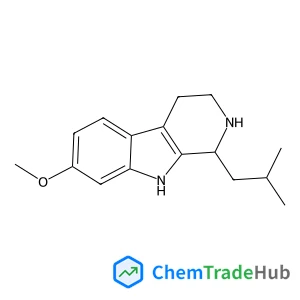
1-Isobutyl-7-methoxy-2,3,4,9-tetrahydro-1H-beta-carboline
CAS Number:
175975-76-5
Molecular Formula:
C16H22N2O
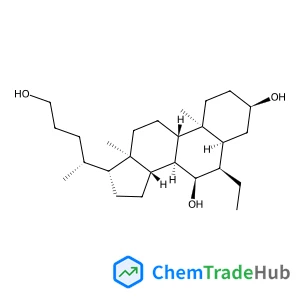
(3alpha,5beta,6alpha,7alpha)-6-Ethylcholane-3,7,24-triol
CAS Number:
1537866-49-1
Molecular Formula:
C26H46O3
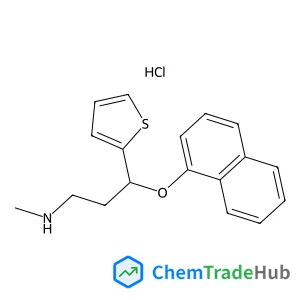
N-Methyl-3-(1-naphthyloxy)-3-(2-thienyl)-1-propanamine hydrochloride (1:1)
CAS Number:
1188266-11-6
Molecular Formula:
C18H20ClNOS
Recommended Suppliers






Disclaimer
This page provides academic journal information for reference and research purposes only. We are not affiliated with any journal publishers and do not handle publication submissions. For publication-related inquiries, please contact the respective journal publishers directly.
If you notice any inaccuracies in the information displayed, please contact us at support@chemtradehub.com. We will promptly review and address your concerns.