












Novel chemiluminescent immunochromatographic assay using a dual-readout signal probe for multiplexed detection of pesticide residues
Literature Information
Publication Date
2018-04-30
DOI
10.1039/C8AN00661J
Impact Factor
4.616
Authors
Hui Ouyang, Wenwen Wang, Qi Shu, Zhifeng Fu
View Original
Abstract
A novel immunochromatographic assay (ICA) using a dual-readout signal probe was developed for multiplexed detection of pesticide residues by adopting methyl parathion and fenpropathrin as model analytes. Luminol-reduced Au nanoparticles (LRAuNPs) were synthesized and utilized in the proposed ICA platform as a colorimetric/chemiluminescent (CL) dual-readout probe. The methyl parathion antibody and fenpropathrin antibody were tagged with the prepared LRAuNPs to conduct spatially-resolved multiplexed detection. After the occurrence of two immunoreactions on the test strip, the probes were captured by the immobilized antigens on the two test zones. The red color resulting from the accumulation of captured LRAuNPs was adopted as the visual and semi-quantitative readout. For the sensitive quantitative detection of the analytes, the CL signals caused by the luminophore in the LRAuNPs were collected after triggering the luminol-H2O2 CL reaction. Under the optimal conditions, the detection limits for methyl parathion and fenpropathrin were 0.17 ng mL−1 and 0.10 ng mL−1 (S/N = 3), respectively. The whole procedure for ICA was completed within 15 min. The present ICA protocol was successfully applied for detection of pesticide residues in spiked traditional Chinese medicine samples. This dual-readout ICA platform showed merits such as low cost, time efficiency, easy operation and high sensitivity. Its application potential has been demonstrated in the rapid screening and field detection of multiple pesticide residues.
Related Literature
Relating the structure and dynamics of ionic liquids under shear by means of reverse non-equilibrium molecular dynamics simulations
Kalil Bernardino, Mauro C. C. Ribeiro
2021-06-04
Paper
DOI: 10.1039/D1CP01205C
First principles characterisation of bio–nano interface
Ian Rouse, David Power, Erik G. Brandt, Matthew Schneemilch, Konstantinos Kotsis, Nick Quirke, Alexander P. Lyubartsev, Vladimir Lobaskin
2021-06-10
Paper
DOI: 10.1039/D1CP01116B
The structure of isolated thalidomide as reference for its chirality-dependent biological activity: a laser-ablation rotational study
Susana Blanco, Alberto Macario, Juan Carlos López
2021-06-07
Paper
DOI: 10.1039/D1CP01691A
Controlled 2H/1T phase transition in MoS2 monolayers by a strong interface with M2C MXenes: a computational study
Zhongxu Wang, Yu Liu, FengYu Li, Jingxiang Zhao
2021-08-25
Paper
DOI: 10.1039/D1CP02648H
Glass transition and dynamics of semiflexible polymer brushes
Jian-Hua Huang, Dan-Dan Sun, Rong-Xing Lu
2021-05-28
Paper
DOI: 10.1039/D1CP00089F
Room-temperature diffusion of metal clusters on graphene
Mohammad Zarshenas, Victor Gervilla, Davide G. Sangiovanni, Kostas Sarakinos
2021-05-24
Paper
DOI: 10.1039/D1CP00522G
Time-resolved observations of vibrationally excited NO X 2Π (v′) formed from collisional quenching of NO A 2Σ+ (v = 0) by NO X 2Π: evidence for the participation of the NO a 4Π state
James D. Fletcher, Lucia Lanfri, Grant A. D. Ritchie, Gus Hancock, Meez Islam, Graham Richmond
2021-09-08
Paper
DOI: 10.1039/D1CP03360C
The manner and extent to which the hydration shell impacts interactions between hydrated species
Jinyang Jiang, Le Guo, Luping Tang, Yu Zhang
2021-08-17
Paper
DOI: 10.1039/D1CP03368A
Bonding of C1 fragments on metal nanoclusters: a search for methane conversion catalysts with swarm intelligence
Mikiya Hori, Yuta Tsuji, Kazunari Yoshizawa
2021-06-01
Paper
DOI: 10.1039/D1CP00345C
You might also like
Compound Q&A
What is the market or research trend for N-(4-Methoxybenzyl)-2-pyridinamine (CAS: 52818-63-0)?
N-(4-Methoxybenzyl)-2-pyridinamine (CAS: 52818-63-0) is increasingly being used ...
52818-63-0N-(4-Methoxybenzyl)-...
Compound Q&A
What precautions should be taken when handling Ethyl 4-(2-chlorophenyl)-1,3-thiazole-2-carboxylate (CAS: 1050507-06-6)?
When handling Ethyl 4-(2-chlorophenyl)-1,3-thiazole-2-carboxylate, appropriate p...
1050507-06-6Ethyl 4-(2-chlorophe...
Compound Q&A
What regulatory guidelines apply to diethyldiselane (CAS: 628-39-7)?
Diethyldiselane (CAS: 628-39-7) is classified under the Globally Harmonized Syst...
628-39-7Diethyldiselane
Compound Q&A
What is the market or research trend for oxocopper (CAS: 12053-18-8)?
The market for oxocopper (CAS: 12053-18-8) is primarily driven by its use in cat...
12053-18-8oxocopper; oxo-(oxoc...
Compound Q&A
What is the market or research trend for 5-{[(2-Methyl-2-propanyl)oxy]carbonyl}-5-azaspiro[2.4]heptane-7-carboxylic acid?
The market for 5-{[(2-Methyl-2-propanyl)oxy]carbonyl}-5-azaspiro[2.4]heptane-7-c...
1268519-54-55-{[(2-Methyl-2-prop...
Compound Q&A
What is 2-(1-Pyrrolidinyl)-4-pyridinamine (CAS: 35981-63-6)?
2-(1-Pyrrolidinyl)-4-pyridinamine is a chemical compound with the CAS number 359...
35981-63-62-(1-Pyrrolidinyl)-4...
Compound Q&A
What are the physical and chemical properties of 2-(3-Pyridinyl)-1-azabicyclo[2.2.2]octane (CAS: 91556-75-1)?
2-(3-Pyridinyl)-1-azabicyclo[2.2.2]octane (CAS: 91556-75-1) is a crystalline sol...
91556-75-12-(3-Pyridinyl)-1-az...
Compound Q&A
How is (S)-Alpha-allyl-proline hydrochloride (CAS: 129704-91-2) typically synthesized?
(S)-Alpha-allyl-proline hydrochloride is usually synthesized via a Wittig reacti...
129704-91-2(S)-Alpha-allyl-prol...
Compound Q&A
What is 3-Methyl-1,2-oxazole-5-carboxylic acid (CAS: 4857-42-5)?
3-Methyl-1,2-oxazole-5-carboxylic acid (CAS: 4857-42-5) is an organic compound w...
4857-42-53-Methyl-1,2-oxazole...
Compound Q&A
How is Lys-SMCC-DM1 (CAS: 1281816-04-3) typically synthesized?
Lys-SMCC-DM1 is synthesized via a multi-step process involving the coupling of S...
1281816-04-3Lys-SMCC-DM1
Source Journal
Analyst

CiteScore:
7.8
Self-citation Rate:
5.6%
Articles per Year:
653
Analyst publishes analytical and bioanalytical research that reports premier fundamental discoveries and inventions, and the applications of those discoveries, unconfined by traditional discipline barriers.
Recommended Compounds
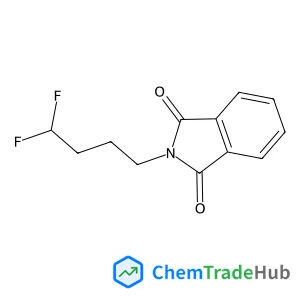
2-(4,4-Difluorobutyl)-1H-isoindole-1,3(2H)-dione
CAS Number:
1265341-14-7
Molecular Formula:
C12H11F2NO2
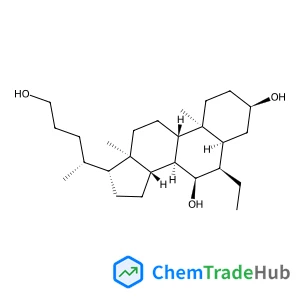
(3alpha,5beta,6alpha,7alpha)-6-Ethylcholane-3,7,24-triol
CAS Number:
1537866-49-1
Molecular Formula:
C26H46O3
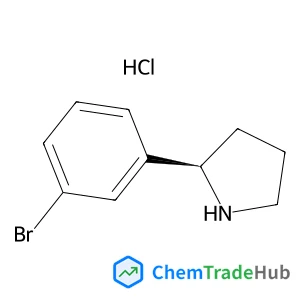
(2R)-2-(3-Bromophenyl)pyrrolidine hydrochloride (1:1)
CAS Number:
1391550-13-2
Molecular Formula:
C10H13BrClN

Recommended Suppliers




Disclaimer
This page provides academic journal information for reference and research purposes only. We are not affiliated with any journal publishers and do not handle publication submissions. For publication-related inquiries, please contact the respective journal publishers directly.
If you notice any inaccuracies in the information displayed, please contact us at support@chemtradehub.com. We will promptly review and address your concerns.