












Design and synthesis of potent N1-substituted indolemelatonin receptor agonists
Literature Information
Publication Date
2003-01-14
DOI
10.1039/B210731G
Impact Factor
6.222
Authors
Andrew Tsotinis, Andreas Eleutheriades, Katherine Hough, David Sugden
View Original
Abstract
The design and expeditious synthesis of two new indole analogs with up to 5-fold potency of that of melatonin is described.
Related Literature
Room-temperature diffusion of metal clusters on graphene
Mohammad Zarshenas, Victor Gervilla, Davide G. Sangiovanni, Kostas Sarakinos
2021-05-24
Paper
DOI: 10.1039/D1CP00522G
Bayesian phase difference estimation: a general quantum algorithm for the direct calculation of energy gaps
Chikako Sakai, Kazuo Toyota, Kazunobu Sato, Daisuke Shiomi
2021-09-02
Paper
DOI: 10.1039/D1CP03156B
Self-assembled, optically-active {naphthalene diimide}U{cucurbit[8]uril} ensembles in an aqueous environment
Heather F. Higginbotham, Subashani Maniam, Tina Hsia, Lyle Isaacs, Steven J. Langford, Toby D. M. Bell
2021-06-02
Communication
DOI: 10.1039/D1CP00659B
Influence of water content on the [2σ+2σ+2π] cycloaddition of dimethyl azodicarboxylate with quadricyclane in mixed methanol–water solvents from QM/MM Monte Carlo simulations
Lian Yang, Xudong Liu, Yan Zhang, Yongsheng Yang, Ying Xue
2021-08-23
Paper
DOI: 10.1039/D1CP01973B
Second harmonic generation theory for a helical macromolecule with high sensitivity to structural disorder
Darius Abramavicius
2021-05-25
Paper
DOI: 10.1039/D1CP00694K
Surface electronic states mediate concerted electron and proton transfer at metal nanoscale interfaces for catalytic hydride reduction of –NO2 to –NH2
Bing-Qian Shan, Jia-Feng Zhou, Meng Ding, Xiao-Dan Hu
2021-05-25
Communication
DOI: 10.1039/D1CP01792F
Prediction of the standard potentials for one-electron oxidation of N,N,N′,N′ tetrasubstituted p-phenylenediamines by calculation
Cecilie L. Andersen, Evanildo G. Lacerda, Jr, Jørn B. Christensen, Stephan P. A. Sauer, Ole Hammerich
2021-09-02
Paper
DOI: 10.1039/D1CP02315B
Exceptionally high saturation magnetisation in Eu-doped magnetite stabilised by spin–orbit interaction
M. Hussein N. Assadi, José Julio Gutiérrez Moreno, Dorian A. H. Hanaor, Hiroshi Katayama-Yoshida
2021-09-02
Paper
DOI: 10.1039/D1CP02164H
You might also like
Compound Q&A
What is the market or research trend for N-(4-Methoxybenzyl)-2-pyridinamine (CAS: 52818-63-0)?
N-(4-Methoxybenzyl)-2-pyridinamine (CAS: 52818-63-0) is increasingly being used ...
52818-63-0N-(4-Methoxybenzyl)-...
Compound Q&A
What precautions should be taken when handling Ethyl 4-(2-chlorophenyl)-1,3-thiazole-2-carboxylate (CAS: 1050507-06-6)?
When handling Ethyl 4-(2-chlorophenyl)-1,3-thiazole-2-carboxylate, appropriate p...
1050507-06-6Ethyl 4-(2-chlorophe...
Compound Q&A
What regulatory guidelines apply to diethyldiselane (CAS: 628-39-7)?
Diethyldiselane (CAS: 628-39-7) is classified under the Globally Harmonized Syst...
628-39-7Diethyldiselane
Compound Q&A
What is the market or research trend for oxocopper (CAS: 12053-18-8)?
The market for oxocopper (CAS: 12053-18-8) is primarily driven by its use in cat...
12053-18-8oxocopper; oxo-(oxoc...
Compound Q&A
What is the market or research trend for 5-{[(2-Methyl-2-propanyl)oxy]carbonyl}-5-azaspiro[2.4]heptane-7-carboxylic acid?
The market for 5-{[(2-Methyl-2-propanyl)oxy]carbonyl}-5-azaspiro[2.4]heptane-7-c...
1268519-54-55-{[(2-Methyl-2-prop...
Compound Q&A
What is 2-(1-Pyrrolidinyl)-4-pyridinamine (CAS: 35981-63-6)?
2-(1-Pyrrolidinyl)-4-pyridinamine is a chemical compound with the CAS number 359...
35981-63-62-(1-Pyrrolidinyl)-4...
Compound Q&A
What are the physical and chemical properties of 2-(3-Pyridinyl)-1-azabicyclo[2.2.2]octane (CAS: 91556-75-1)?
2-(3-Pyridinyl)-1-azabicyclo[2.2.2]octane (CAS: 91556-75-1) is a crystalline sol...
91556-75-12-(3-Pyridinyl)-1-az...
Compound Q&A
How is (S)-Alpha-allyl-proline hydrochloride (CAS: 129704-91-2) typically synthesized?
(S)-Alpha-allyl-proline hydrochloride is usually synthesized via a Wittig reacti...
129704-91-2(S)-Alpha-allyl-prol...
Compound Q&A
What is 3-Methyl-1,2-oxazole-5-carboxylic acid (CAS: 4857-42-5)?
3-Methyl-1,2-oxazole-5-carboxylic acid (CAS: 4857-42-5) is an organic compound w...
4857-42-53-Methyl-1,2-oxazole...
Compound Q&A
How is Lys-SMCC-DM1 (CAS: 1281816-04-3) typically synthesized?
Lys-SMCC-DM1 is synthesized via a multi-step process involving the coupling of S...
1281816-04-3Lys-SMCC-DM1
Source Journal
Chemical Communications

CiteScore:
8.6
Self-citation Rate:
4.7%
Articles per Year:
2458
ChemComm publishes urgent research which is of outstanding significance and interest to experts in the field, while also appealing to the journal’s broad chemistry readership. Our communication format is ideally suited to short, urgent studies that are of such importance that they require accelerated publication. Our scope covers all topics in chemistry, and research at the interface of chemistry and other disciplines (such as materials science, nanoscience, physics, engineering and biology) where there is a significant novelty in the chemistry aspects. Major topic areas covered include: Analytical Chemistry Catalysis Chemical Biology and medicinal chemistry Computational Chemistry and Machine Learning Energy and sustainable chemistry Environmental Chemistry Green Chemistry Inorganic Chemistry Materials Chemistry Nanoscience Organic Chemistry Physical Chemistry Polymer Chemistry Supramolecular Chemistry
Recommended Compounds
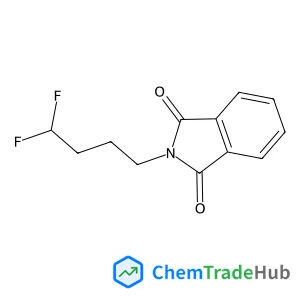
2-(4,4-Difluorobutyl)-1H-isoindole-1,3(2H)-dione
CAS Number:
1265341-14-7
Molecular Formula:
C12H11F2NO2
![1-(1-Benzyl-1,2,3,6-tetrahydropyridin-4-yl)-1H-benzo[d]imidazol-2(3H)-one structure](https://static.chemtradehub.com/structs/603/60373-71-9-7dfb.webp "1-(1-Benzyl-1,2,3,6-tetrahydropyridin-4-yl)-1H-benzo[d]imidazol-2(3H)-one structure")
1-(1-Benzyl-1,2,3,6-tetrahydropyridin-4-yl)-1H-benzo[d]imidazol-2(3H)-one
CAS Number:
60373-71-9
Molecular Formula:
C19H19N3O
Recommended Suppliers



Disclaimer
This page provides academic journal information for reference and research purposes only. We are not affiliated with any journal publishers and do not handle publication submissions. For publication-related inquiries, please contact the respective journal publishers directly.
If you notice any inaccuracies in the information displayed, please contact us at support@chemtradehub.com. We will promptly review and address your concerns.