













Surface electronic states mediate concerted electron and proton transfer at metal nanoscale interfaces for catalytic hydride reduction of –NO2 to –NH2
Literature Information
Publication Date
2021-05-25
DOI
10.1039/D1CP01792F
Impact Factor
3.676
Authors
Bing-Qian Shan, Jia-Feng Zhou, Meng Ding, Xiao-Dan Hu
View Original
Abstract
Concerted electron and proton transfer is a key step for the reversible conversion of molecular hydrogen in both heterogeneous nanocatalysis and metalloenzyme catalysis. However, its activation mechanism involving electron and proton transfer kinetics remains elusive. With the most widely used catalytic hydride reduction of 4-nitrophenol (4-NP) to 4-aminophenol (4-AP) as a model reaction, we evaluate the catalytic activity of noble metal nanoparticles (NPs) trapped in porous silica in aqueous NaBH4 solution. By virtue of a novel combination of catalyst design, reaction kinetics, isotope labeling, and multiple spectroscopic techniques, the real catalytic site for the conversion of –NO2 to –NH2 is identified to be the water–hydroxyl transition metal complex, which could further react with NaBH4 to form a new triangular configuration metal complex of H3B–water–hydroxyl with dynamic features. It yields an ensemble of surface electronic states (SESs) though space overlapping of p orbitals of one B and several O atoms (including the O atoms of 4-NP), which could act as an alternative channel for concerted electron and proton transfer. This work highlights the critical role of the conceptual SESs model in heterogeneous catalysis to tune the chemical reactivity and also sheds light on the intricate working of the [FeFe]-hydrogenases.
Related Literature
Inelastic insights for molecular tunneling pathways: Bypassing the terminal groups
Alessandro Troisi, Mark A. Ratner
2007-03-21
Paper
DOI: 10.1039/B702377D
Theoretical and experimental determination of the electronic structure of V2O5, reduced V2O5−x and sodium intercalated NaV2O5
Stefan Laubach, Peter C. Schmidt, Andreas Thißen, Francisco Javier Fernandez-Madrigal, Qi-Hui Wu, Wolfram Jaegermann, Matthias Klemm, Siegfried Horn
2007-03-21
Paper
DOI: 10.1039/B612489E
Determination of the temperature and pressure dependence of the reaction OH + C2H4 from 200–400 K using experimental and master equation analyses
Patricia A. Cleary, Maria Teresa Baeza Romero, Mark A. Blitz, Dwayne E. Heard, Michael J. Pilling, Paul W. Seakins, Liming Wang
2006-11-15
Paper
DOI: 10.1039/B612127F
Crossed beam studies of radical–radical reactions: O(3P) + C3H5 (allyl)
F. Leonori, N. Balucani, G. Capozza, E. Segoloni, D. Stranges, P. Casavecchia
2007-02-01
Communication
DOI: 10.1039/B618971G
Prospects of transition interface sampling simulations for the theoretical study of zeolite synthesis
Titus S. Van Erp, Tom P. Caremans, Christine E. A. Kirschhock, Johan A. Martens
2007-01-25
Invited Article
DOI: 10.1039/B614980D
Can “microwave effects” be explained by enhanced diffusion?
Christian Antonio, Rowan T. Deam
2007-04-26
Paper
DOI: 10.1039/B617358F
Consequences of chain networks on thermodynamic, dielectric and structural properties for liquid water
Steven W. Rick
2006-11-28
Paper
DOI: 10.1039/B614742A
Long-lived coherent oscillations of the femtosecond transients in cyanobacterial photosystem I
Oleg M. Sarkisov, Fedor E. Gostev, Vladimir I. Novoderezhkin, Oxana A. Gopta, Mahir D. Mamedov, Alexey Yu. Semenov
2006-11-13
Paper
DOI: 10.1039/B605660A
On the curvature dependence of the interfacial tension in a symmetric three-component interface
2006-11-28
Paper
DOI: 10.1039/B613074G
You might also like
Compound Q&A
What is the market or research trend for N-(4-Methoxybenzyl)-2-pyridinamine (CAS: 52818-63-0)?
N-(4-Methoxybenzyl)-2-pyridinamine (CAS: 52818-63-0) is increasingly being used ...
52818-63-0N-(4-Methoxybenzyl)-...
Compound Q&A
What precautions should be taken when handling Ethyl 4-(2-chlorophenyl)-1,3-thiazole-2-carboxylate (CAS: 1050507-06-6)?
When handling Ethyl 4-(2-chlorophenyl)-1,3-thiazole-2-carboxylate, appropriate p...
1050507-06-6Ethyl 4-(2-chlorophe...
Compound Q&A
What regulatory guidelines apply to diethyldiselane (CAS: 628-39-7)?
Diethyldiselane (CAS: 628-39-7) is classified under the Globally Harmonized Syst...
628-39-7Diethyldiselane
Compound Q&A
What is the market or research trend for oxocopper (CAS: 12053-18-8)?
The market for oxocopper (CAS: 12053-18-8) is primarily driven by its use in cat...
12053-18-8oxocopper; oxo-(oxoc...
Compound Q&A
What is the market or research trend for 5-{[(2-Methyl-2-propanyl)oxy]carbonyl}-5-azaspiro[2.4]heptane-7-carboxylic acid?
The market for 5-{[(2-Methyl-2-propanyl)oxy]carbonyl}-5-azaspiro[2.4]heptane-7-c...
1268519-54-55-{[(2-Methyl-2-prop...
Compound Q&A
What is 2-(1-Pyrrolidinyl)-4-pyridinamine (CAS: 35981-63-6)?
2-(1-Pyrrolidinyl)-4-pyridinamine is a chemical compound with the CAS number 359...
35981-63-62-(1-Pyrrolidinyl)-4...
Compound Q&A
What are the physical and chemical properties of 2-(3-Pyridinyl)-1-azabicyclo[2.2.2]octane (CAS: 91556-75-1)?
2-(3-Pyridinyl)-1-azabicyclo[2.2.2]octane (CAS: 91556-75-1) is a crystalline sol...
91556-75-12-(3-Pyridinyl)-1-az...
Compound Q&A
How is (S)-Alpha-allyl-proline hydrochloride (CAS: 129704-91-2) typically synthesized?
(S)-Alpha-allyl-proline hydrochloride is usually synthesized via a Wittig reacti...
129704-91-2(S)-Alpha-allyl-prol...
Compound Q&A
What is 3-Methyl-1,2-oxazole-5-carboxylic acid (CAS: 4857-42-5)?
3-Methyl-1,2-oxazole-5-carboxylic acid (CAS: 4857-42-5) is an organic compound w...
4857-42-53-Methyl-1,2-oxazole...
Compound Q&A
How is Lys-SMCC-DM1 (CAS: 1281816-04-3) typically synthesized?
Lys-SMCC-DM1 is synthesized via a multi-step process involving the coupling of S...
1281816-04-3Lys-SMCC-DM1
Source Journal
Physical Chemistry Chemical Physics

CiteScore:
5.5
Self-citation Rate:
10.3%
Articles per Year:
3036
Physical Chemistry Chemical Physics (PCCP) is an international journal co-owned by 19 physical chemistry and physics societies from around the world. This journal publishes original, cutting-edge research in physical chemistry, chemical physics and biophysical chemistry. To be suitable for publication in PCCP, articles must include significant innovation and/or insight into physical chemistry; this is the most important criterion that reviewers and Editors will judge against when evaluating submissions. The journal has a broad scope and welcomes contributions spanning experiment, theory, computation and data science. Topical coverage includes spectroscopy, dynamics, kinetics, statistical mechanics, thermodynamics, electrochemistry, catalysis, surface science, quantum mechanics, quantum computing and machine learning. Interdisciplinary research areas such as polymers and soft matter, materials, nanoscience, energy, surfaces/interfaces, and biophysical chemistry are welcomed if they demonstrate significant innovation and/or insight into physical chemistry. Joined experimental/theoretical studies are particularly appreciated when complementary and based on up-to-date approaches.
Recommended Compounds
![N-{15-[(2,5-Dioxo-1-pyrrolidinyl)oxy]-15-oxo-3,6,9,12-tetraoxapentadec-1-yl}-2-(2-propyn-1-yloxy)acetamide structure](https://static.chemtradehub.com/structs/210/2101206-92-0-2eb5.webp "N-{15-[(2,5-Dioxo-1-pyrrolidinyl)oxy]-15-oxo-3,6,9,12-tetraoxapentadec-1-yl}-2-(2-propyn-1-yloxy)acetamide structure")
N-{15-[(2,5-Dioxo-1-pyrrolidinyl)oxy]-15-oxo-3,6,9,12-tetraoxapentadec-1-yl}-2-(2-propyn-1-yloxy)acetamide
CAS Number:
2101206-92-0
Molecular Formula:
C20H30N2O10
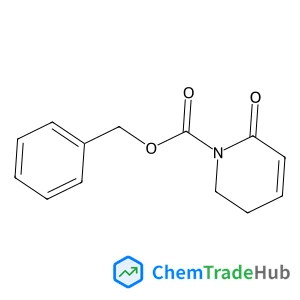
Benzyl 6-oxo-3,6-dihydro-1(2H)-pyridinecarboxylate
CAS Number:
725746-35-0
Molecular Formula:
C13H13NO3
Recommended Suppliers






Disclaimer
This page provides academic journal information for reference and research purposes only. We are not affiliated with any journal publishers and do not handle publication submissions. For publication-related inquiries, please contact the respective journal publishers directly.
If you notice any inaccuracies in the information displayed, please contact us at support@chemtradehub.com. We will promptly review and address your concerns.