












Self-assembled oligonucleotide-polyester dendrimers
Literature Information
Publication Date
2002-11-12
DOI
10.1039/B209029E
Impact Factor
6.222
Authors
Sarah L. Goh, Matthew B. Francis, Jean M. J. Fréchet
View Original
Abstract
A new approach to the controlled synthesis of multicomponent dendrimers is presented, in which three oligonucleotide–dendron conjugates were synthesized using solid phase techniques and hybridized to create a second generation polyester dendrimer with DNA as a core and bearing two types of peripheral functional groups.
Related Literature
NMR study on the cellulose dissolution mechanism in CaCl2·6H2O–LiCl molten salt hydrate
Rui Tang, Ling Han, Jing Yang, Min Xu, Min Ge, Yuanyuan Tang, Xiaobin Fu, Hongtao Liu, Yuan Qian
2021-08-27
Paper
DOI: 10.1039/D1CP02769G
Gaseous cyclodextrin-closo-dodecaborate complexes χCD·B12X122− (χ = α, β, and γ; X = F, Cl, Br, and I): electronic structures and intramolecular interactions
Yanrong Jiang, Qinqin Yuan, Wenjin Cao, Marc C. Nierstenhöfer, Zhipeng Li, Yan Yang, Cheng Zhong, Carsten Jenne, Xue-Bin Wang
2021-04-26
Paper
DOI: 10.1039/D1CP01131F
Sequence-selective recognition of cationic amphipathic tripeptides with similar structures in aqueous solutions by cucurbit[7]uril
Fenfen Ma, Xiaoyan Zheng, Zesheng Li
2021-05-28
Paper
DOI: 10.1039/D1CP01326B
Caveat when using ADC(2) for studying the photochemistry of carbonyl-containing molecules
Emanuele Marsili, Antonio Prlj, Basile F. E. Curchod
2021-06-04
Communication
DOI: 10.1039/D1CP02185K
Infrared spectroscopy of CeO2 nanoparticles using Bergman's spectral representation: effects of phonon confinement and lattice strain
Leire del Campo, Domingos De Sousa Meneses
2021-05-25
Paper
DOI: 10.1039/D1CP01259B
Evaluation of mixed quantum–classical molecular dynamics on cis-azobenzene photoisomerization
Diandong Tang, Lin Shen, Wei-Hai Fang
2021-06-02
Paper
DOI: 10.1039/D1CP01374B
Experimental and DFT studies on oxygen release and migration mechanisms of LaAl-type perovskites as catalyst supports in biomass-to-H2 conversion
Tao Deng, Yujie Zheng, Changlei Qin, Zhiliang Ou, Hongqiang Xia, Zhonghui Zhang
2021-05-19
Paper
DOI: 10.1039/D1CP01372F
Relating the structure and dynamics of ionic liquids under shear by means of reverse non-equilibrium molecular dynamics simulations
Kalil Bernardino, Mauro C. C. Ribeiro
2021-06-04
Paper
DOI: 10.1039/D1CP01205C
Theoretical study of the mechanism of the solvent dependency of ESIPT in HBT
Keiji Naka
2021-07-19
Paper
DOI: 10.1039/D0CP06604D
Exceptionally high saturation magnetisation in Eu-doped magnetite stabilised by spin–orbit interaction
M. Hussein N. Assadi, José Julio Gutiérrez Moreno, Dorian A. H. Hanaor, Hiroshi Katayama-Yoshida
2021-09-02
Paper
DOI: 10.1039/D1CP02164H
You might also like
Compound Q&A
What is the market or research trend for N-(4-Methoxybenzyl)-2-pyridinamine (CAS: 52818-63-0)?
N-(4-Methoxybenzyl)-2-pyridinamine (CAS: 52818-63-0) is increasingly being used ...
52818-63-0N-(4-Methoxybenzyl)-...
Compound Q&A
What precautions should be taken when handling Ethyl 4-(2-chlorophenyl)-1,3-thiazole-2-carboxylate (CAS: 1050507-06-6)?
When handling Ethyl 4-(2-chlorophenyl)-1,3-thiazole-2-carboxylate, appropriate p...
1050507-06-6Ethyl 4-(2-chlorophe...
Compound Q&A
What regulatory guidelines apply to diethyldiselane (CAS: 628-39-7)?
Diethyldiselane (CAS: 628-39-7) is classified under the Globally Harmonized Syst...
628-39-7Diethyldiselane
Compound Q&A
What is the market or research trend for oxocopper (CAS: 12053-18-8)?
The market for oxocopper (CAS: 12053-18-8) is primarily driven by its use in cat...
12053-18-8oxocopper; oxo-(oxoc...
Compound Q&A
What is the market or research trend for 5-{[(2-Methyl-2-propanyl)oxy]carbonyl}-5-azaspiro[2.4]heptane-7-carboxylic acid?
The market for 5-{[(2-Methyl-2-propanyl)oxy]carbonyl}-5-azaspiro[2.4]heptane-7-c...
1268519-54-55-{[(2-Methyl-2-prop...
Compound Q&A
What is 2-(1-Pyrrolidinyl)-4-pyridinamine (CAS: 35981-63-6)?
2-(1-Pyrrolidinyl)-4-pyridinamine is a chemical compound with the CAS number 359...
35981-63-62-(1-Pyrrolidinyl)-4...
Compound Q&A
What are the physical and chemical properties of 2-(3-Pyridinyl)-1-azabicyclo[2.2.2]octane (CAS: 91556-75-1)?
2-(3-Pyridinyl)-1-azabicyclo[2.2.2]octane (CAS: 91556-75-1) is a crystalline sol...
91556-75-12-(3-Pyridinyl)-1-az...
Compound Q&A
How is (S)-Alpha-allyl-proline hydrochloride (CAS: 129704-91-2) typically synthesized?
(S)-Alpha-allyl-proline hydrochloride is usually synthesized via a Wittig reacti...
129704-91-2(S)-Alpha-allyl-prol...
Compound Q&A
What is 3-Methyl-1,2-oxazole-5-carboxylic acid (CAS: 4857-42-5)?
3-Methyl-1,2-oxazole-5-carboxylic acid (CAS: 4857-42-5) is an organic compound w...
4857-42-53-Methyl-1,2-oxazole...
Compound Q&A
How is Lys-SMCC-DM1 (CAS: 1281816-04-3) typically synthesized?
Lys-SMCC-DM1 is synthesized via a multi-step process involving the coupling of S...
1281816-04-3Lys-SMCC-DM1
Source Journal
Chemical Communications

CiteScore:
8.6
Self-citation Rate:
4.7%
Articles per Year:
2458
ChemComm publishes urgent research which is of outstanding significance and interest to experts in the field, while also appealing to the journal’s broad chemistry readership. Our communication format is ideally suited to short, urgent studies that are of such importance that they require accelerated publication. Our scope covers all topics in chemistry, and research at the interface of chemistry and other disciplines (such as materials science, nanoscience, physics, engineering and biology) where there is a significant novelty in the chemistry aspects. Major topic areas covered include: Analytical Chemistry Catalysis Chemical Biology and medicinal chemistry Computational Chemistry and Machine Learning Energy and sustainable chemistry Environmental Chemistry Green Chemistry Inorganic Chemistry Materials Chemistry Nanoscience Organic Chemistry Physical Chemistry Polymer Chemistry Supramolecular Chemistry
Recommended Compounds
![N-{[(2-Methyl-2-propanyl)oxy]carbonyl}-L-methionylglycine structure](https://static.chemtradehub.com/structs/234/23446-03-9-e1e5.webp "N-{[(2-Methyl-2-propanyl)oxy]carbonyl}-L-methionylglycine structure")
N-{[(2-Methyl-2-propanyl)oxy]carbonyl}-L-methionylglycine
CAS Number:
23446-03-9
Molecular Formula:
C12H22N2O5S
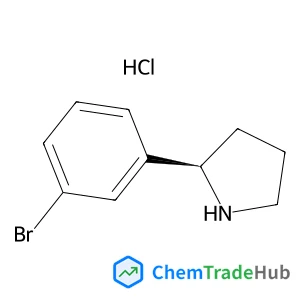
(2R)-2-(3-Bromophenyl)pyrrolidine hydrochloride (1:1)
CAS Number:
1391550-13-2
Molecular Formula:
C10H13BrClN

Recommended Suppliers






Disclaimer
This page provides academic journal information for reference and research purposes only. We are not affiliated with any journal publishers and do not handle publication submissions. For publication-related inquiries, please contact the respective journal publishers directly.
If you notice any inaccuracies in the information displayed, please contact us at support@chemtradehub.com. We will promptly review and address your concerns.