












Photo- and thermo-oxidative stability of aromatic spiro-linked bichromophoric cross-shaped molecules
Literature Information
Publication Date
2000-09-28
DOI
10.1039/B004931J
Impact Factor
3.676
Authors
Bernhard Schartel, Thomas Damerau, Manfred Hennecke
View Original
Abstract
An extensive investigation of the photostability and the thermo-oxidative stability is presented for 2,2′,7,7′-tetrakis(biphenyl-4-yl)-9,9′-spirobifluorene and 2,2′,4,4′,7,7′-hexakis(biphenyl-4-yl)-9,9′-spirobifluorene. Both compounds are conjugated fully aromatic systems that are being discussed as active functional materials for a variety of advanced applications. The effect of atmosphere, sample thickness and preparation procedure on photo-oxidative degradation are investigated in detail by absorption and fluorescence spectroscopy. Distinct mechanisms are described in terms of relevant parameters such as the quantum yields of the photo-oxidation and the fluorescence. No oxidative degradation could be detected under nitrogen. In ambient air a strong decrease of the fluorescence performance is found due to effective quenching by defective chromophores. Chemiluminescence investigations were performed to characterise the thermo-oxidative behaviour in the temperature region between 300 and 450 K. It becomes clear that even a stable chemical structure such as the investigated aromatic system does not guarantee sufficient photostability with regard to light emitting properties.
Related Literature
Enhancement of facilitated olefin transport by amino acid in silver–polymer complex membranes
Sang Wook Kang, Jong Hak Kim, Jongok Won, Kookheon Char, Yong Soo Kang
2003-02-25
Communication
DOI: 10.1039/B211933A
Kumada–Corriu coupling of Grignard reagents, probed with a chiral Grignard reagent
Bettina Hölzer, Reinhard W. Hoffmann
2003-02-19
Communication
DOI: 10.1039/B300033H
Tetranuclear nickel(ii) complexes with genuine μ3-1,1,3 and μ4-1,1,3,3 azide bridges
Franc Meyer, Peter Kircher, Hans Pritzkow
2003-02-25
Communication
DOI: 10.1039/B211486K
Probing DNA selectivity of ruthenium metallointercalators using ESI mass spectrometry
Jennifer L. Beck, Rajesh Gupta, Thitima Urathamakul, Nyree L. Williamson, Margaret M. Sheil, Janice R. Aldrich-Wright, Stephen F. Ralph
2003-02-10
Communication
DOI: 10.1039/B212132H
Asymmetric protonation of lithium enolates of α-amino acid derivatives with α-amino acid-based chiral Brønsted acids
Kentaro Futatsugi, Akira Yanagisawa, Hisashi Yamamoto
2003-01-30
Communication
DOI: 10.1039/B211523A
A new organic superconductor, (DODHT)2BF4·H2O
Hiroyuki Nishikawa, Asami Machida, Takanobu Morimoto, Koichi Kikuchi, Takeshi Kodama, Isao Ikemoto, Jun-ichi Yamada, Harukazu Yoshino, Keizo Murata
2003-01-27
Communication
DOI: 10.1039/B211275B
Adsorbed water for the electro-oxidation of methanol at Pt–Ru alloy
Takahiro Yajima, Noriaki Wakabayashi, Hiroyuki Uchida, Masahiro Watanabe
2003-03-05
Communication
DOI: 10.1039/B212197B
8-(1,4,7,10-Tetraoxa-13-azacyclopentadec-13-ylmethyl)quinolin-7-ol: synthesis and application as a highly sensitive metal cation probe
Kun-Chan Wu, Moawia O. Ahmed, Chun-Yan Chen, Guo-Wei Huang, Yung-Son Hon, Pi-Tai Chou
2003-03-10
Communication
DOI: 10.1039/B300941F
Systematic manipulation of surface chemical reaction on the nanoscale: a novel approach for constructing three-dimensional nanostructures
Xiuzhu Wang, Dejian Zhou, Trevor Rayment, Chris Abell
2003-01-20
Communication
DOI: 10.1039/B211906D
Reductive cleavage of the C–O bond of acetals and orthoesters: reduction by silane in the presence of a Rh–PPh3 complex
Tetsuo Ohta, Tsugumi Michibata, Kazuyuki Yamada, Ryohei Omori, Isao Furukawa
2003-04-17
Communication
DOI: 10.1039/B302124F
You might also like
Compound Q&A
What precautions should be taken when handling 4-(2-Furylmethyl)thiomorpholine 1,1-dioxide (CAS: 79206-94-3)?
When handling 4-(2-Furylmethyl)thiomorpholine 1,1-dioxide (CAS: 79206-94-3), it ...
79206-94-34-(2-Furylmethyl)thi...
Compound Q&A
What precautions should be taken when handling 4-Chloro-N-[2-(4-morpholinyl)ethyl]benzamide (CAS: 71320-77-9)?
When handling 4-Chloro-N-[2-(4-morpholinyl)ethyl]benzamide (CAS: 71320-77-9), it...
71320-77-94-Chloro-N-[2-(4-mor...
Compound Q&A
How should waste containing 2-[2-(2-Methoxyethoxy)ethoxy]ethyl 4-methylbenzenesulfonate (CAS: 62921-74-8) be handled?
Waste containing this compound (CAS: 62921-74-8) should be handled according to ...
62921-74-82-[2-(2-Methoxyethox...
Compound Q&A
How should waste containing (S)-Methyl 2-amino-3-cyclohexylpropanoate be handled?
Waste containing (S)-Methyl 2-amino-3-cyclohexylpropanoate should be collected i...
40056-18-6(S)-Methyl 2-amino-3...
Compound Q&A
How is 5-({4-[(2S,4R)-4-Hydroxy-2-methyltetrahydro-2H-pyran-4-yl]-2-thienyl}sulfanyl)-1-methyl-1,3-dihydro-2H-indol-2-one (CAS: 166882-70-8) typically synthesized?
This compound can be synthesized using a multi-step process involving the conjug...
166882-70-85-({4-[(2S,4R)-4-Hyd...
Compound Q&A
Are there alternatives to (2E)-3-(3,4-Dichlorophenyl)acrylic acid (CAS: 7312-27-8) in synthesis?
There are several alternatives to (2E)-3-(3,4-Dichlorophenyl)acrylic acid in syn...
7312-27-8(2E)-3-(3,4-Dichloro...
Compound Q&A
How should Ethyl 6-(2-nitrophenyl)imidazo[2,1-b][1,3]thiazole-3-carboxylate (CAS: 925437-84-9) be stored?
Ethyl 6-(2-nitrophenyl)imidazo[2,1-b][1,3]thiazole-3-carboxylate (CAS: 925437-84...
925437-84-9Ethyl 6-(2-nitrophen...
Compound Q&A
How should waste containing 2-(1,3-Thiazol-2-yl)ethanamine (CAS: 18453-07-1) be handled?
Waste containing 2-(1,3-Thiazol-2-yl)ethanamine (CAS: 18453-07-1) should be coll...
18453-07-12-(1,3-Thiazol-2-yl)...
Compound Q&A
How is Methyl 5-iodo-2-methylbenzoate (CAS: 103440-54-6) typically synthesized?
Methyl 5-iodo-2-methylbenzoate can be synthesized through the iodination of meth...
103440-54-6Methyl 5-iodo-2-meth...
Compound Q&A
How is 5-Chloro[1,2,4]triazolo[1,5-a]pyridine (CAS: 1427399-34-5) typically synthesized?
5-Chloro[1,2,4]triazolo[1,5-a]pyridine is commonly synthesized via the condensat...
1427399-34-55-Chloro[1,2,4]triaz...
Source Journal
Physical Chemistry Chemical Physics

CiteScore:
5.5
Self-citation Rate:
10.3%
Articles per Year:
3036
Physical Chemistry Chemical Physics (PCCP) is an international journal co-owned by 19 physical chemistry and physics societies from around the world. This journal publishes original, cutting-edge research in physical chemistry, chemical physics and biophysical chemistry. To be suitable for publication in PCCP, articles must include significant innovation and/or insight into physical chemistry; this is the most important criterion that reviewers and Editors will judge against when evaluating submissions. The journal has a broad scope and welcomes contributions spanning experiment, theory, computation and data science. Topical coverage includes spectroscopy, dynamics, kinetics, statistical mechanics, thermodynamics, electrochemistry, catalysis, surface science, quantum mechanics, quantum computing and machine learning. Interdisciplinary research areas such as polymers and soft matter, materials, nanoscience, energy, surfaces/interfaces, and biophysical chemistry are welcomed if they demonstrate significant innovation and/or insight into physical chemistry. Joined experimental/theoretical studies are particularly appreciated when complementary and based on up-to-date approaches.
Recommended Compounds
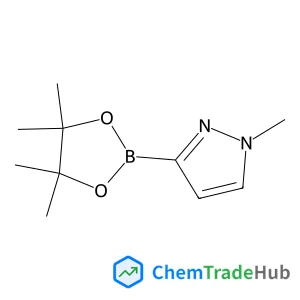
1-Methyl-3-(4,4,5,5-tetramethyl-1,3,2-dioxaborolan-2-yl)-1H-pyrazole
CAS Number:
1020174-04-2
Molecular Formula:
C10H17BN2O2
![[4-Amino-2-(methylsulfanyl)-5-pyrimidinyl]methanol structure](https://static.chemtradehub.com/structs/588/588-36-3-fc73.webp "[4-Amino-2-(methylsulfanyl)-5-pyrimidinyl]methanol structure")
Recommended Suppliers






Disclaimer
This page provides academic journal information for reference and research purposes only. We are not affiliated with any journal publishers and do not handle publication submissions. For publication-related inquiries, please contact the respective journal publishers directly.
If you notice any inaccuracies in the information displayed, please contact us at support@chemtradehub.com. We will promptly review and address your concerns.