













Enhancement of facilitated olefin transport by amino acid in silver–polymer complex membranes
Literature Information
Publication Date
2003-02-25
DOI
10.1039/B211933A
Impact Factor
6.222
Authors
Sang Wook Kang, Jong Hak Kim, Jongok Won, Kookheon Char, Yong Soo Kang
View Original
Abstract
Silver ions dissolved in a polymer matrix are additionally coordinated by carbonyl oxygens of asparagines and their counter anions interact with cationic sites, resulting in the enhanced activity of the silver ion as an olefin carrier for facilitated olefin transport.
Recommended Journals
Related Literature
Compact reactor architectures designed with fractals
Carlos A. Grande
2021-05-12
Paper
DOI: 10.1039/D1RE00107H
Towards controlled bubble nucleation in microreactors for enhanced mass transport
Jeffery A. Wood, Stefan Schlautmann, Han J. G. E. Gardeniers, Séverine Le Gac
2021-07-16
Paper
DOI: 10.1039/D1RE00092F
Direct RAFT polymerization of an unprotected isocyanate-containing monomer and subsequent structopendant functionalization using “click”-type reactions
Joel D. Flores, Junghwan Shin
2009-12-22
Paper
DOI: 10.1039/B9PY00294D
One-flow upscaling neutralization of an organophosphonate-derived pesticide/nerve agent simulant to value-added chemicals in a novel Teflon microreactor platform
Brijesh M. Sharma, Se-Jun Yim, Arun Nikam, Gwang-Noh Ahn, Dong-Pyo Kim
2021-06-06
Paper
DOI: 10.1039/D1RE00147G
Living spontaneous gradient copolymers of acrylic acid and styrene: one-pot synthesis of pH-responsive amphiphiles
Simon Harrisson, Francesca Ercole, Benjamin W. Muir
2009-12-22
Paper
DOI: 10.1039/B9PY00301K
Synthesis of optically active green fluorescent π-conjugated fluorenepolymers having chiral Schiff bases in the side chain
Kengo Asai, Gen-ichi Konishi, Kentaro Sumi, Susumu Kawauchi
2009-12-21
Paper
DOI: 10.1039/B9PY00268E
Regeneration of pristine HZSM-5 extrudates during the production of deeply deoxygenated bio-oil from ex situ catalytic fast pyrolysis of biomass in a bench-scale fluidised-bed reactor
Nuttapan Promsampao, Nuwong Chollacoop, Adisak Pattiya
2021-11-24
Paper
DOI: 10.1039/D1RE00347J
High yield and greener C–H difluoromethylation reactions using copper iodide nanoparticles/boron nitride nanosheets as a versatile and recyclable heterogeneous catalyst
Gowsika Jaikumar, Fushen Lu
2021-07-29
Paper
DOI: 10.1039/D1RE00196E
You might also like
Compound Q&A
What precautions should be taken when handling 4-(2-Furylmethyl)thiomorpholine 1,1-dioxide (CAS: 79206-94-3)?
When handling 4-(2-Furylmethyl)thiomorpholine 1,1-dioxide (CAS: 79206-94-3), it ...
79206-94-34-(2-Furylmethyl)thi...
Compound Q&A
What precautions should be taken when handling 4-Chloro-N-[2-(4-morpholinyl)ethyl]benzamide (CAS: 71320-77-9)?
When handling 4-Chloro-N-[2-(4-morpholinyl)ethyl]benzamide (CAS: 71320-77-9), it...
71320-77-94-Chloro-N-[2-(4-mor...
Compound Q&A
How should waste containing 2-[2-(2-Methoxyethoxy)ethoxy]ethyl 4-methylbenzenesulfonate (CAS: 62921-74-8) be handled?
Waste containing this compound (CAS: 62921-74-8) should be handled according to ...
62921-74-82-[2-(2-Methoxyethox...
Compound Q&A
How should waste containing (S)-Methyl 2-amino-3-cyclohexylpropanoate be handled?
Waste containing (S)-Methyl 2-amino-3-cyclohexylpropanoate should be collected i...
40056-18-6(S)-Methyl 2-amino-3...
Compound Q&A
How is 5-({4-[(2S,4R)-4-Hydroxy-2-methyltetrahydro-2H-pyran-4-yl]-2-thienyl}sulfanyl)-1-methyl-1,3-dihydro-2H-indol-2-one (CAS: 166882-70-8) typically synthesized?
This compound can be synthesized using a multi-step process involving the conjug...
166882-70-85-({4-[(2S,4R)-4-Hyd...
Compound Q&A
Are there alternatives to (2E)-3-(3,4-Dichlorophenyl)acrylic acid (CAS: 7312-27-8) in synthesis?
There are several alternatives to (2E)-3-(3,4-Dichlorophenyl)acrylic acid in syn...
7312-27-8(2E)-3-(3,4-Dichloro...
Compound Q&A
How should Ethyl 6-(2-nitrophenyl)imidazo[2,1-b][1,3]thiazole-3-carboxylate (CAS: 925437-84-9) be stored?
Ethyl 6-(2-nitrophenyl)imidazo[2,1-b][1,3]thiazole-3-carboxylate (CAS: 925437-84...
925437-84-9Ethyl 6-(2-nitrophen...
Compound Q&A
How should waste containing 2-(1,3-Thiazol-2-yl)ethanamine (CAS: 18453-07-1) be handled?
Waste containing 2-(1,3-Thiazol-2-yl)ethanamine (CAS: 18453-07-1) should be coll...
18453-07-12-(1,3-Thiazol-2-yl)...
Compound Q&A
How is Methyl 5-iodo-2-methylbenzoate (CAS: 103440-54-6) typically synthesized?
Methyl 5-iodo-2-methylbenzoate can be synthesized through the iodination of meth...
103440-54-6Methyl 5-iodo-2-meth...
Compound Q&A
How is 5-Chloro[1,2,4]triazolo[1,5-a]pyridine (CAS: 1427399-34-5) typically synthesized?
5-Chloro[1,2,4]triazolo[1,5-a]pyridine is commonly synthesized via the condensat...
1427399-34-55-Chloro[1,2,4]triaz...
Source Journal
Chemical Communications

CiteScore:
8.6
Self-citation Rate:
4.7%
Articles per Year:
2458
ChemComm publishes urgent research which is of outstanding significance and interest to experts in the field, while also appealing to the journal’s broad chemistry readership. Our communication format is ideally suited to short, urgent studies that are of such importance that they require accelerated publication. Our scope covers all topics in chemistry, and research at the interface of chemistry and other disciplines (such as materials science, nanoscience, physics, engineering and biology) where there is a significant novelty in the chemistry aspects. Major topic areas covered include: Analytical Chemistry Catalysis Chemical Biology and medicinal chemistry Computational Chemistry and Machine Learning Energy and sustainable chemistry Environmental Chemistry Green Chemistry Inorganic Chemistry Materials Chemistry Nanoscience Organic Chemistry Physical Chemistry Polymer Chemistry Supramolecular Chemistry
Recommended Compounds
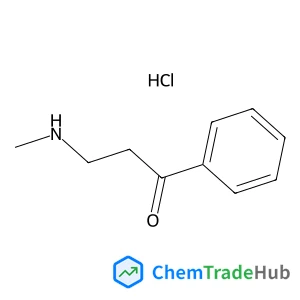
3-(Methylamino)-1-phenyl-1-propanone hydrochloride (1:1)
CAS Number:
2538-50-3
Molecular Formula:
C10H14ClNO

Methyl 2-cyano-3,12-dioxooleana-1,9(11)-dien-28-oate
CAS Number:
218600-53-4
Molecular Formula:
C32H43NO4
Recommended Suppliers





Disclaimer
This page provides academic journal information for reference and research purposes only. We are not affiliated with any journal publishers and do not handle publication submissions. For publication-related inquiries, please contact the respective journal publishers directly.
If you notice any inaccuracies in the information displayed, please contact us at support@chemtradehub.com. We will promptly review and address your concerns.