












Non-covalent switch for intramolecular energy transfer
Literature Information
Publication Date
2003-02-05
DOI
10.1039/B212912D
Impact Factor
6.222
Authors
Joe Otsuki, Akane Yasuda, Toshio Takido
View Original
Abstract
The axially coordinated complex of phenylazopyridine and a Zn-porphyrin/free-base porphyrin conjugate provides a switch for intramolecular energy transfer, with reversible complexation/decomplexation as a switching protocol.
Related Literature
Development of a rapid biolistic assay to determine changes in relative levels of intracellular calcium in leaves following tetracycline uptake by pinto bean plants
Michael H. Farkas, Elmer-Rico E. Mojica, Minesh Patel, Diana S. Aga, James O. Berry
2009-06-02
Paper
DOI: 10.1039/B902147G
A dynamic fluorescence probed glycolysis suppression process in HeLa cells treated with trichostatin A
Wei Zhao, Xumiao Jing
2022-09-21
Paper
DOI: 10.1039/D2AN01114J
Molecularly imprinted nanoparticle-based assay (MINA) for microcystin-LR detection in water
Yadiris García, Myleidi Vera, Verónica A. Jiménez, Luis F. Barraza, Joao Aguilar, Susana Sánchez, Eduardo D. Pereira
2022-12-14
Paper
DOI: 10.1039/D2AN01680J
Development of a metabolomic approach based on liquid chromatography-high resolution mass spectrometry to screen for clenbuterol abuse in calves
Frédérique Courant, Gaud Pinel, Emmanuelle Bichon, Fabrice Monteau, Jean-Philippe Antignac, Bruno Le Bizec
2009-05-06
Paper
DOI: 10.1039/B901813A
A sample-to-answer DNA detection microfluidic system integrating sample pretreatment and smartphone-readable gradient plasmonic photothermal continuous-flow PCR
Zengming Zhang, Shuhao Zhao, Lei Jiang, Junjun Wu, Wenhan Zhao, Xiaoniu Guo, Niancai Peng, Fei Hu
2022-09-20
Paper
DOI: 10.1039/D2AN00908K
An electroactive fiber optic chip for spectroelectrochemical characterization of ultra-thin redox-active films
Brooke M. Beam, Neal R. Armstrong, Sergio B. Mendes
2008-12-19
Paper
DOI: 10.1039/B814338B
Paper-based sample processing for the fast and direct MS analysis of multiple analytes from serum samples
Fu Zhang, Bin Ji, Xiang-Hong Yan, Shuang Lv, Fang Fang, Shuang Zhao, Xiao-Lin Guo, Zhi-Yong Wu
2022-09-20
Paper
DOI: 10.1039/D2AN01261H
Fluorescence identification of arthropathic calcium pyrophosphate single crystals using alizarin red S and a xanthene dipicolylamine ZnII complex
Waralee Srinarawat, Ruedee Hemstapat, Tulyapruek Tawonsawatruk, Nisa Patikarnmonthon, Itaru Hamachi, Akio Ojida, Jirarut Wongkongkatep
2022-09-20
Paper
DOI: 10.1039/D2AN01257J
Sensitive and selective detection ofcysteine using gold nanoparticles as colorimetric probes
Li Li, Baoxin Li
2009-04-02
Paper
DOI: 10.1039/B819842J
Vapor detection and vapor pressure measurements of fentanyl and fentanyl hydrochloride salt at ambient temperatures
Robert G. Ewing, Megan K. Nims, Kelsey A. Morrison, Garret L. Hart, Nancy M. Avalos, Elizabeth H. Denis
2022-09-28
Paper
DOI: 10.1039/D2AN01149B
You might also like
Compound Q&A
What precautions should be taken when handling 4-(2-Furylmethyl)thiomorpholine 1,1-dioxide (CAS: 79206-94-3)?
When handling 4-(2-Furylmethyl)thiomorpholine 1,1-dioxide (CAS: 79206-94-3), it ...
79206-94-34-(2-Furylmethyl)thi...
Compound Q&A
What precautions should be taken when handling 4-Chloro-N-[2-(4-morpholinyl)ethyl]benzamide (CAS: 71320-77-9)?
When handling 4-Chloro-N-[2-(4-morpholinyl)ethyl]benzamide (CAS: 71320-77-9), it...
71320-77-94-Chloro-N-[2-(4-mor...
Compound Q&A
How should waste containing 2-[2-(2-Methoxyethoxy)ethoxy]ethyl 4-methylbenzenesulfonate (CAS: 62921-74-8) be handled?
Waste containing this compound (CAS: 62921-74-8) should be handled according to ...
62921-74-82-[2-(2-Methoxyethox...
Compound Q&A
How should waste containing (S)-Methyl 2-amino-3-cyclohexylpropanoate be handled?
Waste containing (S)-Methyl 2-amino-3-cyclohexylpropanoate should be collected i...
40056-18-6(S)-Methyl 2-amino-3...
Compound Q&A
How is 5-({4-[(2S,4R)-4-Hydroxy-2-methyltetrahydro-2H-pyran-4-yl]-2-thienyl}sulfanyl)-1-methyl-1,3-dihydro-2H-indol-2-one (CAS: 166882-70-8) typically synthesized?
This compound can be synthesized using a multi-step process involving the conjug...
166882-70-85-({4-[(2S,4R)-4-Hyd...
Compound Q&A
Are there alternatives to (2E)-3-(3,4-Dichlorophenyl)acrylic acid (CAS: 7312-27-8) in synthesis?
There are several alternatives to (2E)-3-(3,4-Dichlorophenyl)acrylic acid in syn...
7312-27-8(2E)-3-(3,4-Dichloro...
Compound Q&A
How should Ethyl 6-(2-nitrophenyl)imidazo[2,1-b][1,3]thiazole-3-carboxylate (CAS: 925437-84-9) be stored?
Ethyl 6-(2-nitrophenyl)imidazo[2,1-b][1,3]thiazole-3-carboxylate (CAS: 925437-84...
925437-84-9Ethyl 6-(2-nitrophen...
Compound Q&A
How should waste containing 2-(1,3-Thiazol-2-yl)ethanamine (CAS: 18453-07-1) be handled?
Waste containing 2-(1,3-Thiazol-2-yl)ethanamine (CAS: 18453-07-1) should be coll...
18453-07-12-(1,3-Thiazol-2-yl)...
Compound Q&A
How is Methyl 5-iodo-2-methylbenzoate (CAS: 103440-54-6) typically synthesized?
Methyl 5-iodo-2-methylbenzoate can be synthesized through the iodination of meth...
103440-54-6Methyl 5-iodo-2-meth...
Compound Q&A
How is 5-Chloro[1,2,4]triazolo[1,5-a]pyridine (CAS: 1427399-34-5) typically synthesized?
5-Chloro[1,2,4]triazolo[1,5-a]pyridine is commonly synthesized via the condensat...
1427399-34-55-Chloro[1,2,4]triaz...
Source Journal
Chemical Communications

CiteScore:
8.6
Self-citation Rate:
4.7%
Articles per Year:
2458
ChemComm publishes urgent research which is of outstanding significance and interest to experts in the field, while also appealing to the journal’s broad chemistry readership. Our communication format is ideally suited to short, urgent studies that are of such importance that they require accelerated publication. Our scope covers all topics in chemistry, and research at the interface of chemistry and other disciplines (such as materials science, nanoscience, physics, engineering and biology) where there is a significant novelty in the chemistry aspects. Major topic areas covered include: Analytical Chemistry Catalysis Chemical Biology and medicinal chemistry Computational Chemistry and Machine Learning Energy and sustainable chemistry Environmental Chemistry Green Chemistry Inorganic Chemistry Materials Chemistry Nanoscience Organic Chemistry Physical Chemistry Polymer Chemistry Supramolecular Chemistry
Recommended Compounds
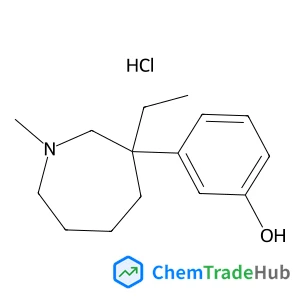
3-(3-Ethyl-1-methyl-3-azepanyl)phenol hydrochloride (1:1)
CAS Number:
59263-76-2
Molecular Formula:
C15H24ClNO
Recommended Suppliers






Disclaimer
This page provides academic journal information for reference and research purposes only. We are not affiliated with any journal publishers and do not handle publication submissions. For publication-related inquiries, please contact the respective journal publishers directly.
If you notice any inaccuracies in the information displayed, please contact us at support@chemtradehub.com. We will promptly review and address your concerns.