



AD
3-(3,4-Dihydro-2H-pyrrol-5-yl)pyridine(CAS: 532-12-7)
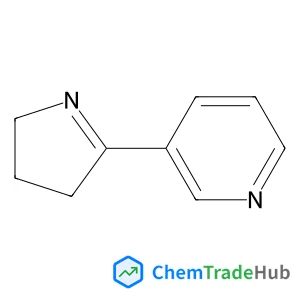
CAS Number
Related Products
![2-{4-[(3S)-3-Piperidinyl]phenyl}-2H-indazole-7-carboxamide 4-methylbenzenesulfonate hydrate (1:1:1)](https://static.chemtradehub.com/structs/161/1613220-15-7-5592.webp)
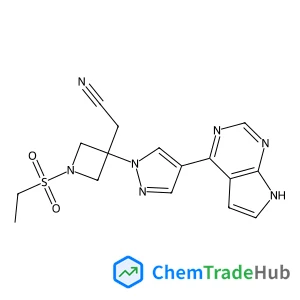
Baricitinib
CAS Number: 1187594-09-7
![(2R,3R)-2,3-Dihydroxysuccinic acid - 2-{[(3aR,4S,6R,6aS)-6-amino-2,2-dimethyltetrahydro-3aH-cyclopenta[d][1,3]dioxol-4-yl]oxy}ethanol (1:1)](https://static.chemtradehub.com/structs/376/376608-65-0-1a9e.webp)
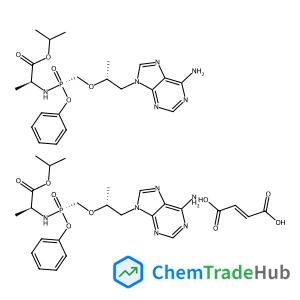
Tenofovir alafenamide hemifumarate
CAS Number: 1392275-56-7
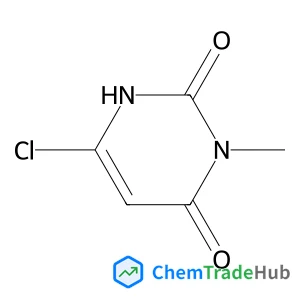
Alogliptin Impurity 24
CAS Number: 4318-56-3
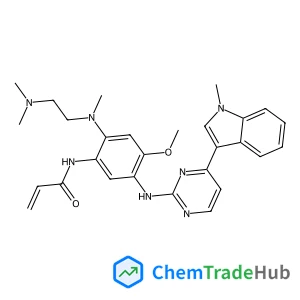
Osimertinib
CAS Number: 1421373-65-0
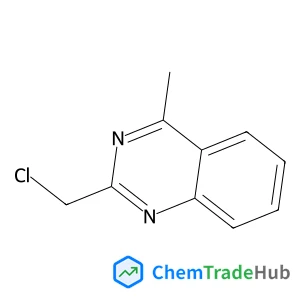
2-(Chloromethyl)-4-methylquinazoline
CAS Number: 109113-72-6
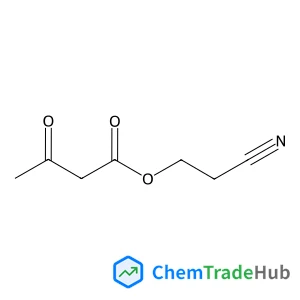
2-Cyanoethyl 3-oxobutanoate
CAS Number: 65193-87-5
Other Suppliers for 3-(3,4-Dihydro-2H-pyrrol-5-yl)pyridine






Basic Information
Molecular Formula
C9H10N2
Molecular Weight
146.19 g/mol
Physical Properties
Melting Point
91 ºC (ligroine )
Boiling Point
125 ºC (8 Torr)
Flash Point
101.8±22.3 ºC,
Chemical Identifiers
SMILES
C1CC(=NC1)C2=CN=CC=C2
InChIKey
DPNGWXJMIILTBS-UHFFFAOYSA-N
Database References
MDL Number
MFCD00052019
Beilstein Registry Number
119254
FAQ
3-(3,4-Dihydro-2H-pyrrol-5-yl)pyridine is a crystalline solid with a molecular weight of approximately 229.21 g/mol. It shows moderate solubility in common organic solvents such as ethanol and acetone. This compound is generally stable under normal conditions but can react with strong acids and bases. It is used in various applications that require its specific chemical properties, such as in the development of molecular electronics and as a precursor in medicinal chemistry.
3-(3,4-Dihydro-2H-pyrrol-5-yl)pyridine is commonly synthesized through a condensation reaction between pyridine and an appropriate pyrrole derivative. The synthesis typically involves the use of a base catalyst to enhance the reaction rate. The yields and selectivity can be improved by optimizing reaction conditions, such as temperature and stoichiometry. This compound is often used as a starting material in the development of novel organic compounds.
3-(3,4-Dihydro-2H-pyrrol-5-yl)pyridine is primarily used in the pharmaceutical and electronics industries. It serves as a precursor in the synthesis of drugs and is also utilized in the development of organic semiconductors and sensors due to its unique chemical properties. Its applications in polymer science and medicinal chemistry highlight its versatility in various industrial settings.
When handling 3-(3,4-Dihydro-2H-pyrrol-5-yl)pyridine, it is essential to use appropriate personal protective equipment (PPE) such as gloves, goggles, and a lab coat. Work should be conducted in a well-ventilated area or within a fume hood to minimize exposure. Spills should be cleaned up immediately, and appropriate spill kits should be available. Always refer to the Safety Data Sheet (SDS) for detailed information on handling and storage procedures to ensure safe laboratory practices.
Safety Notice
Please verify product specifications and safety data before use. Contact the supplier for detailed safety information.
Always follow proper handling procedures
Contact Information
Contact Person
Yang Shuangyou
863922768@qq.com