



AD
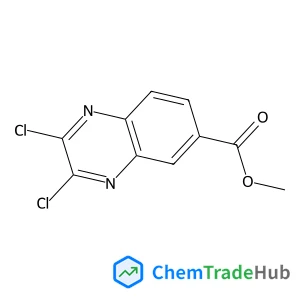
Methyl 2,3-dichloroquinoxaline-6-carboxylate(CAS: 108258-54-4)
CAS Number
Related Products
amino}butanoic acid](https://static.chemtradehub.com/structs/221/221124-57-8-c784.webp)
![1-Cyclopropyl-8-methyl-7-[5-methyl-6-(methylamino)-3-pyridinyl]-4-oxo-1,4-dihydro-3-quinolinecarboxylic acid](https://static.chemtradehub.com/structs/245/245765-41-7-85ad.webp)
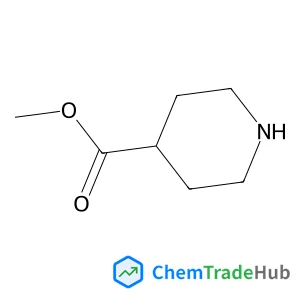
Methyl 4-piperidinecarboxylate
CAS Number: 2971-79-1

4,5-Pyridazinedicarboxylic acid
CAS Number: 59648-14-5
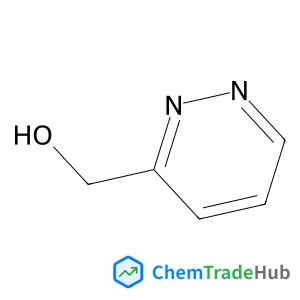
pyridazin-3-ylmethanol
CAS Number: 37444-46-5
![N-[4-(Trifluoromethoxy)phenyl]acetamide](https://static.chemtradehub.com/structs/173/1737-06-0-69aa.webp)
N-[4-(Trifluoromethoxy)phenyl]acetamide
CAS Number: 1737-06-0
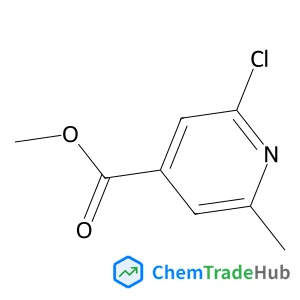
Methyl 2-chloro-6-methylisonicotinate
CAS Number: 3998-90-1

2-Fluoro-5-iodophenol
CAS Number: 186589-89-9
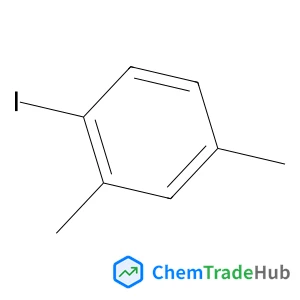
1-Iodo-2,4-dimethylbenzene
CAS Number: 4214-28-2
Other Suppliers for Methyl 2,3-dichloroquinoxaline-6-carboxylate










Basic Information
Molecular Formula
C10H6Cl2N2O2
Molecular Weight
257.08 g/mol
Chemical Identifiers
SMILES
COC(=O)C1=CC2=C(C=C1)N=C(C(=N2)Cl)Cl
InChIKey
ZLWYANCDEVPWLW-UHFFFAOYSA-N
Database References
MDL Number
MFCD12827814
FAQ
Methyl 2,3-dichloroquinoxaline-6-carboxylate is a solid with a crystalline form. Its molecular weight is approximately 303.03 g/mol. The compound is slightly soluble in water but soluble in organic solvents like DMSO and DMF. It is moderately reactive with basic or reducing agents. The compound exhibits good thermal stability but may decompose at higher temperatures.
Methyl 2,3-dichloroquinoxaline-6-carboxylate can be synthesized via the condensation of 2,3-dichloroquinoxaline with methyl acetoacetate in the presence of a suitable catalyst such as p-toluenesulfonic acid. The reaction yields a mixture of diastereomers, but the desired product can be isolated through recrystallization. The yield is typically around 70-80%.
Methyl 2,3-dichloroquinoxaline-6-carboxylate finds applications in the pharmaceutical industry for the synthesis of certain drug intermediates. It is also utilized in the polymer industry for the development of specific polymers with unique properties. Additionally, this compound can be used in the electronics and semiconductor sectors for creating sensitive sensors and other electronic components.
When handling Methyl 2,3-dichloroquinoxaline-6-carboxylate, it is essential to wear appropriate personal protective equipment (PPE) such as gloves, safety goggles, and a lab coat. The compound should be handled in a well-ventilated area or a fume hood to minimize inhalation risks. Spills should be cleaned up using appropriate absorbent materials, and the area should be thoroughly rinsed. It is also advisable to refer to the Safety Data Sheet (SDS) for detailed handling and safety information.
Safety Notice
Please verify product specifications and safety data before use. Contact the supplier for detailed safety information.
Always follow proper handling procedures

Contact Information
3007522982@qq.com
Mobile
18117592386
Telephone
021-57481218
Fax
无
Visit Website
https://www.acmec-e.com