



AD
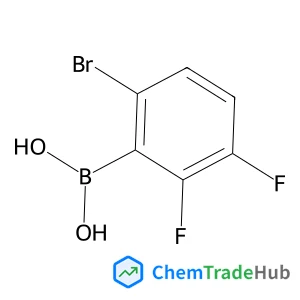
(6-Bromo-2,3-difluorophenyl)boronic acid(CAS: 870718-10-8)
CAS Number
Related Products
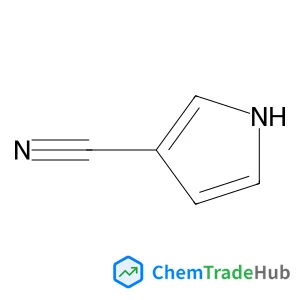
1H-Pyrrole-3-carbonitrile
CAS Number: 7126-38-7
![3-methyl-1,4-diphenylpyrano[2,3-c]pyrazol-6(1H)-one](https://static.chemtradehub.com/structs/850/85094-13-9-dba3.webp)
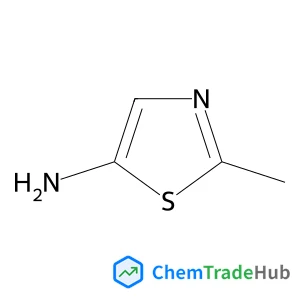
2-Methylthiazol-5-amine
CAS Number: 89281-44-7
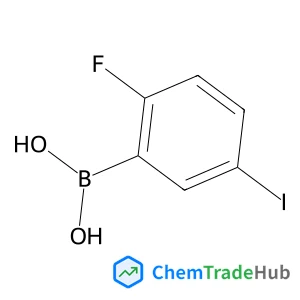
(2-Fluoro-5-iodophenyl)boronic acid
CAS Number: 866683-41-2
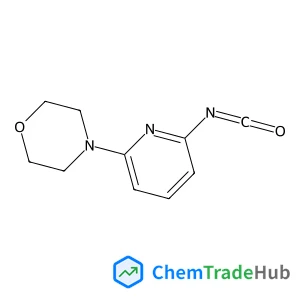
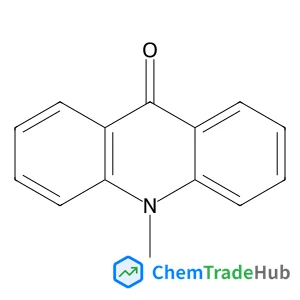
10-Methyl-9(10H)-acridinone
CAS Number: 719-54-0
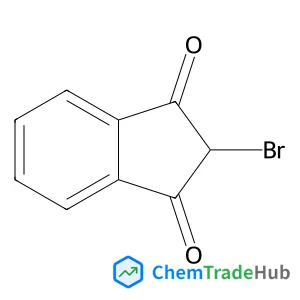
2-Bromo-1H-indene-1,3(2H)-dione
CAS Number: 7319-63-3
![1,3,5-Triazinane-2,4,6-trione - 6-[2-(2-methyl-1H-imidazol-1-yl)ethyl]-1,3,5-triazine-2,4-diamine (1:1)](https://static.chemtradehub.com/structs/684/68490-66-4-2526.webp)
Other Suppliers for (6-Bromo-2,3-difluorophenyl)boronic acid




Basic Information
Molecular Formula
C6H4BBrF2O2
Molecular Weight
236.81 g/mol
Physical Properties
Boiling Point
324.5°C at 760 mmHg
Density
1.82
Flash Point
150.1°C
Chemical Identifiers
SMILES
FC1=C(F)C(B(O)O)=C(Br)C=C1
InChIKey
VZVDYVBOSRNBQL-UHFFFAOYSA-N
Database References
MDL Number
MFCD06200708
FAQ
(6-Bromo-2,3-difluorophenyl)boronic acid is a crystalline compound with a molecular weight of approximately 312.02 g/mol. It is slightly soluble in water but has good solubility in organic solvents like ethanol and acetonitrile. This compound exhibits moderate reactivity, particularly towards esters and carboxylic acids, making it useful in various organic synthesis reactions. Its physical properties include a melting point around 160-165°C and a density of approximately 1.35 g/cm³.
(6-Bromo-2,3-difluorophenyl)boronic acid can be synthesized by the Finkelstein method, where 2,3-difluorobromobenzene is treated with sodium hydride and then boron tribromide. This process yields high selectivity and good yield (up to 85%). The method requires careful handling to maintain high purity and requires the use of anhydrous conditions to prevent hydrolysis. The reaction is typically carried out in dimethylformamide (DMF) solvent.
(6-Bromo-2,3-difluorophenyl)boronic acid is primarily used in pharmaceuticals and polymer synthesis. It serves as a key intermediate in the synthesis of drug molecules, particularly those targeting specific receptors. Additionally, it finds applications in the development of advanced materials and sensors, where its unique chemical functionalities are utilized to enhance performance and stability.
When handling (6-Bromo-2,3-difluorophenyl)boronic acid, it is essential to wear appropriate personal protective equipment (PPE) including gloves, goggles, and a lab coat. Work should be conducted in a fume hood to minimize inhalation risks. Spills should be cleaned up immediately using appropriate absorbents, and the area should be well-ventilated. For detailed safety information, refer to the Material Safety Data Sheet (MSDS) or Safety Data Sheet (SDS). The compound is not considered highly toxic, but it should still be handled with care due to its reactivity and potential skin irritation.
Safety Notice
Please verify product specifications and safety data before use. Contact the supplier for detailed safety information.
Always follow proper handling procedures
Contact Information
jojo.shen@lininchem.com