













Contents list
Literature Information
Publication Date
2024-01-23
DOI
10.1039/D4EE90007C
Impact Factor
38.532
Authors
View Original
Abstract
The first page of this article is displayed as the abstract.
Related Literature
Simple transformation of crystalline chiral natural anions to liquid medium and their use to induce chirality
Luís C. Branco, Pedro M. P. Gois, Nuno M. T. Lourenço, Vanya B. Kurteva, Carlos A. M. Afonso
2006-05-10
Communication
DOI: 10.1039/B600816J
Ag/SiO2: a novel catalyst with high activity and selectivity for hydrogenation of chloronitrobenzenes
Yangying Chen, Chuang Wang, Hongyang Liu, Jieshan Qiu, Xinhe Bao
2005-09-23
Communication
DOI: 10.1039/B509595F
A geometric switching approach toward thermal activation of metalloenediynes
Sibaprasad Bhattacharyya, David F. Dye, Maren Pink, Jeffrey M. Zaleski
2005-09-22
Communication
DOI: 10.1039/B509125J
Sieving behaviour of nanoscopic pores by hydrated ions
Joohan Lee, Juhyoun Kwak
2006-04-20
Communication
DOI: 10.1039/B601613H
Synthesis and spectroscopic observation of dendrimer-encapsulated gold nanoclusters
M. Linh Tran, Andrei V. Zvyagin, Taras Plakhotnik
2006-05-03
Communication
DOI: 10.1039/B602079H
Formation of layered titania and zirconia catalysed by surface-bound silicatein
Muhammad Nawaz Tahir, Patrick Théato, Werner E. G. Müller, Heinz C. Schröder, Alexandra Borejko, Simon Faiß, Andreas Janshoff, Joachim Huth, Wolfgang Tremel
2005-10-13
Communication
DOI: 10.1039/B510113A
Characterization of the H2 sensing mechanism of Pd-promoted SnO2 by XAS in operando conditions
Thomas Neisius, Bernard Chenevier, Aleksandre M. Gaskov, Michel Labeau
2005-09-19
Communication
DOI: 10.1039/B509826B
DNA microarraying on compact disc surfaces. Application to the analysis of single nucleotide polymorphisms in Plum pox virus
Sergi Morais, Raquel Marco-Molés, Rosa Puchades, Ángel Maquieira
2006-05-02
Communication
DOI: 10.1039/B600049E
Unusual variations in the incidence of Z′ > 1 in oxo-anion structures
Kirsty M. Anderson, Andres E. Goeta, Kirsty S. B. Hancock, Jonathan W. Steed
2006-04-04
Communication
DOI: 10.1039/B602492K
You might also like
Compound Q&A
What are the main uses of 1H-Indazole-6-carbonitrile (CAS: 141290-59-7)?
1H-Indazole-6-carbonitrile finds applications in pharmaceuticals, where it serve...
141290-59-71H-Indazole-6-carbon...
Compound Q&A
How should waste containing Dioctyl (2E)-2-butenedioate (CAS: 2997-85-5) be handled?
Waste containing Dioctyl (2E)-2-butenedioate (CAS: 2997-85-5) should be collecte...
2997-85-5Dioctyl (2E)-2-buten...
Compound Q&A
What industries use Sodium [(1,2-benzoxazol-3-ylmethyl)sulfonyl]azanide (CAS: 68291-98-5)?
Sodium [(1,2-benzoxazol-3-ylmethyl)sulfonyl]azanide is primarily used in pharmac...
68291-98-5Sodium [(1,2-benzoxa...
Compound Q&A
Are there alternatives to Dimethyl 4-(4,4,5,5-tetramethyl-1,3,2-dioxaborolan-2-yl)-2,6-pyridinedicarboxylate (CAS: 741709-66-0) in synthesis?
Dimethyl 4-(4,4,5,5-tetramethyl-1,3,2-dioxaborolan-2-yl)-2,6-pyridinedicarboxyla...
741709-66-0Dimethyl 4-(4,4,5,5-...
Compound Q&A
How should waste containing 2-Fluoro-6-hydrazinopyridine (CAS: 80714-39-2) be handled?
Waste containing 2-Fluoro-6-hydrazinopyridine (CAS: 80714-39-2) should be manage...
80714-39-22-Fluoro-6-hydrazino...
Compound Q&A
What is 6-Formyl-2-pyridinecarboxylic acid (CAS: 499214-11-8)?
6-Formyl-2-pyridinecarboxylic acid is an organic compound with the molecular for...
499214-11-86-Formyl-2-pyridinec...
Compound Q&A
What is the market or research trend for 3-(3,4-dimethoxyphenyl)-2,5-dimethyl-N-(2-morpholin-4-ylethyl)pyrazolo[1,5-a]pyrimidin-7-amine (CAS: 900874-91-1)?
Research trends for this compound indicate a focus on its potential applications...
900874-91-13-(3,4-dimethoxyphen...
Compound Q&A
How is 9H-Tribenzo[b,d,f]azepine (CAS: 29875-73-8) typically synthesized?
9H-Tribenzo[b,d,f]azepine is typically synthesized via a multi-step process invo...
29875-73-89H-Tribenzo[b,d,f]az...
Compound Q&A
How is 1-Cyclopropyl-7-ethoxy-6-fluoro-8-methoxy-4-oxo-1,4-dihydro-3-quinolinecarboxylic acid (CAS: 1797982-51-4) typically synthesized?
1-Cyclopropyl-7-ethoxy-6-fluoro-8-methoxy-4-oxo-1,4-dihydro-3-quinolinecarboxyli...
1797982-51-41-Cyclopropyl-7-etho...
Compound Q&A
How should waste containing Methyl 3-oxo-1,2,3,4-tetrahydro-6-quinoxalinecarboxylate (CAS: 671820-52-3) be handled?
Waste containing Methyl 3-oxo-1,2,3,4-tetrahydro-6-quinoxalinecarboxylate (CAS: ...
671820-52-3Methyl 3-oxo-1,2,3,4...
Source Journal
Energy & Environmental Science
CiteScore:
32.34
Self-citation Rate:
3.4%
Articles per Year:
481
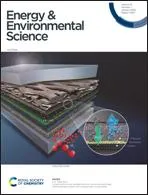
Energy & Environmental Science is an international journal dedicated to publishing exceptionally important and high quality, agenda-setting research tackling the key global and societal challenges of ensuring the provision of energy and protecting our environment for the future. The scope is intentionally broad and the journal recognises the complexity of issues and challenges relating to energy conversion and storage, alternative fuel technologies and environmental science. For work to be published it must be linked to the energy-environment nexus and be of significant general interest to our community-spanning readership. All scales of studies and analysis, from impactful fundamental advances, to interdisciplinary research across the (bio)chemical, (bio/geo)physical sciences and chemical engineering disciplines are welcomed. Topics include, but are not limited to, the following: Solar energy conversion and photovoltaics Solar fuels and artificial photosynthesis Fuel cells Hydrogen storage and (bio) hydrogen production Materials for energy systems Capture, storage and fate of CO2, including chemicals and fuels from CO2 Catalysis for a variety of feedstocks (for example, oil, gas, coal, biomass and synthesis gas) Biofuels and biorefineries Materials in extreme environments Environmental impacts of energy technologies Global atmospheric chemistry and climate change as related to energy systems Water-energy nexus Energy systems and networks Globally applicable principles of energy policy and techno-economics
Recommended Compounds


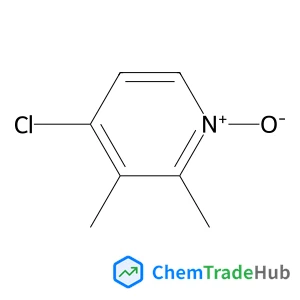
EthylenediaminetetraaceticacidcalciumDisodiumsalthydrate
CAS Number:
23411-34-9
Molecular Formula:
C10H16CaN2Na2O10

Recommended Suppliers




Disclaimer
This page provides academic journal information for reference and research purposes only. We are not affiliated with any journal publishers and do not handle publication submissions. For publication-related inquiries, please contact the respective journal publishers directly.
If you notice any inaccuracies in the information displayed, please contact us at support@chemtradehub.com. We will promptly review and address your concerns.