












A geometric switching approach toward thermal activation of metalloenediynes
Literature Information
Publication Date
2005-09-22
DOI
10.1039/B509125J
Impact Factor
6.222
Authors
Sibaprasad Bhattacharyya, David F. Dye, Maren Pink, Jeffrey M. Zaleski
View Original
Abstract
Tetradentate metalloenediynes with strong imine and weaker thioether coordination serve as a geometrically non-rigid switch to drive thermal Bergman cyclization.
Related Literature
A CoII complex for 19F MRI-based detection of reactive oxygen species
Meng Yu, Da Xie, Khanh P. Phan, José S. Enriquez, Emily L. Que
2016-11-08
Communication
DOI: 10.1039/C6CC08207F
A portable, disposable, and low-cost optode for sulphide and thiol detection
Giancarla Alberti, Valeria M. Nurchi, Lisa R. Magnaghi, Raffaela Biesuz
2019-08-07
Paper
DOI: 10.1039/C9AY01538H
Evaluation of reverse osmosis drinking water treatment of riverbank filtrate using bioanalytical tools and non-target screening
Vittorio Albergamo, Emma L. Schymanski, Rick Helmus, Milou M. L. Dingemans, Michiel H. S. Kraak
2019-10-18
Paper
DOI: 10.1039/C9EW00741E
A more universal and stable method for lactate dehydrogenase isoenzyme test
Peijuan Li, Nanhai Qiu, Li Zhang, Guishu Zhong, Fancai Zeng
2019-07-17
Paper
DOI: 10.1039/C9AY01327J
A fully self-assembled non-symmetric triad for photoinduced charge separation
G. Dan Pantoş, Jeremy K. M. Sanders, Michele Orlandi, Claudio Chiorboli, Sandro Fracasso
2010-12-24
Edge Article
DOI: 10.1039/C0SC00520G
A ratiometric electrochemical biosensor for ultrasensitive and highly selective detection of the K-ras gene via exonuclease III-assisted target recycling and rolling circle amplification strategies
Qi Xiao, Jinrong Feng, Jiawen Li, Yi Liu, Dan Wang, Shan Huang
2019-07-06
Paper
DOI: 10.1039/C9AY01007F
Recent advances in the development of rotaxanes and pseudorotaxanes based on pillar[n]arenes: from construction to application
Kui Yang, Shuang Chao, Feiyu Zhang, Yuxin Pei, Zhichao Pei
2019-10-07
Feature Article
DOI: 10.1039/C9CC07373F
In situ synthesis of fluorescent copper nanoclusters for rapid detection of ascorbic acid in biological samples
Xuan Wang, Caicheng Long, Zixin Jiang, Taiping Qing, Kaiwu Zhang, Peng Zhang, Bo Feng
2019-08-29
Paper
DOI: 10.1039/C9AY01627A
The extraction of pyrethroid insecticides in juice and tea beverages by liquid-phase microextraction using deep eutectic solvents
Heng Qian, Chaoran Liu, Qian Yang, Xinya Liu, Haixiang Gao, Wenfeng Zhou
2019-09-02
Paper
DOI: 10.1039/C9AY01518C
You might also like
Compound Q&A
What are the main uses of 1H-Indazole-6-carbonitrile (CAS: 141290-59-7)?
1H-Indazole-6-carbonitrile finds applications in pharmaceuticals, where it serve...
141290-59-71H-Indazole-6-carbon...
Compound Q&A
How should waste containing Dioctyl (2E)-2-butenedioate (CAS: 2997-85-5) be handled?
Waste containing Dioctyl (2E)-2-butenedioate (CAS: 2997-85-5) should be collecte...
2997-85-5Dioctyl (2E)-2-buten...
Compound Q&A
What industries use Sodium [(1,2-benzoxazol-3-ylmethyl)sulfonyl]azanide (CAS: 68291-98-5)?
Sodium [(1,2-benzoxazol-3-ylmethyl)sulfonyl]azanide is primarily used in pharmac...
68291-98-5Sodium [(1,2-benzoxa...
Compound Q&A
Are there alternatives to Dimethyl 4-(4,4,5,5-tetramethyl-1,3,2-dioxaborolan-2-yl)-2,6-pyridinedicarboxylate (CAS: 741709-66-0) in synthesis?
Dimethyl 4-(4,4,5,5-tetramethyl-1,3,2-dioxaborolan-2-yl)-2,6-pyridinedicarboxyla...
741709-66-0Dimethyl 4-(4,4,5,5-...
Compound Q&A
How should waste containing 2-Fluoro-6-hydrazinopyridine (CAS: 80714-39-2) be handled?
Waste containing 2-Fluoro-6-hydrazinopyridine (CAS: 80714-39-2) should be manage...
80714-39-22-Fluoro-6-hydrazino...
Compound Q&A
What is 6-Formyl-2-pyridinecarboxylic acid (CAS: 499214-11-8)?
6-Formyl-2-pyridinecarboxylic acid is an organic compound with the molecular for...
499214-11-86-Formyl-2-pyridinec...
Compound Q&A
What is the market or research trend for 3-(3,4-dimethoxyphenyl)-2,5-dimethyl-N-(2-morpholin-4-ylethyl)pyrazolo[1,5-a]pyrimidin-7-amine (CAS: 900874-91-1)?
Research trends for this compound indicate a focus on its potential applications...
900874-91-13-(3,4-dimethoxyphen...
Compound Q&A
How is 9H-Tribenzo[b,d,f]azepine (CAS: 29875-73-8) typically synthesized?
9H-Tribenzo[b,d,f]azepine is typically synthesized via a multi-step process invo...
29875-73-89H-Tribenzo[b,d,f]az...
Compound Q&A
How is 1-Cyclopropyl-7-ethoxy-6-fluoro-8-methoxy-4-oxo-1,4-dihydro-3-quinolinecarboxylic acid (CAS: 1797982-51-4) typically synthesized?
1-Cyclopropyl-7-ethoxy-6-fluoro-8-methoxy-4-oxo-1,4-dihydro-3-quinolinecarboxyli...
1797982-51-41-Cyclopropyl-7-etho...
Compound Q&A
How should waste containing Methyl 3-oxo-1,2,3,4-tetrahydro-6-quinoxalinecarboxylate (CAS: 671820-52-3) be handled?
Waste containing Methyl 3-oxo-1,2,3,4-tetrahydro-6-quinoxalinecarboxylate (CAS: ...
671820-52-3Methyl 3-oxo-1,2,3,4...
Source Journal
Chemical Communications

CiteScore:
8.6
Self-citation Rate:
4.7%
Articles per Year:
2458
ChemComm publishes urgent research which is of outstanding significance and interest to experts in the field, while also appealing to the journal’s broad chemistry readership. Our communication format is ideally suited to short, urgent studies that are of such importance that they require accelerated publication. Our scope covers all topics in chemistry, and research at the interface of chemistry and other disciplines (such as materials science, nanoscience, physics, engineering and biology) where there is a significant novelty in the chemistry aspects. Major topic areas covered include: Analytical Chemistry Catalysis Chemical Biology and medicinal chemistry Computational Chemistry and Machine Learning Energy and sustainable chemistry Environmental Chemistry Green Chemistry Inorganic Chemistry Materials Chemistry Nanoscience Organic Chemistry Physical Chemistry Polymer Chemistry Supramolecular Chemistry
Recommended Compounds
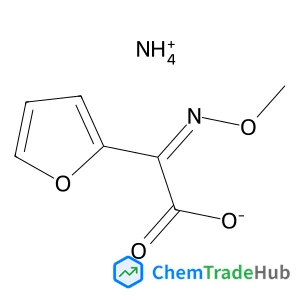
Ammonium (Z)-2-(furan-2-yl)-2-(methoxyimino)acetate
CAS Number:
97148-39-5
Molecular Formula:
C7H10N2O4
Recommended Suppliers






Disclaimer
This page provides academic journal information for reference and research purposes only. We are not affiliated with any journal publishers and do not handle publication submissions. For publication-related inquiries, please contact the respective journal publishers directly.
If you notice any inaccuracies in the information displayed, please contact us at support@chemtradehub.com. We will promptly review and address your concerns.