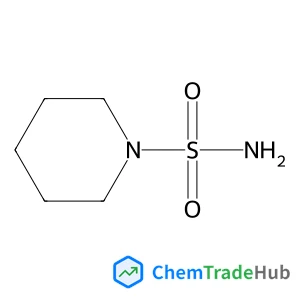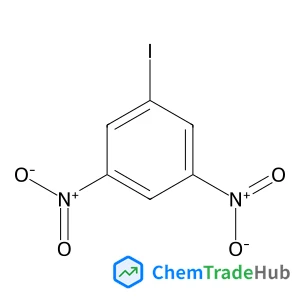
1-(4-Methylphenoxy)-3-(propan-2-ylamino)propan-2-ol
CAS Number:
5790-46-5
Molecular Formula:
C13H21NO2
Yuqian Mao, Huihui Zhao, Lemin Zhang, Long Xiong, Zhisheng Long
To date, implant-associated infection is still a significant clinical challenge, which cannot be effectively eliminated by single therapies due to the formation of microbial biofilms. Herein, a pH-responsive nanoplatform was constructed via the in situ growth of zinc sulfide (ZnS) nanoparticles on the surface of Ti3C2 MXene nanosheets, which was subsequently introduced in poly(L-lactic acid) (PLLA) to prepare a composite bone scaffold via selective laser sintering technology. In the acidic biofilm microenvironment, the degradation of ZnS released hydrogen sulfide (H2S) gas to eliminate the biofilm extracellular DNA (eDNA), thus destroying the compactness of the biofilm. Then, the bacterial biofilm became sensitive to hyperthermia, which could be further destroyed under near-infrared light irradiation due to the excellent photothermal property of MXene, finally achieving gas/photothermal synergistic antibiofilm and efficient sterilization. The results showed that the synergistic gas/photothermal therapy for the composite scaffold not only evidently inhibited the formation of biofilms, but also effectively eradicated the eDNA of the already-formed biofilms and killed 90.4% of E. coli and 84.2% of S. aureus under near infrared light irradiation compared with single gas or photothermal therapy. In addition, the composite scaffold promoted the proliferation and osteogenic differentiation of mouse bone marrow mesenchymal stem cells. Thus, the designed scaffold with excellent biofilm elimination and osteogenesis ability has great potential as an alternative treatment for implant-associated bone infections.
Cheng Liu, Xiuping Li, Jinyan Wang, Xigao Jian, Chunyue Pan
DOI: 10.1039/C2PY00417H
Daniel J. Krasznai, Timothy F. L. McKenna, Michael F. Cunningham, Pascale Champagne, Niels M. B. Smeets
DOI: 10.1039/C2PY00601D
Anna-Marie Zorn, Helmut Keul, Christopher Barner-Kowollik, Martin Moeller
DOI: 10.1039/C1PY00344E
Jian-Bing Zeng, Qun-Ying Zhu, Xi Lu, Yi-Song He, Yu-Zhong Wang
DOI: 10.1039/C1PY00456E
Julia N. Dobish, Sharon K. Hamilton, Eva Harth
DOI: 10.1039/C2PY00606E
Derek M. Ryan, Bradley L. Nilsson
DOI: 10.1039/C1PY00335F
Radovan Vukićević, Ulrike Schwadtke, Simon Schmücker, Philipp Schäfer, Dirk Kuckling, Sabine Beuermann
DOI: 10.1039/C1PY00427A
Takahiro Fukumaru, Tsuyohiko Fujigaya
DOI: 10.1039/C1PY00470K
4-(4-tert-Butylphenyl)-1H-pyrazol-3-amine finds applications in various industri...
H3TATAB is used in the pharmaceutical industry for the synthesis of certain orga...
1-Ethyl-3-fluorobenzene (CAS: 696-39-9) is primarily used as a precursor in the ...
1-(tert-Butoxycarbonyl)-4-(4-methoxyphenyl)pyrrolidine-3-carboxylic acid is prim...
1-Cyclobutyl-4-piperidinone (CAS: 359880-05-0) is a colorless or white crystalli...
Pyridine-2,6-dicarboxylic acid mono-tert-butyl ester (CAS: 575433-76-0) is a che...
The market for 2,3-Difluorophenylalanine (CAS: 236754-62-4) is growing with incr...
(2-Hydroxy-1-naphthyl)boronic acid can be synthesized through the reduction of 2...
This compound is a crystalline solid with a molecular weight of approximately 52...
While 5,7-Dihydroxy-4-oxo-2-(3,4,5-trihydroxyphenyl)-4H-chromen-3-yl beta-D-gluc...
Journal of Materials Chemistry A, B & C cover high quality studies across all fields of materials chemistry. The journals focus on those theoretical or experimental studies that report new understanding, applications, properties and synthesis of materials. The journals have a strong history of publishing quality reports of interest to interdisciplinary communities and providing an efficient and rigorous service through peer review and publication. The journals are led by an international team of Editors-in-Chief and Associate Editors who are all active researchers in their fields. Journal of Materials Chemistry A, B & C are separated by the intended application of the material studied. Broadly, applications in energy and sustainability are of interest to Journal of Materials Chemistry A, applications in biology and medicine are of interest to Journal of Materials Chemistry B, and applications in optical, magnetic and electronic devices are of interest to Journal of Materials Chemistry C. More than one Journal of Materials Chemistry journal may be suitable for certain fields and researchers are encouraged to submit their paper to the journal that they feel best fits for their particular article. Example topic areas within the scope of Journal of Materials Chemistry B are listed below. This list is neither exhaustive nor exclusive. Antifouling coatings Biocompatible materials Bioelectronics Bioimaging Biomimetics Biomineralisation Bionics Biosensors Diagnostics Drug delivery Gene delivery Immunobiology Nanomedicine Regenerative medicine & Tissue engineering Scaffolds Soft robotics Stem cells Therapeutic devices image block All articles published in Journal of Materials Chemistry B from 2019 onwards will be indexed in MEDLINE®. Articles that primarily focus on providing insight into the underlying science and performance of biomaterials within a biological environment are more suited to our companion journal, Biomaterials Science.