












Design and preparation of porous polybenzoxazole films using the tert-butoxycarbonyl group as a pore generator and their application for patternable low-k materials
Literature Information
Publication Date
2011-11-24
DOI
10.1039/C1PY00470K
Impact Factor
5.582
Authors
Takahiro Fukumaru, Tsuyohiko Fujigaya
View Original
Abstract
The continuous advance of the device performance in microelectronics requires the development of the lower dielectric constant (low-k) materials. We target the development of a next generation low-k material based on poly(p-phenylene benzobisoxazole) (PPBO) films due to their low k value, remarkable mechanical toughness, excellent thermal stability, extremely low coefficient of thermal expansion and chemical inertness. In order to overcome the poor processability caused by the insolubility in organic solvents, the tert-butoxycarbonyl (t-Boc) group was introduced into the PPBO precursor (t-Boc-prePBO). The obtained t-Boc-prePBO shows excellent solubility in common organic solvents and fine films were successfully prepared. The thermal treatment of the t-Boc-prePBO film produces the PPBO film, which was completely characterized using IR. The low dielectric constant (k) value of 2.37 was achieved in the PPBO film. Scanning electron microscopy revealed the formation of a pore structure that plays an important role in the low k value of the film. The porous PPBO film also showed a good mechanical strength (16.0 MPa) and remarkably high thermal conductivity (0.445 W m−1 K−1). Furthermore, the t-Boc functionalization enabled micropatterning using a photolithographic technique. Such a patternable film with a low k value, mechanical toughness, and high thermal conductivity is a promising candidate for the next generation low-k materials. Our calculation revealed that a k value could be lowered to 1.98 by controlling the film morphology, the value that satisfies the requirement of the International Technology Roadmap for Semiconductors (ITRS 2009).
Related Literature
A spectroscopic study of the fluorination and defluorination reactions on single-walled carbon nanotubes
Pierre R. Marcoux, Joachim Schreiber, Patrick Batail, Serge Lefrant, Joël Renouard, Guy Jacob, David Albertini, Jean-Yves Mevellec
2002-05-02
Paper
DOI: 10.1039/B109770A
Template extraction from porous clay heterostructures: Influence on the porosity and the hydrothermal stability of the materials
M. Benjelloun, P. Cool, P. Van Der Voort, E. F. Vansant
2002-05-13
Paper
DOI: 10.1039/B108361A
Triaziridine and tetrazetidinevs. cyclic water trimer and tetramer: A computational approach to the relationship between molecular and supramolecular conformational analysis
Manuel Alcamí, Otilia Mó, Manuel Yáñez, Ibon Alkorta, José Elguero
2002-04-30
Paper
DOI: 10.1039/B108270C
Topo-combinatoric categorization of quasi-local graphitic defects
2002-05-02
Paper
DOI: 10.1039/B110618J
Solubilization of organic compounds into as-synthesized spherical mesoporous silica
Yoshikazu Miyake, Toshimi Yumoto, Hajime Kitamura, Taichi Sugimoto
2002-05-10
Paper
DOI: 10.1039/B200074C
Scanning plasmon near-field microscopy: signal–noise ratio of different registration schemes and prospects for single molecule detection
V. N. Konopsky, S. A. Saunin, V. A. Bykov, E. A. Vinogradov
2002-05-13
Paper
DOI: 10.1039/B109955H
Mechanism of the reaction of OH radicals with acetone and acetaldehyde at 251 and 296 K
Geoffrey S. Tyndall, John J. Orlando, Timothy J. Wallington, Michael D. Hurley, Masashi Goto, Masahiro Kawasaki
2002-04-25
Paper
DOI: 10.1039/B111195G
Two-step mechanism in cationic lipoplex formation as observed by dynamic light scattering, dielectric relaxation and circular dichroism methods
2002-05-13
Paper
DOI: 10.1039/B110503E
Preparation of silica-supported cobalt catalysts through chemisorption of cobalt(ii) and cobalt(iii) acetylacetonate
Aimo Rautiainen, Marina Lindblad, Leif B. Backman, Riikka L. Puurunen
2002-05-09
Paper
DOI: 10.1039/B201168A
Metal clusters in plasma polymer matrices Part IV. Electrical properties of Ag clusters
Michael Wark, Alfred Baalmann, Ulrich Simon, Nils Jaeger
2002-04-26
Paper
DOI: 10.1039/B111038A
You might also like
Compound Q&A
How should waste containing (6-Bromo-2-naphthyl)oxy](dimethyl)(2-methyl-2-propanyl)silane be handled?
Waste containing (6-Bromo-2-naphthyl)oxy](dimethyl)(2-methyl-2-propanyl)silane (...
100751-65-3[(6-Bromo-2-naphthyl...
Compound Q&A
How is 7-Fluoro-4-isoquinolinecarboxylic acid (CAS: 1841081-40-0) typically synthesized?
7-Fluoro-4-isoquinolinecarboxylic acid can be synthesized via a multi-step proce...
1841081-40-07-Fluoro-4-isoquinol...
Compound Q&A
What are the physical and chemical properties of 2,3,5,6-Tetrabromothieno[3,2-b]thiophene (CAS: 124638-53-5)?
2,3,5,6-Tetrabromothieno[3,2-b]thiophene is a crystalline compound with a high m...
124638-53-52,3,5,6-Tetrabromoth...
Compound Q&A
Is 1-[4-(Benzylamino)-7,8-dihydro-5H-pyrano[4,3-d]pyrimidin-2-yl]-2-methyl-1H-indole-4-carboxamide (CAS: 1542705-92-9) safe?
1-[4-(Benzylamino)-7,8-dihydro-5H-pyrano[4,3-d]pyrimidin-2-yl]-2-methyl-1H-indol...
1542705-92-91-[4-(Benzylamino)-7...
Compound Q&A
What is the market or research trend for imidazo[5,1-d]-1,2,3,5-tetrazine-8-carboxylic acid, 3,4-dihydro-3-methyl-4-oxo- (CAS: 113942-30-6)?
The market for imidazo[5,1-d]-1,2,3,5-tetrazine-8-carboxylic acid, 3,4-dihydro-3...
113942-30-6Imidazo[5,1-d]-1,2,3...
Compound Q&A
What is 3-(Triisopropylsilyl)propiolaldehyde (CAS: 163271-80-5)?
3-(Triisopropylsilyl)propiolaldehyde is a synthetic organic compound with the CA...
163271-80-53-(Triisopropylsilyl...
Compound Q&A
What regulatory guidelines apply to 6-Nitro-2H-1,4-benzoxazin-3(4H)-one (CAS: 81721-87-1)?
6-Nitro-2H-1,4-benzoxazin-3(4H)-one (CAS: 81721-87-1) is subject to various regu...
81721-87-16-Nitro-2H-1,4-benzo...
Compound Q&A
How should waste containing (3-Fluorophenyl)(4-{[(2-methyl-2-propanyl)oxy]carbonyl}-1-piperazinyl)acetic acid (CAS: 885272-91-3) be handled?
Waste containing (3-Fluorophenyl)(4-{[(2-methyl-2-propanyl)oxy]carbonyl}-1-piper...
885272-91-3(3-Fluorophenyl)(4-{...
Compound Q&A
What are the physical and chemical properties of N,N'-4,4'-Biphenyldiyldiisonicotinamide (CAS: 55119-40-9)?
N,N'-4,4'-Biphenyldiyldiisonicotinamide is a white crystalline solid with a mole...
55119-40-9N,N'-4,4'-Biphenyldi...
Compound Q&A
What industries use 6-Bromo-8-fluoro-2-quinazolinol (CAS: 1036756-15-6)?
6-Bromo-8-fluoro-2-quinazolinol is primarily used in the pharmaceutical industry...
1036756-15-66-Bromo-8-fluoro-2-q...
Source Journal
Polymer Chemistry

CiteScore:
8.6
Self-citation Rate:
7.3%
Articles per Year:
457
Polymer Chemistry welcomes submissions in all areas of polymer science that have a strong focus on macromolecular chemistry. Manuscripts may cover a broad range of fields, yet no direct application focus is required.
Recommended Compounds
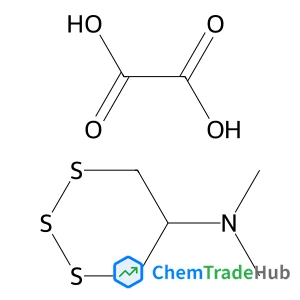
Oxalic acid compound with cyclohexylsulfamothioic O-acid (11)
CAS Number:
31895-22-4
Molecular Formula:
C7H13NO4S3
![(2S)-2-({[(2-Methyl-2-propanyl)oxy]carbonyl}amino)-4-pentynoic acid structure](https://static.chemtradehub.com/structs/630/63039-48-5-b66d.webp "(2S)-2-({[(2-Methyl-2-propanyl)oxy]carbonyl}amino)-4-pentynoic acid structure")
(2S)-2-({[(2-Methyl-2-propanyl)oxy]carbonyl}amino)-4-pentynoic acid
CAS Number:
63039-48-5
Molecular Formula:
C10H15NO4
Recommended Suppliers







Disclaimer
This page provides academic journal information for reference and research purposes only. We are not affiliated with any journal publishers and do not handle publication submissions. For publication-related inquiries, please contact the respective journal publishers directly.
If you notice any inaccuracies in the information displayed, please contact us at support@chemtradehub.com. We will promptly review and address your concerns.