












Self-assembled amino acids and dipeptides as noncovalent hydrogels for tissue engineering
Literature Information
Publication Date
2011-10-07
DOI
10.1039/C1PY00335F
Impact Factor
5.582
Authors
Derek M. Ryan, Bradley L. Nilsson
View Original
Abstract
Noncovalent hydrogels derived from the self-assembly of peptides and proteins have demonstrated advantages over covalent hydrogels for three-dimensional cell scaffolding applications. There is growing interest in exploiting minimal, self-assembling dipeptides and amino acids as hydrogel networks that support cell culture applications, but significant questions persist concerning the mechanism of self-assembly and the relationship between the molecular structure of the assembled materials and their emergent viscoelastic and biochemical properties. This review will critically assess current progress in the use of minimal self-assembling peptides and functionalized amino acids to create hydrogels, with a focus on the challenges of understanding the structure and function of these materials and on the outlook for the use of these modular and dynamic materials as robust networks for tissue engineering.
Related Literature
Spectral properties of a fluorescing molecule within a spherical metallic nanocavity
Jörg Enderlein
2002-05-07
Paper
DOI: 10.1039/B200502F
Metal clusters in plasma polymer matrices Part IV. Electrical properties of Ag clusters
Michael Wark, Alfred Baalmann, Ulrich Simon, Nils Jaeger
2002-04-26
Paper
DOI: 10.1039/B111038A
Dielectric spectroscopy of ion-pairing and hydration in aqueous tetra-n-alkylammonium halide solutions
Richard Buchner, Christian Hölzl, Jochen Stauber, Josef Barthel
2002-04-29
Paper
DOI: 10.1039/B110361J
Preparation, characterization and applications of free-standing single walled carbon nanotube thin films
Sergei Lebedkin
2002-05-01
Paper
DOI: 10.1039/B201570F
Black body radiation induced hydrogen formation in hydrated vanadium cations V+(H2O)n
Brigitte S. Fox, Iulia Balteanu, O. Petru Balaj, Haichuan Liu, Martin K. Beyer, Vladimir E. Bondybey
2002-05-01
Paper
DOI: 10.1039/B110849B
Structure of intrazeolite molybdenum oxide clusters and their catalysis of the oxidation of ethyl alcohol
Yasuaki Okamoto, Nobuyuki Oshima, Yasuhiro Kobayashi, Osamu Terasaki, Tetsuya Kodaira, Takeshi Kubota
2002-05-08
Paper
DOI: 10.1039/B108639C
Surface reactivity of prereduced rare earth oxides with nitric oxide: New approach for NO decomposition
Masaaki Haneda, Yoshiaki Kintaichi, Hideaki Hamada
2002-05-17
Paper
DOI: 10.1039/B201340A
Interaction between probe molecules and zeolites. Part II:Interpretation of the IR spectra of CO and N2 adsorbed in NaY and NaRbY
A. V. Larin, D. P. Vercauteren, C. Lamberti, S. Bordiga, A. Zecchina
2002-04-29
Paper
DOI: 10.1039/B107242K
Static and dynamic structures of halogenated dimethyl ether radical cations: An EPR and MO study
Yoshiteru Itagaki, Peng Wang, Nobuyuki Isamoto, Masaru Shiotani, Akinori Hasegawa, Magnus Jansson, Sten Lunell
2002-05-16
Paper
DOI: 10.1039/B200437B
Micellar aggregation of sulfonate surfactants studied by electron paramagnetic resonance of a cationic nitroxide: an experimental and computational approach
A. M. Tedeschi, G. D'Errico, E. Busi, R. Basosi, V. Barone
2002-04-25
Paper
DOI: 10.1039/B106833D
You might also like
Compound Q&A
How should waste containing (6-Bromo-2-naphthyl)oxy](dimethyl)(2-methyl-2-propanyl)silane be handled?
Waste containing (6-Bromo-2-naphthyl)oxy](dimethyl)(2-methyl-2-propanyl)silane (...
100751-65-3[(6-Bromo-2-naphthyl...
Compound Q&A
How is 7-Fluoro-4-isoquinolinecarboxylic acid (CAS: 1841081-40-0) typically synthesized?
7-Fluoro-4-isoquinolinecarboxylic acid can be synthesized via a multi-step proce...
1841081-40-07-Fluoro-4-isoquinol...
Compound Q&A
What are the physical and chemical properties of 2,3,5,6-Tetrabromothieno[3,2-b]thiophene (CAS: 124638-53-5)?
2,3,5,6-Tetrabromothieno[3,2-b]thiophene is a crystalline compound with a high m...
124638-53-52,3,5,6-Tetrabromoth...
Compound Q&A
Is 1-[4-(Benzylamino)-7,8-dihydro-5H-pyrano[4,3-d]pyrimidin-2-yl]-2-methyl-1H-indole-4-carboxamide (CAS: 1542705-92-9) safe?
1-[4-(Benzylamino)-7,8-dihydro-5H-pyrano[4,3-d]pyrimidin-2-yl]-2-methyl-1H-indol...
1542705-92-91-[4-(Benzylamino)-7...
Compound Q&A
What is the market or research trend for imidazo[5,1-d]-1,2,3,5-tetrazine-8-carboxylic acid, 3,4-dihydro-3-methyl-4-oxo- (CAS: 113942-30-6)?
The market for imidazo[5,1-d]-1,2,3,5-tetrazine-8-carboxylic acid, 3,4-dihydro-3...
113942-30-6Imidazo[5,1-d]-1,2,3...
Compound Q&A
What is 3-(Triisopropylsilyl)propiolaldehyde (CAS: 163271-80-5)?
3-(Triisopropylsilyl)propiolaldehyde is a synthetic organic compound with the CA...
163271-80-53-(Triisopropylsilyl...
Compound Q&A
What regulatory guidelines apply to 6-Nitro-2H-1,4-benzoxazin-3(4H)-one (CAS: 81721-87-1)?
6-Nitro-2H-1,4-benzoxazin-3(4H)-one (CAS: 81721-87-1) is subject to various regu...
81721-87-16-Nitro-2H-1,4-benzo...
Compound Q&A
How should waste containing (3-Fluorophenyl)(4-{[(2-methyl-2-propanyl)oxy]carbonyl}-1-piperazinyl)acetic acid (CAS: 885272-91-3) be handled?
Waste containing (3-Fluorophenyl)(4-{[(2-methyl-2-propanyl)oxy]carbonyl}-1-piper...
885272-91-3(3-Fluorophenyl)(4-{...
Compound Q&A
What are the physical and chemical properties of N,N'-4,4'-Biphenyldiyldiisonicotinamide (CAS: 55119-40-9)?
N,N'-4,4'-Biphenyldiyldiisonicotinamide is a white crystalline solid with a mole...
55119-40-9N,N'-4,4'-Biphenyldi...
Compound Q&A
What industries use 6-Bromo-8-fluoro-2-quinazolinol (CAS: 1036756-15-6)?
6-Bromo-8-fluoro-2-quinazolinol is primarily used in the pharmaceutical industry...
1036756-15-66-Bromo-8-fluoro-2-q...
Source Journal
Polymer Chemistry

CiteScore:
8.6
Self-citation Rate:
7.3%
Articles per Year:
457
Polymer Chemistry welcomes submissions in all areas of polymer science that have a strong focus on macromolecular chemistry. Manuscripts may cover a broad range of fields, yet no direct application focus is required.
Recommended Compounds
![(2S)-2-({[(2-Methyl-2-propanyl)oxy]carbonyl}amino)-4-pentynoic acid structure](https://static.chemtradehub.com/structs/630/63039-48-5-b66d.webp "(2S)-2-({[(2-Methyl-2-propanyl)oxy]carbonyl}amino)-4-pentynoic acid structure")
(2S)-2-({[(2-Methyl-2-propanyl)oxy]carbonyl}amino)-4-pentynoic acid
CAS Number:
63039-48-5
Molecular Formula:
C10H15NO4
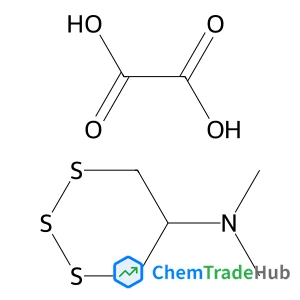
Oxalic acid compound with cyclohexylsulfamothioic O-acid (11)
CAS Number:
31895-22-4
Molecular Formula:
C7H13NO4S3
Recommended Suppliers






Disclaimer
This page provides academic journal information for reference and research purposes only. We are not affiliated with any journal publishers and do not handle publication submissions. For publication-related inquiries, please contact the respective journal publishers directly.
If you notice any inaccuracies in the information displayed, please contact us at support@chemtradehub.com. We will promptly review and address your concerns.