












A sustainable and self-healable silk fibroin nanocomposite with antibacterial and drug eluting properties for 3D printed wound dressings
Literature Information
Publication Date
2023-12-15
DOI
10.1039/D3TB02363J
Impact Factor
6.331
Authors
Sana Sheybanikashani, Nooshin Zandi, Danial Hosseini, Roya Lotfi
View Original
Abstract
The development of self-healable and 3D printable hydrogels with decent biocompatibility, mechanical durability, adhesiveness to tissues, and antibacterial activity is of great importance for wound healing applications. In this study, we present a sustainable and environmentally friendly composite hydrogel consisting of silk fibroin (SF), oxidized salep (OS), and kappa carrageenan nanoparticles (NPs) for efficient wound care. The injectable nanocomposite hydrogel is highly stretchable and exhibits strong tissue adhesiveness and self-healing response through Schiff-base cross-linking between OS and SF. The tunable shear-thinning viscoelastic properties of the hydrogel facilitate 3D bioprinting with excellent shape adaptability (97.7 ± 1.1% recovery), enabling the fabrication of complex-shaped constructs. In vitro release kinetics of tetracycline (TC) encapsulated in kappa carrageenan NPs indicate a distinctive Korsmeyer–Peppas profile, including an initial burst release followed by a triphasic pattern controlled by the embedded NPs within the hydrogel matrix. The composite hydrogel shows a remarkable broad-spectrum antibacterial activity with substantial zones of inhibition against S. aureus (34.00 ± 1.00 mm) and E. coli (27.60 ± 2.08 mm) after 24 h of incubation at 37 °C. The addition of TC further enhances the zones of inhibition by approximately 45% for S. aureus and 27% for E. coli. The control group without kappa NP incorporation shows no zone of inhibition, underscoring the critical role of the nanoparticles in imparting antibacterial activity to the hydrogel. Cytocompatibility assays show the high viability of fibroblast (L929) cells (>90%) in vitro. In vivo biocompatibility studies through subcutaneous implantation also do not show malignancy, infection, abscess, necrosis, epidermal or dermal modifications, or inflammation of the wounds after 14 days post-injection. H&E staining shows that the biodegradation of the developed hydrogel facilitates the growth of non-inflammatory cells, leading to the substitution of the injected hydrogel with autologous tissue. The detailed analyses affirm that the multifunctional injectable hydrogel with self-healing and antibacterial properties has high potential for wound healing and skin tissue engineering.
Related Literature
Ultra bright red AIE dots for cytoplasm and nuclear imaging
Zilong Wang, Lulin Yan, Lei Zhang, Yujue Chen, Hui Li, Jibo Zhang, Yan Zhang, Xing Li, Bin Xu, Xueqi Fu, Zaicheng Sun, Wenjing Tian
2014-08-13
Paper
DOI: 10.1039/C4PY00764F
Bulk AGET ATRP of methyl methacrylate using iron(iii) acetylacetonate as a catalyst
Yuan Liu, Tianchi Xu, Lifen Zhang, Zhenping Cheng, Xiulin Zhu
2014-08-13
Paper
DOI: 10.1039/C4PY00968A
Correction: Synergistic effects of hydrophobicity and gas barrier properties on the anticorrosion property of PMMA nanocomposite coatings embedded with graphene nanosheets
Kung-Chin Chang, Wei-Fu Ji, Mei-Chun Lai, You-Rong Hsiao, Chien-Hua Hsu, Tsao-Li Chuang, Yen Wei, Jui-Ming Yeh, Wei-Ren Liu
2014-10-21
Correction
DOI: 10.1039/C4PY90078B
Branched polythiophenes by Ni-catalyzed Kumada coupling
Martin Scheuble, Thomas V. Richter, Miriam Goll, Steffen Link, Juan T. López Navarrete, Adrian Ruff, M. Carmen Ruiz Delgado, Sabine Ludwigs
2014-09-01
Paper
DOI: 10.1039/C4PY00899E
Injectable hydrogels with in situ-forming hydrophobic domains: oligo(d,l-lactide) modified poly(oligoethylene glycol methacrylate) hydrogels
Niels M. B. Smeets, Mathew Patenaude, Dennis Kinio, Francis M. Yavitt, Emilia Bakaic, Fei-Chi Yang, Maikel Rheinstädter, Todd Hoare
2014-09-01
Paper
DOI: 10.1039/C4PY00810C
Facile preparation of electrochromic poly(amine–imide) films from diimide compounds with terminal triphenylamino groups via electrochemical oxidative coupling reactions
Sheng-Huei Hsiao, Jun-Wen Lin
2014-08-11
Paper
DOI: 10.1039/C4PY00610K
Suzuki–Miyaura catalyst-transfer polycondensation with Pd(IPr)(OAc)2 as the catalyst for the controlled synthesis of polyfluorenes and polythiophenes
Xincui Shi, Hongkun Tian, Yanhou Geng, Fosong Wang
2014-08-28
Paper
DOI: 10.1039/C4PY00917G
Improve the photovoltaic performance of new quinoxaline-based conjugated polymers from the view of conjugated length and steric hindrance
Manjun Xiao, Weiguo Zhu, Ning Wang, Xichang Bao, Renqiang Yang
2014-08-29
Paper
DOI: 10.1039/C4PY01061B
Construction of a pillar[5]arene-based linear supramolecular polymer and a photo-responsive supramolecular network
Jie Yang, Zhengtao Li, Yujuan Zhou, Guocan Yu
2014-08-19
Communication
DOI: 10.1039/C4PY01042F
You might also like
Compound Q&A
How should waste containing (6-Bromo-2-naphthyl)oxy](dimethyl)(2-methyl-2-propanyl)silane be handled?
Waste containing (6-Bromo-2-naphthyl)oxy](dimethyl)(2-methyl-2-propanyl)silane (...
100751-65-3[(6-Bromo-2-naphthyl...
Compound Q&A
How is 7-Fluoro-4-isoquinolinecarboxylic acid (CAS: 1841081-40-0) typically synthesized?
7-Fluoro-4-isoquinolinecarboxylic acid can be synthesized via a multi-step proce...
1841081-40-07-Fluoro-4-isoquinol...
Compound Q&A
What are the physical and chemical properties of 2,3,5,6-Tetrabromothieno[3,2-b]thiophene (CAS: 124638-53-5)?
2,3,5,6-Tetrabromothieno[3,2-b]thiophene is a crystalline compound with a high m...
124638-53-52,3,5,6-Tetrabromoth...
Compound Q&A
Is 1-[4-(Benzylamino)-7,8-dihydro-5H-pyrano[4,3-d]pyrimidin-2-yl]-2-methyl-1H-indole-4-carboxamide (CAS: 1542705-92-9) safe?
1-[4-(Benzylamino)-7,8-dihydro-5H-pyrano[4,3-d]pyrimidin-2-yl]-2-methyl-1H-indol...
1542705-92-91-[4-(Benzylamino)-7...
Compound Q&A
What is the market or research trend for imidazo[5,1-d]-1,2,3,5-tetrazine-8-carboxylic acid, 3,4-dihydro-3-methyl-4-oxo- (CAS: 113942-30-6)?
The market for imidazo[5,1-d]-1,2,3,5-tetrazine-8-carboxylic acid, 3,4-dihydro-3...
113942-30-6Imidazo[5,1-d]-1,2,3...
Compound Q&A
What is 3-(Triisopropylsilyl)propiolaldehyde (CAS: 163271-80-5)?
3-(Triisopropylsilyl)propiolaldehyde is a synthetic organic compound with the CA...
163271-80-53-(Triisopropylsilyl...
Compound Q&A
What regulatory guidelines apply to 6-Nitro-2H-1,4-benzoxazin-3(4H)-one (CAS: 81721-87-1)?
6-Nitro-2H-1,4-benzoxazin-3(4H)-one (CAS: 81721-87-1) is subject to various regu...
81721-87-16-Nitro-2H-1,4-benzo...
Compound Q&A
How should waste containing (3-Fluorophenyl)(4-{[(2-methyl-2-propanyl)oxy]carbonyl}-1-piperazinyl)acetic acid (CAS: 885272-91-3) be handled?
Waste containing (3-Fluorophenyl)(4-{[(2-methyl-2-propanyl)oxy]carbonyl}-1-piper...
885272-91-3(3-Fluorophenyl)(4-{...
Compound Q&A
What are the physical and chemical properties of N,N'-4,4'-Biphenyldiyldiisonicotinamide (CAS: 55119-40-9)?
N,N'-4,4'-Biphenyldiyldiisonicotinamide is a white crystalline solid with a mole...
55119-40-9N,N'-4,4'-Biphenyldi...
Compound Q&A
What industries use 6-Bromo-8-fluoro-2-quinazolinol (CAS: 1036756-15-6)?
6-Bromo-8-fluoro-2-quinazolinol is primarily used in the pharmaceutical industry...
1036756-15-66-Bromo-8-fluoro-2-q...
Source Journal
Journal of Materials Chemistry B

CiteScore:
12
Self-citation Rate:
4.9%
Articles per Year:
831
Journal of Materials Chemistry A, B & C cover high quality studies across all fields of materials chemistry. The journals focus on those theoretical or experimental studies that report new understanding, applications, properties and synthesis of materials. The journals have a strong history of publishing quality reports of interest to interdisciplinary communities and providing an efficient and rigorous service through peer review and publication. The journals are led by an international team of Editors-in-Chief and Associate Editors who are all active researchers in their fields. Journal of Materials Chemistry A, B & C are separated by the intended application of the material studied. Broadly, applications in energy and sustainability are of interest to Journal of Materials Chemistry A, applications in biology and medicine are of interest to Journal of Materials Chemistry B, and applications in optical, magnetic and electronic devices are of interest to Journal of Materials Chemistry C. More than one Journal of Materials Chemistry journal may be suitable for certain fields and researchers are encouraged to submit their paper to the journal that they feel best fits for their particular article. Example topic areas within the scope of Journal of Materials Chemistry B are listed below. This list is neither exhaustive nor exclusive. Antifouling coatings Biocompatible materials Bioelectronics Bioimaging Biomimetics Biomineralisation Bionics Biosensors Diagnostics Drug delivery Gene delivery Immunobiology Nanomedicine Regenerative medicine & Tissue engineering Scaffolds Soft robotics Stem cells Therapeutic devices image block All articles published in Journal of Materials Chemistry B from 2019 onwards will be indexed in MEDLINE®. Articles that primarily focus on providing insight into the underlying science and performance of biomaterials within a biological environment are more suited to our companion journal, Biomaterials Science.
Recommended Compounds
![2-{[4-(2-Methoxyethyl)phenoxy]methyl}oxirane structure](https://static.chemtradehub.com/structs/567/56718-70-8-f037.webp "2-{[4-(2-Methoxyethyl)phenoxy]methyl}oxirane structure")
![(2S)-2-({[(2-Methyl-2-propanyl)oxy]carbonyl}amino)-4-pentynoic acid structure](https://static.chemtradehub.com/structs/630/63039-48-5-b66d.webp "(2S)-2-({[(2-Methyl-2-propanyl)oxy]carbonyl}amino)-4-pentynoic acid structure")
(2S)-2-({[(2-Methyl-2-propanyl)oxy]carbonyl}amino)-4-pentynoic acid
CAS Number:
63039-48-5
Molecular Formula:
C10H15NO4
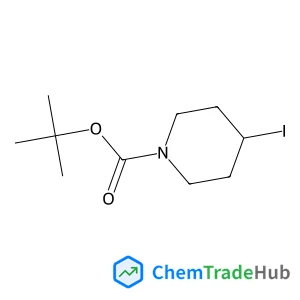
2-Methyl-2-propanyl 4-iodo-1-piperidinecarboxylate
CAS Number:
301673-14-3
Molecular Formula:
C10H18INO2
Recommended Suppliers






Disclaimer
This page provides academic journal information for reference and research purposes only. We are not affiliated with any journal publishers and do not handle publication submissions. For publication-related inquiries, please contact the respective journal publishers directly.
If you notice any inaccuracies in the information displayed, please contact us at support@chemtradehub.com. We will promptly review and address your concerns.