












![5-Bromoimidazo[1,2-a]pyridine structure](https://static.chemtradehub.com/structs/692/69214-09-1-d8e2.webp "5-Bromoimidazo[1,2-a]pyridine structure")
Injectable hydrogels with in situ-forming hydrophobic domains: oligo(d,l-lactide) modified poly(oligoethylene glycol methacrylate) hydrogels
Literature Information
Publication Date
2014-09-01
DOI
10.1039/C4PY00810C
Impact Factor
5.582
Authors
Niels M. B. Smeets, Mathew Patenaude, Dennis Kinio, Francis M. Yavitt, Emilia Bakaic, Fei-Chi Yang, Maikel Rheinstädter, Todd Hoare
View Original
Abstract
Injectable, in situ-gelling nanostructured hydrogels have been prepared from hydrazide and aldehyde-functionalized polymer precursors based on a copolymer of oligo(ethylene glycol) methacrylate (OEGMA) and an oligo(lactic acid) macromonomer (OLA) with varying lactic acid chain lengths. The resulting hydrogels contain a mix of chemical (hydrazone bond formation between hydrazide and aldehyde groups) and physical (hydrophobic interactions between OLA chains) cross-links which form competitively as a function of the OLA chain length and density. An increase in the OLA chain length and density results in the formation of more physical cross-links and fewer chemical cross-links. Tuning the relative prevalence of physical and chemical cross-link formation facilitated largely independent tuning of gel mechanics relative to gel swelling and degradation. Small-angle neutron scattering of these OLA-containing hydrogels reveals a microstructure consisting of associative hydrophobic domains, based on an increased scattering intensity and decreased blob size relative to that observed for POEGMA hydrogels prepared without the OLA co-monomer. The presence of hydrophobic OLA domains increases the uptake and slows the release of bovine serum albumin, a protein well-known to associate with hydrophobic domains. Coupled with the observed cytocompatibility of the reactive precursor polymers used to prepare the hydrogels, we anticipate significant potential applications of these hydrogels for the prolonged release of hydrophobic cargoes.
Recommended Journals
Related Literature
A new multifunctional energy harvester based on mica nanosheet-dispersed PVDF nanofabrics featuring piezo-capacitive, piezoelectric and triboelectric effects
Govind S. Ekbote, Mohammed Khalifa, B. Venkatesa Perumal, S. Anandhan
2023-08-30
Paper
DOI: 10.1039/D3LP00080J
Thermoresponsive polymers with LCST transition: synthesis, characterization, and their impact on biomedical frontiers
Yichun Yuan, Konpal Raheja, Nathalie B. Milbrandt, Sophia Beilharz, Steffy Tene, Solomon Oshabaheebwa, Anna Cristina S. Samia, Metin Karayilan
2023-08-29
Review Article
DOI: 10.1039/D3LP00114H
Radical polymers in optoelectronic and spintronic applications
Hyunki Yeo, Suman Debnath, Baiju P. Krishnan
2023-12-20
Perspective
DOI: 10.1039/D3LP00213F
Aromatic polypeptide amphiphiles for drug adsorption: a new approach for drug overdose treatment
Karoline E. Eckhart, Hunter B. Wood, Tarik A. Taoufik, Michelle E. Wolf, Dazhe J. Cao, Stefanie A. Sydlik
2023-10-09
Paper
DOI: 10.1039/D3LP00082F
Polybrominated diphenyl ethers in the grey-headed gull (Larus cirrocephalus) and African sacred ibis (Threskiornis aethiopicus)
C. Emereole, R. Jansen, O. J. Okonkwo
2023-10-04
Paper
DOI: 10.1039/D3VA00119A
Chemical recycling of PET to value-added products
Zixian Jia, Lin Gao, Lijiao Qin, Jianzhong Yin
2023-10-19
Critical Review
DOI: 10.1039/D3SU00311F
Boosting the catalytic performance of metal–zeolite catalysts in the hydrocracking of polyolefin wastes by optimizing the nanoscale proximity
Xinlei Han, Xinru Zhou, Tuo Ji, Feng Zeng, Weiping Deng, Zhenchen Tang, Rizhi Chen
2023-10-09
Paper
DOI: 10.1039/D3EY00180F
Direct ink writing of polyimide aerogels for battery thermal mitigation
Ciera E. Cipriani, Donald A. Dornbusch, Stephanie L. Vivod
2023-12-13
Paper
DOI: 10.1039/D3LP00200D
Using a supervised machine learning approach to predict water quality at the Gaza wastewater treatment plant
Mazen S. Hamada, Hossam Adel Zaqoot, Waqar Ahmed Sethar
2023-11-04
Paper
DOI: 10.1039/D3VA00170A
You might also like
Compound Q&A
How should waste containing (6-Bromo-2-naphthyl)oxy](dimethyl)(2-methyl-2-propanyl)silane be handled?
Waste containing (6-Bromo-2-naphthyl)oxy](dimethyl)(2-methyl-2-propanyl)silane (...
100751-65-3[(6-Bromo-2-naphthyl...
Compound Q&A
How is 7-Fluoro-4-isoquinolinecarboxylic acid (CAS: 1841081-40-0) typically synthesized?
7-Fluoro-4-isoquinolinecarboxylic acid can be synthesized via a multi-step proce...
1841081-40-07-Fluoro-4-isoquinol...
Compound Q&A
What are the physical and chemical properties of 2,3,5,6-Tetrabromothieno[3,2-b]thiophene (CAS: 124638-53-5)?
2,3,5,6-Tetrabromothieno[3,2-b]thiophene is a crystalline compound with a high m...
124638-53-52,3,5,6-Tetrabromoth...
Compound Q&A
Is 1-[4-(Benzylamino)-7,8-dihydro-5H-pyrano[4,3-d]pyrimidin-2-yl]-2-methyl-1H-indole-4-carboxamide (CAS: 1542705-92-9) safe?
1-[4-(Benzylamino)-7,8-dihydro-5H-pyrano[4,3-d]pyrimidin-2-yl]-2-methyl-1H-indol...
1542705-92-91-[4-(Benzylamino)-7...
Compound Q&A
What is the market or research trend for imidazo[5,1-d]-1,2,3,5-tetrazine-8-carboxylic acid, 3,4-dihydro-3-methyl-4-oxo- (CAS: 113942-30-6)?
The market for imidazo[5,1-d]-1,2,3,5-tetrazine-8-carboxylic acid, 3,4-dihydro-3...
113942-30-6Imidazo[5,1-d]-1,2,3...
Compound Q&A
What is 3-(Triisopropylsilyl)propiolaldehyde (CAS: 163271-80-5)?
3-(Triisopropylsilyl)propiolaldehyde is a synthetic organic compound with the CA...
163271-80-53-(Triisopropylsilyl...
Compound Q&A
What regulatory guidelines apply to 6-Nitro-2H-1,4-benzoxazin-3(4H)-one (CAS: 81721-87-1)?
6-Nitro-2H-1,4-benzoxazin-3(4H)-one (CAS: 81721-87-1) is subject to various regu...
81721-87-16-Nitro-2H-1,4-benzo...
Compound Q&A
How should waste containing (3-Fluorophenyl)(4-{[(2-methyl-2-propanyl)oxy]carbonyl}-1-piperazinyl)acetic acid (CAS: 885272-91-3) be handled?
Waste containing (3-Fluorophenyl)(4-{[(2-methyl-2-propanyl)oxy]carbonyl}-1-piper...
885272-91-3(3-Fluorophenyl)(4-{...
Compound Q&A
What are the physical and chemical properties of N,N'-4,4'-Biphenyldiyldiisonicotinamide (CAS: 55119-40-9)?
N,N'-4,4'-Biphenyldiyldiisonicotinamide is a white crystalline solid with a mole...
55119-40-9N,N'-4,4'-Biphenyldi...
Compound Q&A
What industries use 6-Bromo-8-fluoro-2-quinazolinol (CAS: 1036756-15-6)?
6-Bromo-8-fluoro-2-quinazolinol is primarily used in the pharmaceutical industry...
1036756-15-66-Bromo-8-fluoro-2-q...
Source Journal
Polymer Chemistry

CiteScore:
8.6
Self-citation Rate:
7.3%
Articles per Year:
457
Polymer Chemistry welcomes submissions in all areas of polymer science that have a strong focus on macromolecular chemistry. Manuscripts may cover a broad range of fields, yet no direct application focus is required.
Recommended Compounds
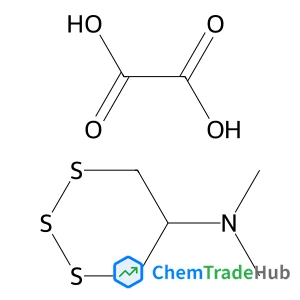
Oxalic acid compound with cyclohexylsulfamothioic O-acid (11)
CAS Number:
31895-22-4
Molecular Formula:
C7H13NO4S3
Recommended Suppliers




Disclaimer
This page provides academic journal information for reference and research purposes only. We are not affiliated with any journal publishers and do not handle publication submissions. For publication-related inquiries, please contact the respective journal publishers directly.
If you notice any inaccuracies in the information displayed, please contact us at support@chemtradehub.com. We will promptly review and address your concerns.