












Evidence for coherent mixing of excited and charge-transfer states in the major plant light-harvesting antenna, LHCII
Literature Information
Publication Date
2017-08-03
DOI
10.1039/C7CP03038J
Impact Factor
3.676
Authors
Charusheela Ramanan, Marco Ferretti, Henny van Roon, Vladimir I. Novoderezhkin, Rienk van Grondelle
View Original
Abstract
LHCII, the major light harvesting antenna from plants, plays a dual role in photosynthesis. In low light it is a light-harvester, while in high light it is a quencher that protects the organism from photodamage. The switching mechanism between these two orthogonal conditions is mediated by protein dynamic disorder and photoprotective energy dissipation. The latter in particular is thought to occur in part via spectroscopically ‘dark’ states. We searched for such states in LHCII trimers from spinach, at both room temperature and at 77 K. Using 2D electronic spectroscopy, we explored coherent interactions between chlorophylls absorbing on the low-energy side of LHCII, which is the region that is responsible for both light-harvesting and photoprotection. 2D beating frequency maps allow us to identify four frequencies with strong excitonic character. In particular, our results show the presence of a low-lying state that is coupled to a low-energy excitonic state. We assign this to a mixed excitonic-charge transfer state involving the state with charge separation within the Chl a603–b609 heterodimer, borrowing some dipole strength from the Chl a602–a603 excited states. Such a state may play a role in photoprotection, in conjunction with specific and environmentally controlled realizations of protein dynamic disorder. Our identification and assignment of the coherences observed in the 2D frequency maps suggests that the structure of exciton states as well as a mixing of the excited and charge-transfer states is affected by coupling of these states to resonant vibrations in LHCII.
Related Literature
Mechanistic insights for the transprotection of tertiary amines with Boc2O via charged carbamates: access to both enantiomers of 2-azanorbornane-3-exo-carboxylic acids
Ivo E. Sampaio-Dias, Sara C. Silva-Reis, Luís Pinto da Silva, Xerardo García-Mera, Miguel A. Maestro, José E. Rodríguez-Borges
2019-08-29
Research Article
DOI: 10.1039/C9QO00957D
A controlled blue-shift in meso-nitrogen aryl fused DIPY and BODIPY skeletons
Marco Farinone, Joanna Cybińska, Miłosz Pawlicki
2019-04-25
Research Article
DOI: 10.1039/C9QO00294D
Carbonylative transformation of benzyl formates into alkyl 2-arylacetates in organic carbonates
Xinxin Qi, Ming Lai
2019-08-15
Research Article
DOI: 10.1039/C9QO00917E
Stereoselective defluorinative carboxylation of gem-difluoroalkenes with carbon dioxide
Shi-Liang Xie, Xiao-Yuan Cui, Xiao-Tong Gao, Hai-Hong Wu
2019-09-16
Research Article
DOI: 10.1039/C9QO00923J
Optimization of the synthesis of quinoline-based neutral cyclometalated iridium complexes via microwave irradiation: design of light harvesting and emitting complexes using bulky quinolines
Carlos A. Echeverry-Gonzalez, Carlos E. Puerto-Galvis, Carlos H. Borca, Martín A. Mosquera, Andrés F. Luis-Robles, Vladimir V. Kouznetsov
2019-08-21
Research Article
DOI: 10.1039/C9QO00870E
Diastereoselective bicyclization of enynols via gold catalysis
Chiara Cecchini, Gianpiero Cera, Matteo Lanzi, Luciano Marchiò, Max Malacria, Giovanni Maestri
2019-09-06
Research Article
DOI: 10.1039/C9QO00963A
Caerulomycins from Actinoalloteichus cyanogriseus WH1-2216-6: isolation, identification and cytotoxicity
Mengmeng Lan, Guodong Cui, Hongwei Zhang
2019-09-05
Research Article
DOI: 10.1039/C9QO00685K
You might also like
Compound Q&A
Is 6-(3-Fluorophenyl)picolinic acid (CAS: 887982-40-3) safe?
6-(3-Fluorophenyl)picolinic acid is generally considered safe for laboratory use...
887982-40-36-(3-Fluorophenyl)pi...
Compound Q&A
What industries use (3R)-3-Pyrrolidinol (CAS: 2799-21-5)?
(3R)-3-Pyrrolidinol is used in the pharmaceutical industry as a precursor for dr...
2799-21-5(3R)-3-Pyrrolidinol
Compound Q&A
What precautions should be taken when handling (4R,5R)-4,5-Diethoxycarbonyl-2,2-dimethyldioxolane (CAS: 59779-75-8)?
When handling (4R,5R)-4,5-Diethoxycarbonyl-2,2-dimethyldioxolane (CAS: 59779-75-...
59779-75-8(4R,5R)-4,5-Diethoxy...
Compound Q&A
How is 1-(6-Chloroimidazo[1,2-b]pyridazin-3-yl)ethanone (CAS: 90734-71-7) typically synthesized?
1-(6-Chloroimidazo[1,2-b]pyridazin-3-yl)ethanone is often synthesized via a mult...
90734-71-71-(6-Chloroimidazo[1...
Compound Q&A
What is the market or research trend for N-Ethyl-3,4-dimethylbenzylamine (CAS: 39180-83-1)?
The market for N-Ethyl-3,4-dimethylbenzylamine (CAS: 39180-83-1) remains steady,...
39180-83-1N-Ethyl-3,4-dimethyl...
Compound Q&A
What is Tert-butyl 3-(pyrrolidin-1-yl)azetidine-1-carboxylate (CAS: 1019008-21-9)?
Tert-butyl 3-(pyrrolidin-1-yl)azetidine-1-carboxylate is a chemical compound wit...
1019008-21-9Tert-butyl 3-(pyrrol...
Compound Q&A
What regulatory guidelines apply to 1-Bromo-3-chloro-2,4-dimethoxybenzene (CAS: 1228956-93-1)?
1-Bromo-3-chloro-2,4-dimethoxybenzene (CAS: 1228956-93-1) falls under the classi...
1228956-93-11-Bromo-3-chloro-2,4...
Compound Q&A
Is 8-Bromo-2-methyl-3,4-dihydroisoquinolin-1(2H)-one (CAS: 1368622-07-4) safe?
The safety of 8-Bromo-2-methyl-3,4-dihydroisoquinolin-1(2H)-one (CAS: 1368622-07...
1368622-07-48-Bromo-2-methyl-3,4...
Compound Q&A
Is Benzyl [(3S)-2,6-dioxo-3-piperidinyl]carbamate (CAS: 22785-43-9) safe?
Benzyl [(3S)-2,6-dioxo-3-piperidinyl]carbamate is generally safe when handled wi...
22785-43-9Benzyl [(3S)-2,6-dio...
Compound Q&A
How should 1-{[4-(4,4,5,5-Tetramethyl-1,3,2-dioxaborolan-2-yl)phenyl]sulfonyl}pyrrolidine (CAS: 928657-21-0) be stored?
1-{[4-(4,4,5,5-Tetramethyl-1,3,2-dioxaborolan-2-yl)phenyl]sulfonyl}pyrrolidine s...
928657-21-01-{[4-(4,4,5,5-Tetra...
Source Journal
Physical Chemistry Chemical Physics

CiteScore:
5.5
Self-citation Rate:
10.3%
Articles per Year:
3036
Physical Chemistry Chemical Physics (PCCP) is an international journal co-owned by 19 physical chemistry and physics societies from around the world. This journal publishes original, cutting-edge research in physical chemistry, chemical physics and biophysical chemistry. To be suitable for publication in PCCP, articles must include significant innovation and/or insight into physical chemistry; this is the most important criterion that reviewers and Editors will judge against when evaluating submissions. The journal has a broad scope and welcomes contributions spanning experiment, theory, computation and data science. Topical coverage includes spectroscopy, dynamics, kinetics, statistical mechanics, thermodynamics, electrochemistry, catalysis, surface science, quantum mechanics, quantum computing and machine learning. Interdisciplinary research areas such as polymers and soft matter, materials, nanoscience, energy, surfaces/interfaces, and biophysical chemistry are welcomed if they demonstrate significant innovation and/or insight into physical chemistry. Joined experimental/theoretical studies are particularly appreciated when complementary and based on up-to-date approaches.
Recommended Compounds
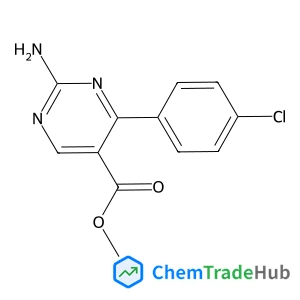
Methyl 2-amino-4-(4-chlorophenyl)-5-pyrimidinecarboxylate
CAS Number:
1133115-56-6
Molecular Formula:
C12H10ClN3O2

Recommended Suppliers





Disclaimer
This page provides academic journal information for reference and research purposes only. We are not affiliated with any journal publishers and do not handle publication submissions. For publication-related inquiries, please contact the respective journal publishers directly.
If you notice any inaccuracies in the information displayed, please contact us at support@chemtradehub.com. We will promptly review and address your concerns.