












Short bent-core molecules: X-ray, polarization, dielectricity, texture and electro-optics investigations
Literature Information
Publication Date
2017-07-26
DOI
10.1039/C7CP03561F
Impact Factor
3.676
Authors
S. Torgova, S. P. Sreenilayam, O. Francescangeli, F. Vita, J. K. Vij, E. Pozhidaev, M. Minchenko, C. Ferrero
View Original
Abstract
Bent-core liquid crystals based on 1,2,4-oxadiazole as a central unit have been the first mesogens to exhibit a ferroelectric response in the nematic phase. This behavior has been widely recognized as due to the presence of smectic-like polar cybotactic clusters permeating the nematic phase. Unfortunately, these compounds exhibited rather high melting points, about 120 °C, due to the presence of four benzene rings in the molecules. Here we describe the synthesis and physical characterization of a new series of BC mesogens, featuring the same bent core as the previous compounds but shorter outer substituents. By keeping only two benzene rings, we were able to lower the melting points to about 70 °C. However, while X-ray diffraction and dielectric spectroscopy measurements confirm the cybotactic nature of the nematic phase of these compounds, polarization and electro-optical measurements ascribe their polar response to flexoelectricity rather than to spontaneous polarization. Finally, texture investigation suggests the biaxiality of the nematic phase, which is indicated also by conoscopic measurements. These results are important for recognizing size and rigidity limitations in designing bent-core liquid crystal molecules suitable for applications.
Related Literature
Synthetic approach to skeletally diverse nitrogen heterocycles from dicyano-2-methylenebut-3-enoates
Wen-Lin Zou, Qing-Zhu Li, Xin Feng, Zhi-Qiang Jia, Yue Liu
2019-05-08
Research Article
DOI: 10.1039/C9QO00509A
Clavipines A–C, antiproliferative meroterpenoids with a fused azepine skeleton from the basidiomycete Clitocybe clavipes
Zhaocui Sun, Nailiang Zhu, Man Zhou, Xiaowei Huo, Haifeng Wu, Yu Tian, Junshan Yang, Guoxu Ma, Yan-Long Yang, Xudong Xu
2019-09-30
Research Article
DOI: 10.1039/C9QO01005J
Regio- and stereo-selective decarbonylative alkylative arylation of terminal alkynes with aliphatic aldehydes and arenes via dual C–H bond functionalization
Yong Peng, Ting-Ting Qin, Cong-Ling Xu, Luo Yang
2019-09-10
Research Article
DOI: 10.1039/C9QO01009B
Asymmetric synthesis of spiro-structural 2,3-dihydrobenzofurans via the bifunctional phosphonium salt-promoted [4 + 1] cyclization of ortho-quinone methides with α-bromoketones
Song Zhang, Jianke Pan, Hongsu Zhang, Tianli Wang
2019-10-08
Research Article
DOI: 10.1039/C9QO01096C
More than a CO source: palladium-catalyzed carbonylative synthesis of butenolides from propargyl alcohols and TFBen
Zhengjie Le, Jun Ying
2019-07-19
Research Article
DOI: 10.1039/C9QO00779B
Guest-length driven high fidelity self-sorting in supramolecular capsule formation of calix[5]arenes in water
Ilenia Pisagatti, Lucia Barbera, Giuseppe Gattuso, Melchiorre F. Parisi, Silvano Geremia, Neal Hickey, Anna Notti
2019-10-14
Research Article
DOI: 10.1039/C9QO01188A
New synthetic approaches for hexacene and its application in thin-film transistors
Jian Han, Xinbang Liu, Yu Li, Zihao Lou, Mingdong Yi, Huihui Kong, Jun Luo
2019-06-20
Research Article
DOI: 10.1039/C9QO00708C
C(sp3)–H hydroxylation of fluorenes, oxindoles and benzofuranones with a Mg(NO3)2–HP(O)Ph2 oxidation system
Chen Hu, Gang Hong, Pradip D. Nahide, Yuchen He, Chen Zhou, Marisa C. Kozlowski, Limin Wang
2019-07-19
Research Article
DOI: 10.1039/C9QO00778D
You might also like
Compound Q&A
Is 6-(3-Fluorophenyl)picolinic acid (CAS: 887982-40-3) safe?
6-(3-Fluorophenyl)picolinic acid is generally considered safe for laboratory use...
887982-40-36-(3-Fluorophenyl)pi...
Compound Q&A
What industries use (3R)-3-Pyrrolidinol (CAS: 2799-21-5)?
(3R)-3-Pyrrolidinol is used in the pharmaceutical industry as a precursor for dr...
2799-21-5(3R)-3-Pyrrolidinol
Compound Q&A
What precautions should be taken when handling (4R,5R)-4,5-Diethoxycarbonyl-2,2-dimethyldioxolane (CAS: 59779-75-8)?
When handling (4R,5R)-4,5-Diethoxycarbonyl-2,2-dimethyldioxolane (CAS: 59779-75-...
59779-75-8(4R,5R)-4,5-Diethoxy...
Compound Q&A
How is 1-(6-Chloroimidazo[1,2-b]pyridazin-3-yl)ethanone (CAS: 90734-71-7) typically synthesized?
1-(6-Chloroimidazo[1,2-b]pyridazin-3-yl)ethanone is often synthesized via a mult...
90734-71-71-(6-Chloroimidazo[1...
Compound Q&A
What is the market or research trend for N-Ethyl-3,4-dimethylbenzylamine (CAS: 39180-83-1)?
The market for N-Ethyl-3,4-dimethylbenzylamine (CAS: 39180-83-1) remains steady,...
39180-83-1N-Ethyl-3,4-dimethyl...
Compound Q&A
What is Tert-butyl 3-(pyrrolidin-1-yl)azetidine-1-carboxylate (CAS: 1019008-21-9)?
Tert-butyl 3-(pyrrolidin-1-yl)azetidine-1-carboxylate is a chemical compound wit...
1019008-21-9Tert-butyl 3-(pyrrol...
Compound Q&A
What regulatory guidelines apply to 1-Bromo-3-chloro-2,4-dimethoxybenzene (CAS: 1228956-93-1)?
1-Bromo-3-chloro-2,4-dimethoxybenzene (CAS: 1228956-93-1) falls under the classi...
1228956-93-11-Bromo-3-chloro-2,4...
Compound Q&A
Is 8-Bromo-2-methyl-3,4-dihydroisoquinolin-1(2H)-one (CAS: 1368622-07-4) safe?
The safety of 8-Bromo-2-methyl-3,4-dihydroisoquinolin-1(2H)-one (CAS: 1368622-07...
1368622-07-48-Bromo-2-methyl-3,4...
Compound Q&A
Is Benzyl [(3S)-2,6-dioxo-3-piperidinyl]carbamate (CAS: 22785-43-9) safe?
Benzyl [(3S)-2,6-dioxo-3-piperidinyl]carbamate is generally safe when handled wi...
22785-43-9Benzyl [(3S)-2,6-dio...
Compound Q&A
How should 1-{[4-(4,4,5,5-Tetramethyl-1,3,2-dioxaborolan-2-yl)phenyl]sulfonyl}pyrrolidine (CAS: 928657-21-0) be stored?
1-{[4-(4,4,5,5-Tetramethyl-1,3,2-dioxaborolan-2-yl)phenyl]sulfonyl}pyrrolidine s...
928657-21-01-{[4-(4,4,5,5-Tetra...
Source Journal
Physical Chemistry Chemical Physics

CiteScore:
5.5
Self-citation Rate:
10.3%
Articles per Year:
3036
Physical Chemistry Chemical Physics (PCCP) is an international journal co-owned by 19 physical chemistry and physics societies from around the world. This journal publishes original, cutting-edge research in physical chemistry, chemical physics and biophysical chemistry. To be suitable for publication in PCCP, articles must include significant innovation and/or insight into physical chemistry; this is the most important criterion that reviewers and Editors will judge against when evaluating submissions. The journal has a broad scope and welcomes contributions spanning experiment, theory, computation and data science. Topical coverage includes spectroscopy, dynamics, kinetics, statistical mechanics, thermodynamics, electrochemistry, catalysis, surface science, quantum mechanics, quantum computing and machine learning. Interdisciplinary research areas such as polymers and soft matter, materials, nanoscience, energy, surfaces/interfaces, and biophysical chemistry are welcomed if they demonstrate significant innovation and/or insight into physical chemistry. Joined experimental/theoretical studies are particularly appreciated when complementary and based on up-to-date approaches.
Recommended Compounds

![trans-2-{[(Tert-butoxy)carbonyl]amino}cyclobutane-1-carboxylic acid structure](https://static.chemtradehub.com/structs/951/951173-25-4-27cd.webp "trans-2-{[(Tert-butoxy)carbonyl]amino}cyclobutane-1-carboxylic acid structure")
trans-2-{[(Tert-butoxy)carbonyl]amino}cyclobutane-1-carboxylic acid
CAS Number:
951173-25-4
Molecular Formula:
C10H17NO4
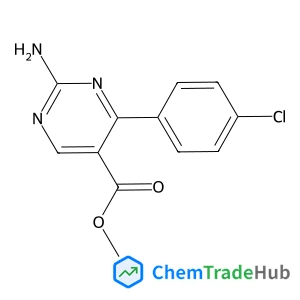
Methyl 2-amino-4-(4-chlorophenyl)-5-pyrimidinecarboxylate
CAS Number:
1133115-56-6
Molecular Formula:
C12H10ClN3O2
![1H-Imidazo[4,5-c]pyridine-7-carboxylic acid structure](https://static.chemtradehub.com/structs/123/1234616-39-7-1344.webp "1H-Imidazo[4,5-c]pyridine-7-carboxylic acid structure")
Recommended Suppliers




Disclaimer
This page provides academic journal information for reference and research purposes only. We are not affiliated with any journal publishers and do not handle publication submissions. For publication-related inquiries, please contact the respective journal publishers directly.
If you notice any inaccuracies in the information displayed, please contact us at support@chemtradehub.com. We will promptly review and address your concerns.