












Spin dynamics of light-induced charge separation in composites of semiconducting polymers and PC60BM revealed using Q-band pulse EPR
Literature Information
Publication Date
2017-07-26
DOI
10.1039/C7CP03680A
Impact Factor
3.676
Authors
E. Suturina, E. Reijerse, W. Lubitz
View Original
Abstract
Light-induced processes in composites of semiconducting polymers and fullerene derivatives have been widely studied due to their usage as active layers of organic solar cells. However the process of charge separation under light illumination – the key process of an organic solar cell is not well understood yet. Here we report a Q-band pulse electron paramagnetic resonance study of composites of the fullerene derivative PC60BM ([6,6]-phenyl-C61-butyric acid methyl ester) with different p-type semiconducting polymers regioregular and regiorandom P3HT (poly(3-hexylthiophene-2,5-diyl), MEH-PPV (poly[2-methoxy-5-(2-ethylhexyloxy)-1,4-phenylenevinylene]), PCDTBT (poly[N-9′-heptadecanyl-2,7-carbazole-alt-5,5-(4′,7′-di-2-thienyl-2′,1′,3′-benzothiadiazole)]), PTB7 (poly({4,8-bis[(2-ethylhexyl)oxy]benzo[1,2-b:4,5-b′]dithiophene-2,6-diyl}{3-fluoro-2-[(2-ethylhexyl)carbonyl]thieno[3,4-b]thiophenediyl}))), resulting in a detailed description of the in-phase laser flash-induced electron spin echo (ESE) signal. We found that in organic donor–acceptor composites the laser flash simultaneously induces species of two types: a polymer˙+/fullerene˙− spin-correlated polaron pair (SCPP) with an initial singlet spin state and (nearly) free polymer˙+ and fullerene˙− species with non-equilibrium spin polarization. Species of the first type (SCPP) are well-known for polymer/fullerene blends and are usually associated with a charge-separated state. Also, spin polarization of long-living free species (polarons in deep traps) is affected by the laser flash, which is the third contribution to the flash-induced ESE signal. A protocol for extracting the in-phase ESE signal of the SCPP based on the dependence of the microwave nutation frequency on the strength of the spin coupling within the polaron pair was developed. Nutation experiments revealed an unusual pattern of the SCPP in RR-P3HT/PC60BM composites, from which the strength of the exchange interaction between the polymer˙+ and fullerene˙− was extracted. In composites with low-efficient polymers the contribution of the SCPP to the in-phase ESE signal is high, while in composites with high-efficient polymers it is low. This finding can be used as a selection criterion of charge separation efficiency in the polymer/fullerene composites.
Related Literature
Access to polyfunctionalized carbazoles through π-extension of 2-methyl-3-oxoacetate indoles
Yingying Guo, Zhoulu Wang, Ying Zhu, Qiaochu Zhang, Donghui Wei, Xiang Liu, Zhenqian Fu
2019-09-27
Research Article
DOI: 10.1039/C9QO01093A
Diastereoselective formal [3 + 3] cycloaddition of isatin-based α-(trifluoromethyl)imines with N,N′-dialkyloxyureas
Hong-Wu Zhao, Jia-Ming Guo, Li-Ru Wang, Wan-Qiu Ding, Zhe Tang, Xiu-Qing Song, Hui-Hui Wu, Xiao-Zu Fan, Xiao-Fan Bi
2019-10-21
Research Article
DOI: 10.1039/C9QO01181A
Exploration of 1,3-dipolar cycloaddition reactions to construct the core skeleton of Calyciphylline A-type alkaloids
Jiaxin Zhong, Haibing He
2019-10-02
Research Article
DOI: 10.1039/C9QO01111K
Recent advances in intramolecular C–O/C–N/C–S bond formation via C–H functionalization
Paran J. Borpatra, Bhaskar Deka, Mohit L. Deb, Pranjal K. Baruah
2019-09-10
Review Article
DOI: 10.1039/C9QO00863B
C(sp3)–H hydroxylation of fluorenes, oxindoles and benzofuranones with a Mg(NO3)2–HP(O)Ph2 oxidation system
Chen Hu, Gang Hong, Pradip D. Nahide, Yuchen He, Chen Zhou, Marisa C. Kozlowski, Limin Wang
2019-07-19
Research Article
DOI: 10.1039/C9QO00778D
Constructing bridged multifunctional calixarenes by intramolecular indole coupling
Boris Bolshchikov, Sergey Volkov, Daria Sokolova, Alexander Gorbunov, Alina Serebryannikova, Igor Gloriozov, Dmitry Cheshkov, Stanislav Bezzubov, Wen-Sheng Chung, Vladimir Kovalev, Ivan Vatsouro
2019-08-13
Research Article
DOI: 10.1039/C9QO00859D
Correction: A formal [4 + 2] cycloaddition of sulfur-containing alkylidene heterocycles with allenic compounds
Vojtěch Dočekal, Bedřich Formánek, Ivana Císařová, Jan Veselý
2019-10-16
Correction
DOI: 10.1039/C9QO90096A
You might also like
Compound Q&A
Is 6-(3-Fluorophenyl)picolinic acid (CAS: 887982-40-3) safe?
6-(3-Fluorophenyl)picolinic acid is generally considered safe for laboratory use...
887982-40-36-(3-Fluorophenyl)pi...
Compound Q&A
What industries use (3R)-3-Pyrrolidinol (CAS: 2799-21-5)?
(3R)-3-Pyrrolidinol is used in the pharmaceutical industry as a precursor for dr...
2799-21-5(3R)-3-Pyrrolidinol
Compound Q&A
What precautions should be taken when handling (4R,5R)-4,5-Diethoxycarbonyl-2,2-dimethyldioxolane (CAS: 59779-75-8)?
When handling (4R,5R)-4,5-Diethoxycarbonyl-2,2-dimethyldioxolane (CAS: 59779-75-...
59779-75-8(4R,5R)-4,5-Diethoxy...
Compound Q&A
How is 1-(6-Chloroimidazo[1,2-b]pyridazin-3-yl)ethanone (CAS: 90734-71-7) typically synthesized?
1-(6-Chloroimidazo[1,2-b]pyridazin-3-yl)ethanone is often synthesized via a mult...
90734-71-71-(6-Chloroimidazo[1...
Compound Q&A
What is the market or research trend for N-Ethyl-3,4-dimethylbenzylamine (CAS: 39180-83-1)?
The market for N-Ethyl-3,4-dimethylbenzylamine (CAS: 39180-83-1) remains steady,...
39180-83-1N-Ethyl-3,4-dimethyl...
Compound Q&A
What is Tert-butyl 3-(pyrrolidin-1-yl)azetidine-1-carboxylate (CAS: 1019008-21-9)?
Tert-butyl 3-(pyrrolidin-1-yl)azetidine-1-carboxylate is a chemical compound wit...
1019008-21-9Tert-butyl 3-(pyrrol...
Compound Q&A
What regulatory guidelines apply to 1-Bromo-3-chloro-2,4-dimethoxybenzene (CAS: 1228956-93-1)?
1-Bromo-3-chloro-2,4-dimethoxybenzene (CAS: 1228956-93-1) falls under the classi...
1228956-93-11-Bromo-3-chloro-2,4...
Compound Q&A
Is 8-Bromo-2-methyl-3,4-dihydroisoquinolin-1(2H)-one (CAS: 1368622-07-4) safe?
The safety of 8-Bromo-2-methyl-3,4-dihydroisoquinolin-1(2H)-one (CAS: 1368622-07...
1368622-07-48-Bromo-2-methyl-3,4...
Compound Q&A
Is Benzyl [(3S)-2,6-dioxo-3-piperidinyl]carbamate (CAS: 22785-43-9) safe?
Benzyl [(3S)-2,6-dioxo-3-piperidinyl]carbamate is generally safe when handled wi...
22785-43-9Benzyl [(3S)-2,6-dio...
Compound Q&A
How should 1-{[4-(4,4,5,5-Tetramethyl-1,3,2-dioxaborolan-2-yl)phenyl]sulfonyl}pyrrolidine (CAS: 928657-21-0) be stored?
1-{[4-(4,4,5,5-Tetramethyl-1,3,2-dioxaborolan-2-yl)phenyl]sulfonyl}pyrrolidine s...
928657-21-01-{[4-(4,4,5,5-Tetra...
Source Journal
Physical Chemistry Chemical Physics

CiteScore:
5.5
Self-citation Rate:
10.3%
Articles per Year:
3036
Physical Chemistry Chemical Physics (PCCP) is an international journal co-owned by 19 physical chemistry and physics societies from around the world. This journal publishes original, cutting-edge research in physical chemistry, chemical physics and biophysical chemistry. To be suitable for publication in PCCP, articles must include significant innovation and/or insight into physical chemistry; this is the most important criterion that reviewers and Editors will judge against when evaluating submissions. The journal has a broad scope and welcomes contributions spanning experiment, theory, computation and data science. Topical coverage includes spectroscopy, dynamics, kinetics, statistical mechanics, thermodynamics, electrochemistry, catalysis, surface science, quantum mechanics, quantum computing and machine learning. Interdisciplinary research areas such as polymers and soft matter, materials, nanoscience, energy, surfaces/interfaces, and biophysical chemistry are welcomed if they demonstrate significant innovation and/or insight into physical chemistry. Joined experimental/theoretical studies are particularly appreciated when complementary and based on up-to-date approaches.
Recommended Compounds
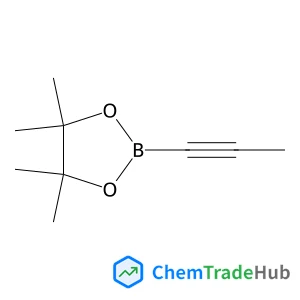
4,4,5,5-Tetramethyl-2-(1-propyn-1-YL)-1,3,2-dioxaborolane
CAS Number:
347389-75-7
Molecular Formula:
C9H15BO2
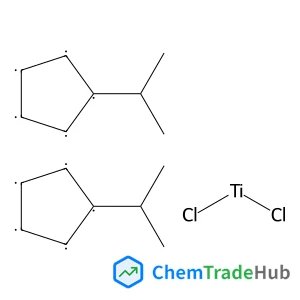
BIS(I-PROPYLCYCLOPENTADIENYL)TITANIUM DICHLORIDE
CAS Number:
12130-65-3
Molecular Formula:
C16H22Cl2Ti
Recommended Suppliers






Disclaimer
This page provides academic journal information for reference and research purposes only. We are not affiliated with any journal publishers and do not handle publication submissions. For publication-related inquiries, please contact the respective journal publishers directly.
If you notice any inaccuracies in the information displayed, please contact us at support@chemtradehub.com. We will promptly review and address your concerns.