












Photoinduced dynamics of the hole-transport material H101 in organic solvents and on mesoporous Al2O3 and TiO2 thin films
Literature Information
Publication Date
2017-08-07
DOI
10.1039/C7CP01718A
Impact Factor
3.676
Authors
Johannes R. Klein, Mirko Scholz, Kawon Oum, Thomas Lenzer
View Original
Abstract
We present a comprehensive steady-state and time-resolved UV-Vis-NIR absorption and fluorescence study of the hole-transport material H101 to characterise its photophysics in different organic solvents and on mesoporous Al2O3 and TiO2 thin films. Photoexcitation of H101 at 400 nm in organic solvents populates the S1 state which shows intramolecular relaxation on a picosecond time scale. Branching from the relaxed S1 state leads to population of the T1 triplet state and the ground electronic state S0. Triplet formation is induced by the internal heavy-atom effect of the sulphur atom, and the triplet yield decreases substantially with solvent polarity. On mesoporous Al2O3, intermolecular exciton-splitting is observed leading to the formation of a radical cation – radical anion pair (H101(S1) + H101(S0) → H101˙+ + H101˙−) followed by exciton recombination. On mesoporous TiO2, efficient electron injection is observed in addition to exciton-splitting. Complementary spectroelectrochemistry experiments enable a full spectral characterisation of the cation species H101˙+ and H1012+. Extensive DFT/TDDFT calculations successfully assign the spectral features of all experimentally observed species. Implications for the function of H101 in photovoltaic devices are discussed.
Recommended Journals
Related Literature
Asymmetric domino 1,6-addition/annulation reaction of 3-cyano-4-alkenyl-2H-chromen-2-ones with isatin-derived MBH carbonates: enantioselective synthesis of 3,3′-cyclopentenylspirooxindoles bearing 2H-chromen-2-ones
Zhen-Hua Wang, Chuan-Wen Lei, Xia-Yan Zhang, Yong You, Jian-Qiang Zhao
2019-08-14
Research Article
DOI: 10.1039/C9QO00890J
Pd/P/dba-Promoted cascade annulations to produce fused medium-sized sulfoximine polyheterocycles
Xiaoyan Chen, Hao Zhou, Zhiyuan Chen
2019-08-29
Research Article
DOI: 10.1039/C9QO00880B
Shape induced sorting via rim-to-rim complementarity in the formation of pillar[5, 6]arene-based supramolecular organogels
Dana Kaizerman-Kane, Maya Hadar, Eran Granot, Fernando Patolsky, Yoram Cohen
2019-08-08
Research Article
DOI: 10.1039/C9QO00717B
Organocatalyzed asymmetric formal [3 + 2] cycloaddition of isocyanoacetates with N-itaconimides: facile access to optically active spiropyrroline succinimide derivatives
Mei-Xin Zhao, Qiang Liu, Kun-Ming Yu, Xiao-Li Zhao
2019-10-17
Research Article
DOI: 10.1039/C9QO00939F
Regio- and stereo-selective decarbonylative alkylative arylation of terminal alkynes with aliphatic aldehydes and arenes via dual C–H bond functionalization
Yong Peng, Ting-Ting Qin, Cong-Ling Xu, Luo Yang
2019-09-10
Research Article
DOI: 10.1039/C9QO01009B
A free-radical-promoted stereospecific denitro silylation of β-nitroalkenes with silanes
Xi Zhang, Ming-Xia Liu, Tong-Lin Wang, Yong-Qing Wang, Xi-Cun Wang, Zheng-Jun Quan
2019-08-21
Research Article
DOI: 10.1039/C9QO00819E
Expanstines A–D: four unusual isoprenoid epoxycyclohexenones generated by Penicillium expansum YJ-15 fermentation and photopromotion
Jia-Peng Wang, Yan Shu, Shi-Xi Liu, Jun-Tao Hu, Cheng-Tong Sun, Hao Zhou, Dong Gan, Xue-Yun Cai, Wei Pu, Le Cai, Zhong-Tao Ding
2019-10-12
Research Article
DOI: 10.1039/C9QO01076A
Polyoxygenated meroterpenoids and a bioactive illudalane derivative from a co-culture of Armillaria sp. and Epicoccum sp.
Hong-Tao Li, Linhuan Tang, Tao Liu, Ruining Yang, Yabin Yang, Hao Zhou, Zhong-Tao Ding
2019-10-14
Research Article
DOI: 10.1039/C9QO01087D
You might also like
Compound Q&A
Is 6-(3-Fluorophenyl)picolinic acid (CAS: 887982-40-3) safe?
6-(3-Fluorophenyl)picolinic acid is generally considered safe for laboratory use...
887982-40-36-(3-Fluorophenyl)pi...
Compound Q&A
What industries use (3R)-3-Pyrrolidinol (CAS: 2799-21-5)?
(3R)-3-Pyrrolidinol is used in the pharmaceutical industry as a precursor for dr...
2799-21-5(3R)-3-Pyrrolidinol
Compound Q&A
What precautions should be taken when handling (4R,5R)-4,5-Diethoxycarbonyl-2,2-dimethyldioxolane (CAS: 59779-75-8)?
When handling (4R,5R)-4,5-Diethoxycarbonyl-2,2-dimethyldioxolane (CAS: 59779-75-...
59779-75-8(4R,5R)-4,5-Diethoxy...
Compound Q&A
How is 1-(6-Chloroimidazo[1,2-b]pyridazin-3-yl)ethanone (CAS: 90734-71-7) typically synthesized?
1-(6-Chloroimidazo[1,2-b]pyridazin-3-yl)ethanone is often synthesized via a mult...
90734-71-71-(6-Chloroimidazo[1...
Compound Q&A
What is the market or research trend for N-Ethyl-3,4-dimethylbenzylamine (CAS: 39180-83-1)?
The market for N-Ethyl-3,4-dimethylbenzylamine (CAS: 39180-83-1) remains steady,...
39180-83-1N-Ethyl-3,4-dimethyl...
Compound Q&A
What is Tert-butyl 3-(pyrrolidin-1-yl)azetidine-1-carboxylate (CAS: 1019008-21-9)?
Tert-butyl 3-(pyrrolidin-1-yl)azetidine-1-carboxylate is a chemical compound wit...
1019008-21-9Tert-butyl 3-(pyrrol...
Compound Q&A
What regulatory guidelines apply to 1-Bromo-3-chloro-2,4-dimethoxybenzene (CAS: 1228956-93-1)?
1-Bromo-3-chloro-2,4-dimethoxybenzene (CAS: 1228956-93-1) falls under the classi...
1228956-93-11-Bromo-3-chloro-2,4...
Compound Q&A
Is 8-Bromo-2-methyl-3,4-dihydroisoquinolin-1(2H)-one (CAS: 1368622-07-4) safe?
The safety of 8-Bromo-2-methyl-3,4-dihydroisoquinolin-1(2H)-one (CAS: 1368622-07...
1368622-07-48-Bromo-2-methyl-3,4...
Compound Q&A
Is Benzyl [(3S)-2,6-dioxo-3-piperidinyl]carbamate (CAS: 22785-43-9) safe?
Benzyl [(3S)-2,6-dioxo-3-piperidinyl]carbamate is generally safe when handled wi...
22785-43-9Benzyl [(3S)-2,6-dio...
Compound Q&A
How should 1-{[4-(4,4,5,5-Tetramethyl-1,3,2-dioxaborolan-2-yl)phenyl]sulfonyl}pyrrolidine (CAS: 928657-21-0) be stored?
1-{[4-(4,4,5,5-Tetramethyl-1,3,2-dioxaborolan-2-yl)phenyl]sulfonyl}pyrrolidine s...
928657-21-01-{[4-(4,4,5,5-Tetra...
Source Journal
Physical Chemistry Chemical Physics

CiteScore:
5.5
Self-citation Rate:
10.3%
Articles per Year:
3036
Physical Chemistry Chemical Physics (PCCP) is an international journal co-owned by 19 physical chemistry and physics societies from around the world. This journal publishes original, cutting-edge research in physical chemistry, chemical physics and biophysical chemistry. To be suitable for publication in PCCP, articles must include significant innovation and/or insight into physical chemistry; this is the most important criterion that reviewers and Editors will judge against when evaluating submissions. The journal has a broad scope and welcomes contributions spanning experiment, theory, computation and data science. Topical coverage includes spectroscopy, dynamics, kinetics, statistical mechanics, thermodynamics, electrochemistry, catalysis, surface science, quantum mechanics, quantum computing and machine learning. Interdisciplinary research areas such as polymers and soft matter, materials, nanoscience, energy, surfaces/interfaces, and biophysical chemistry are welcomed if they demonstrate significant innovation and/or insight into physical chemistry. Joined experimental/theoretical studies are particularly appreciated when complementary and based on up-to-date approaches.
Recommended Compounds
![(1R,6R)-6-({[(2-Methyl-2-propanyl)oxy]carbonyl}amino)-3-cyclohexene-1-carboxylic acid structure](https://static.chemtradehub.com/structs/865/865689-24-3-5fef.webp "(1R,6R)-6-({[(2-Methyl-2-propanyl)oxy]carbonyl}amino)-3-cyclohexene-1-carboxylic acid structure")
(1R,6R)-6-({[(2-Methyl-2-propanyl)oxy]carbonyl}amino)-3-cyclohexene-1-carboxylic acid
CAS Number:
865689-24-3
Molecular Formula:
C12H19NO4
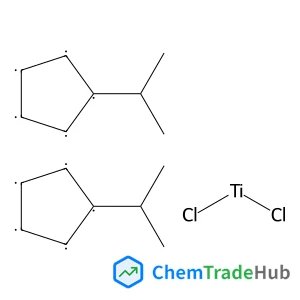
BIS(I-PROPYLCYCLOPENTADIENYL)TITANIUM DICHLORIDE
CAS Number:
12130-65-3
Molecular Formula:
C16H22Cl2Ti
Recommended Suppliers






Disclaimer
This page provides academic journal information for reference and research purposes only. We are not affiliated with any journal publishers and do not handle publication submissions. For publication-related inquiries, please contact the respective journal publishers directly.
If you notice any inaccuracies in the information displayed, please contact us at support@chemtradehub.com. We will promptly review and address your concerns.