












The effect of hydrate promoters on gas uptake
Literature Information
Publication Date
2017-07-24
DOI
10.1039/C7CP02173A
Impact Factor
3.676
Authors
View Original
Abstract
Gas hydrate technology is considered as a promising technology in the fields of gas storage and transportation, gas separation and purification, seawater desalination, and phase-change thermal energy storage. However, to date, the technology is still not commercially used mainly due to the low gas hydrate formation rate and the low gas uptake. In this study, the effect of hydrate promoters on gas uptake was systematically studied and analyzed based on hydrate-based CH4 storage and CO2 capture from CO2/H2 gas mixture experiments. Raman spectroscopy, Fourier transform infrared spectroscopy (FTIR) and gas chromatography (GC) were employed to analyze the microstructures and gas compositions. The results indicate that the effect of the hydrate promoter on the gas uptake depends on the physical and chemical properties of the promoter and gas. A strong polar ionic promoter is not helpful towards obtaining the ideal gas uptake because a dense hydrate layer is easily formed at the gas–liquid interface, which hinders gas diffusion from the gas phase to the bulk solution. For a weak polar or non-polar promoter, the gas uptake depends on the dissolution characteristics among the different substances in the system. The lower the mutual solubility among the substances co-existing in the system, the higher the independence among the substances in the system; this is so that each phase has an equal chance to occupy the hydrate cages without or with small interactions, finally leading to a relatively high gas uptake.
Recommended Journals
Related Literature
Reagent-controlled regiodivergence in the [3,3]-sigmatropic rearrangement of N-(acyloxy)enamides
Norihiko Takeda, Narumi Arisawa, Misaki Miyamoto, Yukiko Kobori, Tetsuro Shinada, Masafumi Ueda
2019-09-27
Research Article
DOI: 10.1039/C9QO01109A
N-Heterocyclic carbene catalysed umpolung reactions of imines approaching enantioselective synthesis
2019-10-21
Highlight
DOI: 10.1039/C9QO01074B
Synthesis of 1-naphthols via Cp*Co(iii)-catalyzed C–H activation and cyclization of sulfoxonium ylides with alkynes
Yongqi Yu, Qianlong Wu, Da Liu, Lin Yu, Ze Tan, Gangguo Zhu
2019-10-12
Research Article
DOI: 10.1039/C9QO00994A
Visible-light-mediated de-aminative alkylation of N-arylamines with alkyl Katritzky salts
Yuliang Xu, Ze-Jun Xu, Zhao-Peng Liu, Hongxiang Lou
2019-10-22
Research Article
DOI: 10.1039/C9QO01175G
Clavipines A–C, antiproliferative meroterpenoids with a fused azepine skeleton from the basidiomycete Clitocybe clavipes
Zhaocui Sun, Nailiang Zhu, Man Zhou, Xiaowei Huo, Haifeng Wu, Yu Tian, Junshan Yang, Guoxu Ma, Yan-Long Yang, Xudong Xu
2019-09-30
Research Article
DOI: 10.1039/C9QO01005J
Synthesis of α-trifluoromethyl ethanone oximes via the three-component reaction of aryl-substituted ethylenes, tert-butyl nitrite, and the Langlois reagent
Kui Lu, Quan Li, Liangshuo Ji, Erbing Hua, Yujie Dai, Xia Zhao
2019-10-01
Research Article
DOI: 10.1039/C9QO00940J
Constructing bridged multifunctional calixarenes by intramolecular indole coupling
Boris Bolshchikov, Sergey Volkov, Daria Sokolova, Alexander Gorbunov, Alina Serebryannikova, Igor Gloriozov, Dmitry Cheshkov, Stanislav Bezzubov, Wen-Sheng Chung, Vladimir Kovalev, Ivan Vatsouro
2019-08-13
Research Article
DOI: 10.1039/C9QO00859D
Diastereoselective formal [3 + 3] cycloaddition of isatin-based α-(trifluoromethyl)imines with N,N′-dialkyloxyureas
Hong-Wu Zhao, Jia-Ming Guo, Li-Ru Wang, Wan-Qiu Ding, Zhe Tang, Xiu-Qing Song, Hui-Hui Wu, Xiao-Zu Fan, Xiao-Fan Bi
2019-10-21
Research Article
DOI: 10.1039/C9QO01181A
New synthetic approaches for hexacene and its application in thin-film transistors
Jian Han, Xinbang Liu, Yu Li, Zihao Lou, Mingdong Yi, Huihui Kong, Jun Luo
2019-06-20
Research Article
DOI: 10.1039/C9QO00708C
You might also like
Compound Q&A
Is 6-(3-Fluorophenyl)picolinic acid (CAS: 887982-40-3) safe?
6-(3-Fluorophenyl)picolinic acid is generally considered safe for laboratory use...
887982-40-36-(3-Fluorophenyl)pi...
Compound Q&A
What industries use (3R)-3-Pyrrolidinol (CAS: 2799-21-5)?
(3R)-3-Pyrrolidinol is used in the pharmaceutical industry as a precursor for dr...
2799-21-5(3R)-3-Pyrrolidinol
Compound Q&A
What precautions should be taken when handling (4R,5R)-4,5-Diethoxycarbonyl-2,2-dimethyldioxolane (CAS: 59779-75-8)?
When handling (4R,5R)-4,5-Diethoxycarbonyl-2,2-dimethyldioxolane (CAS: 59779-75-...
59779-75-8(4R,5R)-4,5-Diethoxy...
Compound Q&A
How is 1-(6-Chloroimidazo[1,2-b]pyridazin-3-yl)ethanone (CAS: 90734-71-7) typically synthesized?
1-(6-Chloroimidazo[1,2-b]pyridazin-3-yl)ethanone is often synthesized via a mult...
90734-71-71-(6-Chloroimidazo[1...
Compound Q&A
What is the market or research trend for N-Ethyl-3,4-dimethylbenzylamine (CAS: 39180-83-1)?
The market for N-Ethyl-3,4-dimethylbenzylamine (CAS: 39180-83-1) remains steady,...
39180-83-1N-Ethyl-3,4-dimethyl...
Compound Q&A
What is Tert-butyl 3-(pyrrolidin-1-yl)azetidine-1-carboxylate (CAS: 1019008-21-9)?
Tert-butyl 3-(pyrrolidin-1-yl)azetidine-1-carboxylate is a chemical compound wit...
1019008-21-9Tert-butyl 3-(pyrrol...
Compound Q&A
What regulatory guidelines apply to 1-Bromo-3-chloro-2,4-dimethoxybenzene (CAS: 1228956-93-1)?
1-Bromo-3-chloro-2,4-dimethoxybenzene (CAS: 1228956-93-1) falls under the classi...
1228956-93-11-Bromo-3-chloro-2,4...
Compound Q&A
Is 8-Bromo-2-methyl-3,4-dihydroisoquinolin-1(2H)-one (CAS: 1368622-07-4) safe?
The safety of 8-Bromo-2-methyl-3,4-dihydroisoquinolin-1(2H)-one (CAS: 1368622-07...
1368622-07-48-Bromo-2-methyl-3,4...
Compound Q&A
Is Benzyl [(3S)-2,6-dioxo-3-piperidinyl]carbamate (CAS: 22785-43-9) safe?
Benzyl [(3S)-2,6-dioxo-3-piperidinyl]carbamate is generally safe when handled wi...
22785-43-9Benzyl [(3S)-2,6-dio...
Compound Q&A
How should 1-{[4-(4,4,5,5-Tetramethyl-1,3,2-dioxaborolan-2-yl)phenyl]sulfonyl}pyrrolidine (CAS: 928657-21-0) be stored?
1-{[4-(4,4,5,5-Tetramethyl-1,3,2-dioxaborolan-2-yl)phenyl]sulfonyl}pyrrolidine s...
928657-21-01-{[4-(4,4,5,5-Tetra...
Source Journal
Physical Chemistry Chemical Physics

CiteScore:
5.5
Self-citation Rate:
10.3%
Articles per Year:
3036
Physical Chemistry Chemical Physics (PCCP) is an international journal co-owned by 19 physical chemistry and physics societies from around the world. This journal publishes original, cutting-edge research in physical chemistry, chemical physics and biophysical chemistry. To be suitable for publication in PCCP, articles must include significant innovation and/or insight into physical chemistry; this is the most important criterion that reviewers and Editors will judge against when evaluating submissions. The journal has a broad scope and welcomes contributions spanning experiment, theory, computation and data science. Topical coverage includes spectroscopy, dynamics, kinetics, statistical mechanics, thermodynamics, electrochemistry, catalysis, surface science, quantum mechanics, quantum computing and machine learning. Interdisciplinary research areas such as polymers and soft matter, materials, nanoscience, energy, surfaces/interfaces, and biophysical chemistry are welcomed if they demonstrate significant innovation and/or insight into physical chemistry. Joined experimental/theoretical studies are particularly appreciated when complementary and based on up-to-date approaches.
Recommended Compounds
![trans-2-{[(Tert-butoxy)carbonyl]amino}cyclobutane-1-carboxylic acid structure](https://static.chemtradehub.com/structs/951/951173-25-4-27cd.webp "trans-2-{[(Tert-butoxy)carbonyl]amino}cyclobutane-1-carboxylic acid structure")
trans-2-{[(Tert-butoxy)carbonyl]amino}cyclobutane-1-carboxylic acid
CAS Number:
951173-25-4
Molecular Formula:
C10H17NO4
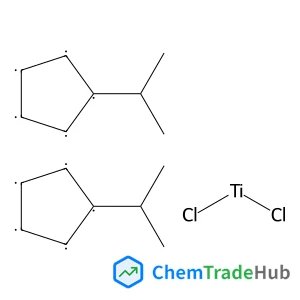
BIS(I-PROPYLCYCLOPENTADIENYL)TITANIUM DICHLORIDE
CAS Number:
12130-65-3
Molecular Formula:
C16H22Cl2Ti
Recommended Suppliers





Disclaimer
This page provides academic journal information for reference and research purposes only. We are not affiliated with any journal publishers and do not handle publication submissions. For publication-related inquiries, please contact the respective journal publishers directly.
If you notice any inaccuracies in the information displayed, please contact us at support@chemtradehub.com. We will promptly review and address your concerns.