![(1R,6R)-6-({[(2-Methyl-2-propanyl)oxy]carbonyl}amino)-3-cyclohexene-1-carboxylic acid structure](https://static.chemtradehub.com/structs/865/865689-24-3-5fef.webp "(1R,6R)-6-({[(2-Methyl-2-propanyl)oxy]carbonyl}amino)-3-cyclohexene-1-carboxylic acid structure")
(1R,6R)-6-({[(2-Methyl-2-propanyl)oxy]carbonyl}amino)-3-cyclohexene-1-carboxylic acid
CAS Number:
865689-24-3
Molecular Formula:
C12H19NO4
Mareike Haensch, Luis Balboa, Alexander Dyck, Gunther Wittstock
The extension of the surface interrogation mode of scanning electrochemical microscopy (SI-SECM) is demonstrated for porous electrode materials. These materials are often high surface area powders which are very important electrocatalysts for instance in fuel cells or water electrolyzers. The powdered electrocatalyst material is filled into a cavity-microelectrode which is then operated as the sample electrode in SECM. After a surface oxide generation step, the oxides on the porous sample are reduced by [Ru(NH3)6]2+ formed at the microelectrode probe of the SECM while the sample is at open circuit potential. Such porous electrodes pose the difficulty to cope with unavoidable variations in the filling of the cavity and to access the entire surface by the mediator. The electrochemically active surface area is used to compensate the variation in filling. It can also be used for calculating coverages of surface oxides for a better comparison between different electrodes. We found a complete and fast accessibility for all investigated porous electrodes which is based on electron transfer. Therefore, we propose a “vertical feedback” mechanism analogous to SECM feedback experiments on extended flat samples at open circuit potential. Moreover, the current transients indicate that distinctive oxide species with different kinetics are present. Taken together, these measures ensure consistent determination of oxide coverages for nanoporous gold and carbon-supported platinum nanoparticles.
Dana Kaizerman-Kane, Maya Hadar, Eran Granot, Fernando Patolsky, Yoram Cohen
DOI: 10.1039/C9QO00717B
Xiuru Xue, Zhaohui Zhao, Yanhua Wang
DOI: 10.1039/C9QO90089F
Ying-Han Chen, Xue-Jiao Lv, Zhi-Hao You
DOI: 10.1039/C9QO01116A
DOI: 10.1039/C9QO01074B
Carlos A. Echeverry-Gonzalez, Carlos E. Puerto-Galvis, Carlos H. Borca, Martín A. Mosquera, Andrés F. Luis-Robles, Vladimir V. Kouznetsov
DOI: 10.1039/C9QO00870E
Jiaxin Zhong, Haibing He
DOI: 10.1039/C9QO01111K
Vojtěch Dočekal, Bedřich Formánek, Ivana Císařová, Jan Veselý
DOI: 10.1039/C9QO90096A
Ziwen Feng, Zhenbo Yuan, Xiaobin Zhao, Yue Huang, Hequan Yao
DOI: 10.1039/C9QO00977A
Shi-Liang Xie, Xiao-Yuan Cui, Xiao-Tong Gao, Hai-Hong Wu
DOI: 10.1039/C9QO00923J
Ravindar Lekkala, Revathi Lekkala, Balakrishna Moku, K. P. Rakesh, Hua-Li Qin
DOI: 10.1039/C9QO00747D
6-(3-Fluorophenyl)picolinic acid is generally considered safe for laboratory use...
(3R)-3-Pyrrolidinol is used in the pharmaceutical industry as a precursor for dr...
When handling (4R,5R)-4,5-Diethoxycarbonyl-2,2-dimethyldioxolane (CAS: 59779-75-...
1-(6-Chloroimidazo[1,2-b]pyridazin-3-yl)ethanone is often synthesized via a mult...
The market for N-Ethyl-3,4-dimethylbenzylamine (CAS: 39180-83-1) remains steady,...
Tert-butyl 3-(pyrrolidin-1-yl)azetidine-1-carboxylate is a chemical compound wit...
1-Bromo-3-chloro-2,4-dimethoxybenzene (CAS: 1228956-93-1) falls under the classi...
The safety of 8-Bromo-2-methyl-3,4-dihydroisoquinolin-1(2H)-one (CAS: 1368622-07...
Benzyl [(3S)-2,6-dioxo-3-piperidinyl]carbamate is generally safe when handled wi...
1-{[4-(4,4,5,5-Tetramethyl-1,3,2-dioxaborolan-2-yl)phenyl]sulfonyl}pyrrolidine s...

Physical Chemistry Chemical Physics (PCCP) is an international journal co-owned by 19 physical chemistry and physics societies from around the world. This journal publishes original, cutting-edge research in physical chemistry, chemical physics and biophysical chemistry. To be suitable for publication in PCCP, articles must include significant innovation and/or insight into physical chemistry; this is the most important criterion that reviewers and Editors will judge against when evaluating submissions. The journal has a broad scope and welcomes contributions spanning experiment, theory, computation and data science. Topical coverage includes spectroscopy, dynamics, kinetics, statistical mechanics, thermodynamics, electrochemistry, catalysis, surface science, quantum mechanics, quantum computing and machine learning. Interdisciplinary research areas such as polymers and soft matter, materials, nanoscience, energy, surfaces/interfaces, and biophysical chemistry are welcomed if they demonstrate significant innovation and/or insight into physical chemistry. Joined experimental/theoretical studies are particularly appreciated when complementary and based on up-to-date approaches.

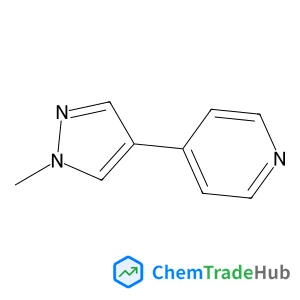
![[1-(5-Methyl-2-pyridinyl)-1H-pyrazol-4-yl]methanol structure](https://static.chemtradehub.com/structs/143/1439822-99-7-6cc9.webp "[1-(5-Methyl-2-pyridinyl)-1H-pyrazol-4-yl]methanol structure")