












Anionic fructose-related conformational and positional isomers assigned through PES experiments and DFT calculations
Literature Information
Publication Date
2017-08-08
DOI
10.1039/C7CP03492J
Impact Factor
3.676
Authors
Zhen Zeng, Elliot R. Bernstein
View Original
Abstract
Gas phase, isolated fructose anionic species, fructose−, (fructose-H)−, (fructose-OH)−, and (fructose-H2O)−, are investigated employing anionic photoelectron spectroscopy (PES) combined with density functional theory (DFT) calculations. The PES vertical detachment energies (VDEs) for these anions are determined and, based on these experimental values, their calculated anionic structures are assigned. Generation of these four species through the matrix assisted laser desorption ionization (MALDI) process is sample desorption substrate dependent. The parent anion fructose− exists as a single, dominant open chain structure in the gas phase, with substrate dependent specific conformational isomers. (Fructose-H)− and (fructose-OH)− are mainly produced from the laser ablation process rather than from fragmentation reaction pathways associated with the parent anion species. Both conformational and positional isomers are identified in the gas phase for these latter anions. (Fructose-H2O)− has two types of positional isomers, both of which contribute to two different components of the observed PES feature. The fixed positions for losing an OH group and an H atom, in addition to thermodynamic calculations, provide reaction pathways for generating a dehydration product (open chain structures) from the parent anion (open chain and furanose structures), further demonstrating the active nature of fructose upon capturing an extra electron.
Recommended Journals
Related Literature
Visible-light-mediated de-aminative alkylation of N-arylamines with alkyl Katritzky salts
Yuliang Xu, Ze-Jun Xu, Zhao-Peng Liu, Hongxiang Lou
2019-10-22
Research Article
DOI: 10.1039/C9QO01175G
Synthesis of α-trifluoromethyl ethanone oximes via the three-component reaction of aryl-substituted ethylenes, tert-butyl nitrite, and the Langlois reagent
Kui Lu, Quan Li, Liangshuo Ji, Erbing Hua, Yujie Dai, Xia Zhao
2019-10-01
Research Article
DOI: 10.1039/C9QO00940J
Thiol substrate-promoted dehydrogenative cyclization of arylmethyl thiols with ortho-substituted amines: a universal approach to heteroaromatic compounds
Mengjun Qiao, Ling Chen, Yibo Dong, Chengkang Jiao, Shengqi Liao
2019-06-15
Research Article
DOI: 10.1039/C9QO00554D
Chiral-at-metal rhodium(iii) complex catalyzed enantioselective synthesis of C2-substituted benzofuran derivatives
Qiang Kang, Yu Du
2019-09-18
Research Article
DOI: 10.1039/C9QO01022J
New synthetic approaches for hexacene and its application in thin-film transistors
Jian Han, Xinbang Liu, Yu Li, Zihao Lou, Mingdong Yi, Huihui Kong, Jun Luo
2019-06-20
Research Article
DOI: 10.1039/C9QO00708C
Constructing bridged multifunctional calixarenes by intramolecular indole coupling
Boris Bolshchikov, Sergey Volkov, Daria Sokolova, Alexander Gorbunov, Alina Serebryannikova, Igor Gloriozov, Dmitry Cheshkov, Stanislav Bezzubov, Wen-Sheng Chung, Vladimir Kovalev, Ivan Vatsouro
2019-08-13
Research Article
DOI: 10.1039/C9QO00859D
Synthetic approach to skeletally diverse nitrogen heterocycles from dicyano-2-methylenebut-3-enoates
Wen-Lin Zou, Qing-Zhu Li, Xin Feng, Zhi-Qiang Jia, Yue Liu
2019-05-08
Research Article
DOI: 10.1039/C9QO00509A
You might also like
Compound Q&A
Is 6-(3-Fluorophenyl)picolinic acid (CAS: 887982-40-3) safe?
6-(3-Fluorophenyl)picolinic acid is generally considered safe for laboratory use...
887982-40-36-(3-Fluorophenyl)pi...
Compound Q&A
What industries use (3R)-3-Pyrrolidinol (CAS: 2799-21-5)?
(3R)-3-Pyrrolidinol is used in the pharmaceutical industry as a precursor for dr...
2799-21-5(3R)-3-Pyrrolidinol
Compound Q&A
What precautions should be taken when handling (4R,5R)-4,5-Diethoxycarbonyl-2,2-dimethyldioxolane (CAS: 59779-75-8)?
When handling (4R,5R)-4,5-Diethoxycarbonyl-2,2-dimethyldioxolane (CAS: 59779-75-...
59779-75-8(4R,5R)-4,5-Diethoxy...
Compound Q&A
How is 1-(6-Chloroimidazo[1,2-b]pyridazin-3-yl)ethanone (CAS: 90734-71-7) typically synthesized?
1-(6-Chloroimidazo[1,2-b]pyridazin-3-yl)ethanone is often synthesized via a mult...
90734-71-71-(6-Chloroimidazo[1...
Compound Q&A
What is the market or research trend for N-Ethyl-3,4-dimethylbenzylamine (CAS: 39180-83-1)?
The market for N-Ethyl-3,4-dimethylbenzylamine (CAS: 39180-83-1) remains steady,...
39180-83-1N-Ethyl-3,4-dimethyl...
Compound Q&A
What is Tert-butyl 3-(pyrrolidin-1-yl)azetidine-1-carboxylate (CAS: 1019008-21-9)?
Tert-butyl 3-(pyrrolidin-1-yl)azetidine-1-carboxylate is a chemical compound wit...
1019008-21-9Tert-butyl 3-(pyrrol...
Compound Q&A
What regulatory guidelines apply to 1-Bromo-3-chloro-2,4-dimethoxybenzene (CAS: 1228956-93-1)?
1-Bromo-3-chloro-2,4-dimethoxybenzene (CAS: 1228956-93-1) falls under the classi...
1228956-93-11-Bromo-3-chloro-2,4...
Compound Q&A
Is 8-Bromo-2-methyl-3,4-dihydroisoquinolin-1(2H)-one (CAS: 1368622-07-4) safe?
The safety of 8-Bromo-2-methyl-3,4-dihydroisoquinolin-1(2H)-one (CAS: 1368622-07...
1368622-07-48-Bromo-2-methyl-3,4...
Compound Q&A
Is Benzyl [(3S)-2,6-dioxo-3-piperidinyl]carbamate (CAS: 22785-43-9) safe?
Benzyl [(3S)-2,6-dioxo-3-piperidinyl]carbamate is generally safe when handled wi...
22785-43-9Benzyl [(3S)-2,6-dio...
Compound Q&A
How should 1-{[4-(4,4,5,5-Tetramethyl-1,3,2-dioxaborolan-2-yl)phenyl]sulfonyl}pyrrolidine (CAS: 928657-21-0) be stored?
1-{[4-(4,4,5,5-Tetramethyl-1,3,2-dioxaborolan-2-yl)phenyl]sulfonyl}pyrrolidine s...
928657-21-01-{[4-(4,4,5,5-Tetra...
Source Journal
Physical Chemistry Chemical Physics

CiteScore:
5.5
Self-citation Rate:
10.3%
Articles per Year:
3036
Physical Chemistry Chemical Physics (PCCP) is an international journal co-owned by 19 physical chemistry and physics societies from around the world. This journal publishes original, cutting-edge research in physical chemistry, chemical physics and biophysical chemistry. To be suitable for publication in PCCP, articles must include significant innovation and/or insight into physical chemistry; this is the most important criterion that reviewers and Editors will judge against when evaluating submissions. The journal has a broad scope and welcomes contributions spanning experiment, theory, computation and data science. Topical coverage includes spectroscopy, dynamics, kinetics, statistical mechanics, thermodynamics, electrochemistry, catalysis, surface science, quantum mechanics, quantum computing and machine learning. Interdisciplinary research areas such as polymers and soft matter, materials, nanoscience, energy, surfaces/interfaces, and biophysical chemistry are welcomed if they demonstrate significant innovation and/or insight into physical chemistry. Joined experimental/theoretical studies are particularly appreciated when complementary and based on up-to-date approaches.
Recommended Compounds
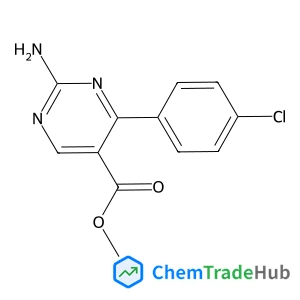
Methyl 2-amino-4-(4-chlorophenyl)-5-pyrimidinecarboxylate
CAS Number:
1133115-56-6
Molecular Formula:
C12H10ClN3O2
Recommended Suppliers





Disclaimer
This page provides academic journal information for reference and research purposes only. We are not affiliated with any journal publishers and do not handle publication submissions. For publication-related inquiries, please contact the respective journal publishers directly.
If you notice any inaccuracies in the information displayed, please contact us at support@chemtradehub.com. We will promptly review and address your concerns.