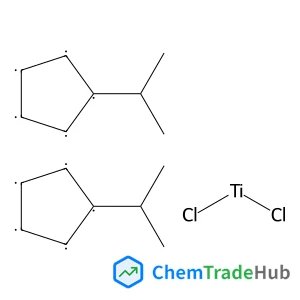
BIS(I-PROPYLCYCLOPENTADIENYL)TITANIUM DICHLORIDE
CAS Number:
12130-65-3
Molecular Formula:
C16H22Cl2Ti
Yuanyuan Qu, Mingwen Zhao
Helium-3 is a precious noble gas, which is essential in many advanced technologies such as cryogenics, isotope labeling and nuclear weapons. The current imbalance of 3He demand and supply shortage leads to the search for an efficient membrane with high performance for 3He separation. In this study, based on first-principles calculations, we demonstrated that highly efficient 3He harvesting can be achieved in a nanoporous graphenylene membrane with industrially-acceptable selectivity and permeance. The quantum tunneling effect leads to 3He harvesting with high efficiency via kinetic sieving. Both the quantum tunneling effect and zero-point energy (ZPE) determine the 3He/4He separation via thermally-driven equilibrium sieving, where the ZPE effect dominates efficient 3He/4He separation between two reservoirs. The quantum effects revealed in this work suggest that the nanoporous graphenylene membrane is promising for efficient 3He harvesting that can be exploited for industrial applications.

Organic Preparations and Procedures International

Journal of Organometallic Chemistry

Helvetica Chimica Acta

Kinetics and Catalysis

Israel Journal of Chemistry

Journal of Medicinal Chemistry

Proceedings of the National Academy of Sciences of the United States of America

Science

Journal of Physics and Chemistry of Solids

Journal of Catalysis
Song Zhang, Jianke Pan, Hongsu Zhang, Tianli Wang
DOI: 10.1039/C9QO01096C
Vojtěch Dočekal, Bedřich Formánek, Ivana Císařová, Jan Veselý
DOI: 10.1039/C9QO90096A
Klaus Banert, Jennifer Seifert
DOI: 10.1039/C9QO00312F
Qaiser Mahmood, Guangqiang Xu, Qinggang Wang
DOI: 10.1039/C9QO00965E
Lin Wang, Pi Cheng, Xinhao Wang, Wei Wang, Jianguo Zeng, Yun Liang, Oliver Reiser
DOI: 10.1039/C9QO01119F
Norihiko Takeda, Narumi Arisawa, Misaki Miyamoto, Yukiko Kobori, Tetsuro Shinada, Masafumi Ueda
DOI: 10.1039/C9QO01109A
Qiang Kang, Yu Du
DOI: 10.1039/C9QO01022J
Feng-Ping Miao, Xiu-Li Yin, Nai-Yun Ji
DOI: 10.1039/C9QO00942F
6-(3-Fluorophenyl)picolinic acid is generally considered safe for laboratory use...
(3R)-3-Pyrrolidinol is used in the pharmaceutical industry as a precursor for dr...
When handling (4R,5R)-4,5-Diethoxycarbonyl-2,2-dimethyldioxolane (CAS: 59779-75-...
1-(6-Chloroimidazo[1,2-b]pyridazin-3-yl)ethanone is often synthesized via a mult...
The market for N-Ethyl-3,4-dimethylbenzylamine (CAS: 39180-83-1) remains steady,...
Tert-butyl 3-(pyrrolidin-1-yl)azetidine-1-carboxylate is a chemical compound wit...
1-Bromo-3-chloro-2,4-dimethoxybenzene (CAS: 1228956-93-1) falls under the classi...
The safety of 8-Bromo-2-methyl-3,4-dihydroisoquinolin-1(2H)-one (CAS: 1368622-07...
Benzyl [(3S)-2,6-dioxo-3-piperidinyl]carbamate is generally safe when handled wi...
1-{[4-(4,4,5,5-Tetramethyl-1,3,2-dioxaborolan-2-yl)phenyl]sulfonyl}pyrrolidine s...

Physical Chemistry Chemical Physics (PCCP) is an international journal co-owned by 19 physical chemistry and physics societies from around the world. This journal publishes original, cutting-edge research in physical chemistry, chemical physics and biophysical chemistry. To be suitable for publication in PCCP, articles must include significant innovation and/or insight into physical chemistry; this is the most important criterion that reviewers and Editors will judge against when evaluating submissions. The journal has a broad scope and welcomes contributions spanning experiment, theory, computation and data science. Topical coverage includes spectroscopy, dynamics, kinetics, statistical mechanics, thermodynamics, electrochemistry, catalysis, surface science, quantum mechanics, quantum computing and machine learning. Interdisciplinary research areas such as polymers and soft matter, materials, nanoscience, energy, surfaces/interfaces, and biophysical chemistry are welcomed if they demonstrate significant innovation and/or insight into physical chemistry. Joined experimental/theoretical studies are particularly appreciated when complementary and based on up-to-date approaches.
![Methyl 2-[5-(3-Phenoxyphenyl)-2H-tetrazol-2-yl]acetate structure](https://static.chemtradehub.com/structs/130/1305320-60-8-84b4.webp "Methyl 2-[5-(3-Phenoxyphenyl)-2H-tetrazol-2-yl]acetate structure")