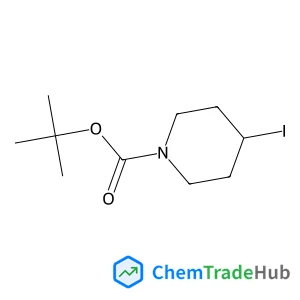
2-Methyl-2-propanyl 4-iodo-1-piperidinecarboxylate
CAS Number:
301673-14-3
Molecular Formula:
C10H18INO2
Shengcan Zhang, Fang Liu, Jingwei He
Polymerisation shrinkage and biofilm accumulation are the two main problems associated with dental resin composites (DRCs) that induce secondary caries, which can cause restoration failure. Polymerisation shrinkage can lead to microleakage gaps between the tooth and the DRCs, causing the aggregation of bacteria and development of secondary caries. Reducing the shrinkage stress (SS) and improving the resistance to bacterial adhesion have always been the focus of this field in modifying DRCs. A thiol–ene resin system can effectively reduce the polymerisation SS via its step-growth mechanism for delaying the gel point. Fluorinated compounds can reduce the surface free energies, thereby reducing bacterial adhesion. Thus, in this study, a range of mass fractions (0, 10, 20, 30, and 40 wt%) of a fluorinated thiol–ene resin system were added to a fluorinated dimethacrylate resin system/tricyclo decanedimethanol diacrylate to create a fluorinated methacrylate-thiol–ene ternary resin matrix. DRCs were prepared using the obtained ternary resin matrix, and their physical and chemical properties, effect on bacterial adhesion, and biocompatibility were investigated. The results demonstrated that the volumetric shrinkage and SS of the DRCs were reduced with no reduction in conversion degree even after the thiol–ene resin system was added. All DRC-based fluorinated resin systems exhibited an excellent anti-bacterial adhesion effect, as evidenced by the colony-forming unit counts, live/dead bacterial staining, and crystal violet staining tests against Streptococcus mutans (S. mutans). The genetic expressions associated with the bacterial adhesion of S. mutans were substantially affected after being cultured with fluorinated DRCs. All fluorinated DRCs demonstrated good biocompatibility through the in vitro cytotoxicity test and live/dead staining images of the L-929 cells. The above results illustrate that the DRCs based on the fluorinated methacrylate-thiol–ene resin matrix can be potentially applied in clinical practice due to their low SS and anti-bacterial adhesion effect.
Ying-Hsuan Chou, Chia-Liang Tsai, Guey-Sheng Liou
DOI: 10.1039/C4PY00825A
Yiwen Li, Hao Su, Xueyan Feng, Zhao Wang, Kai Guo, Qiang Fu, Stephen Z. D. Cheng
DOI: 10.1039/C4PY01103A
Hongliang Kang, Ruigang Liu, Zhuang Li, Xiaozhong Qu
DOI: 10.1039/C4PY00987H
Jing Yang Quek, Xuechao Liu, Peter J. Roth, Andrew B. Lowe
DOI: 10.1039/C4PY01108B
Zilong Wang, Lulin Yan, Lei Zhang, Yujue Chen, Hui Li, Jibo Zhang, Yan Zhang, Xing Li, Bin Xu, Xueqi Fu, Zaicheng Sun, Wenjing Tian
DOI: 10.1039/C4PY00764F
Ghislaine Robert-Nicoud, Roberto Donno, Christopher J. Cadman, Morgan R. Alexander
DOI: 10.1039/C4PY00941J
Yan Kang, Anaïs Pitto-Barry, Helen Willcock, Wen-Dong Quan, Nigel Kirby, Ana M. Sanchez, Rachel K. O'Reilly
DOI: 10.1039/C4PY01074D
K. Arimitsu, H. Kobayashi, M. Furutani, T. Gunji, Y. Abe
DOI: 10.1039/C4PY01096E
Waste containing (6-Bromo-2-naphthyl)oxy](dimethyl)(2-methyl-2-propanyl)silane (...
7-Fluoro-4-isoquinolinecarboxylic acid can be synthesized via a multi-step proce...
2,3,5,6-Tetrabromothieno[3,2-b]thiophene is a crystalline compound with a high m...
1-[4-(Benzylamino)-7,8-dihydro-5H-pyrano[4,3-d]pyrimidin-2-yl]-2-methyl-1H-indol...
The market for imidazo[5,1-d]-1,2,3,5-tetrazine-8-carboxylic acid, 3,4-dihydro-3...
3-(Triisopropylsilyl)propiolaldehyde is a synthetic organic compound with the CA...
6-Nitro-2H-1,4-benzoxazin-3(4H)-one (CAS: 81721-87-1) is subject to various regu...
Waste containing (3-Fluorophenyl)(4-{[(2-methyl-2-propanyl)oxy]carbonyl}-1-piper...
N,N'-4,4'-Biphenyldiyldiisonicotinamide is a white crystalline solid with a mole...
6-Bromo-8-fluoro-2-quinazolinol is primarily used in the pharmaceutical industry...

Journal of Materials Chemistry A, B & C cover high quality studies across all fields of materials chemistry. The journals focus on those theoretical or experimental studies that report new understanding, applications, properties and synthesis of materials. The journals have a strong history of publishing quality reports of interest to interdisciplinary communities and providing an efficient and rigorous service through peer review and publication. The journals are led by an international team of Editors-in-Chief and Associate Editors who are all active researchers in their fields. Journal of Materials Chemistry A, B & C are separated by the intended application of the material studied. Broadly, applications in energy and sustainability are of interest to Journal of Materials Chemistry A, applications in biology and medicine are of interest to Journal of Materials Chemistry B, and applications in optical, magnetic and electronic devices are of interest to Journal of Materials Chemistry C. More than one Journal of Materials Chemistry journal may be suitable for certain fields and researchers are encouraged to submit their paper to the journal that they feel best fits for their particular article. Example topic areas within the scope of Journal of Materials Chemistry B are listed below. This list is neither exhaustive nor exclusive. Antifouling coatings Biocompatible materials Bioelectronics Bioimaging Biomimetics Biomineralisation Bionics Biosensors Diagnostics Drug delivery Gene delivery Immunobiology Nanomedicine Regenerative medicine & Tissue engineering Scaffolds Soft robotics Stem cells Therapeutic devices image block All articles published in Journal of Materials Chemistry B from 2019 onwards will be indexed in MEDLINE®. Articles that primarily focus on providing insight into the underlying science and performance of biomaterials within a biological environment are more suited to our companion journal, Biomaterials Science.
![2-{[4-(2-Methoxyethyl)phenoxy]methyl}oxirane structure](https://static.chemtradehub.com/structs/567/56718-70-8-f037.webp "2-{[4-(2-Methoxyethyl)phenoxy]methyl}oxirane structure")

![2,2'-{2,2-Propanediylbis[(2,6-dibromo-4,1-phenylene)oxy]}diethanol structure](https://static.chemtradehub.com/structs/416/4162-45-2-b3d6.webp "2,2'-{2,2-Propanediylbis[(2,6-dibromo-4,1-phenylene)oxy]}diethanol structure")