












Electrostimulus-associated PD-L1 expression on cell membrane revealed by immune SERS nanoprobes
Literature Information
Publication Date
2021-12-31
DOI
10.1039/D1AN01930A
Impact Factor
4.616
Authors
Jiafeng Wang, Yan Wang, Guohua Qi
View Original
Abstract
Programmed cell death ligand 1 (PD-L1) is considered a major immune checkpoint protein that mediates antitumor immune suppression and response. Effectively regulating PD-L1 expression and dynamic monitoring has become a significant challenge in immunotherapy. Herein, we adopted smart surface-enhanced Raman scattering (SERS) nanoprobes to discriminate and monitor the dynamic expression of PD-L1 under external electrostimulation (ES). The PD-L1 expression levels in three cell lines (MCF-7 cells, HeLa cells, and H8 cells) were assessed before and after ES. The results reveal that ES could effectively and rapidly mediate a transformation in the PD-L1 content (or activity) on the cell membrane. Moreover, the molecular profiles of the cell membrane before and after ES were revealed by using the label-free SERS method with the help of immune plasmonic nanoparticles. The cell membrane protein information presented identifiable conformation changes after ES, showing a significant inhibitory effect on the bridge of PD-L1 and its antibody. This study indicates that ES is superior to chemical drugs due to lesser side effects because ES-based regulation does not depend on intracellular signalling pathways. This strategy is versatile and robust for discriminating and monitoring PD-L1 on cell membranes, thus providing potential clinical application value to PD-L1-mediated systems. This study also offers a practical way to assess the molecular profiles of cell membrane proteins in the presence of an external stimulus, which may be applicable to many membrane protein-related studies.
Related Literature
Vapour diffusion hydrolysis of a self-assembled silylated organogel, the OG–HG transcription process: a new way to cast and handle fluorescent silsesquioxane
Olivier J. Dautel, Jean-Pierre Lère-Porte, Joël J. E. Moreau, Michel Wong Chi Man
2003-09-24
Communication
DOI: 10.1039/B308703D
Synthesis of high quality inorganic fullerene-like BN hollow spheres via a simple chemical route
Xinjun Wang, Yi Xie, Qixun Guo
2003-09-26
Communication
DOI: 10.1039/B308264D
The photonic opal – the jewel in the crown of optical information processing
2003-10-07
Focus
DOI: 10.1039/B306771H
Different thermal reactivity of a 1,2-thiaphospholo[a]phosphirane in free and metal carbonyl complexed form
Tamaki Jikyo, Gerhard Maas
2003-10-14
Communication
DOI: 10.1039/B310256D
Exciplex formation between pyrene and guanine in highly polar solvents
Takahiro Kawai, Masashi Ikegami, Tatsuo Arai
2004-02-24
Communication
DOI: 10.1039/B316315F
Magnetic bead-based label-free chemiluminescence detection of telomeres
Jianzhong Lu, Choiwan Lau, Masaaki Kai
2003-10-20
Communication
DOI: 10.1039/B306895A
Long-term pervaporation performance of microporous methylated silica membranes
Jean Campaniello, Charles W. R. Engelen, Wim G. Haije, Paul P. A. C. Pex, Jaap F. Vente
2004-02-27
Communication
DOI: 10.1039/B401496K
High efficiency photocurrent generation by two-dimensional mixed J-aggregates of cyanine dyes
Mitsuo Kawasaki, Satoshi Aoyama
2004-03-19
Communication
DOI: 10.1039/B400071D
Coordinative and electrostatic forces in action: from the design of differential chromogenic anion sensors to selective carboxylate recognition
Beatriz García-Acosta, Xavier Albiach-Martí, Eduardo García, Luis Gil, Ramón Martínez-Máñez, Knut Rurack, Félix Sancenón, Juan Soto
2004-02-26
Communication
DOI: 10.1039/B314997H
DPA-substituted coumarins as chemosensors for zinc(ii): modulation of the chemosensory characteristics by variation of the position of the chelate on the coumarin
Nathaniel C. Lim, Christian Brückner
2004-04-01
Communication
DOI: 10.1039/B403448A
You might also like
Compound Q&A
What is the market or research trend for N-(4-Methoxybenzyl)-2-pyridinamine (CAS: 52818-63-0)?
N-(4-Methoxybenzyl)-2-pyridinamine (CAS: 52818-63-0) is increasingly being used ...
52818-63-0N-(4-Methoxybenzyl)-...
Compound Q&A
What precautions should be taken when handling Ethyl 4-(2-chlorophenyl)-1,3-thiazole-2-carboxylate (CAS: 1050507-06-6)?
When handling Ethyl 4-(2-chlorophenyl)-1,3-thiazole-2-carboxylate, appropriate p...
1050507-06-6Ethyl 4-(2-chlorophe...
Compound Q&A
What regulatory guidelines apply to diethyldiselane (CAS: 628-39-7)?
Diethyldiselane (CAS: 628-39-7) is classified under the Globally Harmonized Syst...
628-39-7Diethyldiselane
Compound Q&A
What is the market or research trend for oxocopper (CAS: 12053-18-8)?
The market for oxocopper (CAS: 12053-18-8) is primarily driven by its use in cat...
12053-18-8oxocopper; oxo-(oxoc...
Compound Q&A
What is the market or research trend for 5-{[(2-Methyl-2-propanyl)oxy]carbonyl}-5-azaspiro[2.4]heptane-7-carboxylic acid?
The market for 5-{[(2-Methyl-2-propanyl)oxy]carbonyl}-5-azaspiro[2.4]heptane-7-c...
1268519-54-55-{[(2-Methyl-2-prop...
Compound Q&A
What is 2-(1-Pyrrolidinyl)-4-pyridinamine (CAS: 35981-63-6)?
2-(1-Pyrrolidinyl)-4-pyridinamine is a chemical compound with the CAS number 359...
35981-63-62-(1-Pyrrolidinyl)-4...
Compound Q&A
What are the physical and chemical properties of 2-(3-Pyridinyl)-1-azabicyclo[2.2.2]octane (CAS: 91556-75-1)?
2-(3-Pyridinyl)-1-azabicyclo[2.2.2]octane (CAS: 91556-75-1) is a crystalline sol...
91556-75-12-(3-Pyridinyl)-1-az...
Compound Q&A
How is (S)-Alpha-allyl-proline hydrochloride (CAS: 129704-91-2) typically synthesized?
(S)-Alpha-allyl-proline hydrochloride is usually synthesized via a Wittig reacti...
129704-91-2(S)-Alpha-allyl-prol...
Compound Q&A
What is 3-Methyl-1,2-oxazole-5-carboxylic acid (CAS: 4857-42-5)?
3-Methyl-1,2-oxazole-5-carboxylic acid (CAS: 4857-42-5) is an organic compound w...
4857-42-53-Methyl-1,2-oxazole...
Compound Q&A
How is Lys-SMCC-DM1 (CAS: 1281816-04-3) typically synthesized?
Lys-SMCC-DM1 is synthesized via a multi-step process involving the coupling of S...
1281816-04-3Lys-SMCC-DM1
Source Journal
Analyst

CiteScore:
7.8
Self-citation Rate:
5.6%
Articles per Year:
653
Analyst publishes analytical and bioanalytical research that reports premier fundamental discoveries and inventions, and the applications of those discoveries, unconfined by traditional discipline barriers.
Recommended Compounds
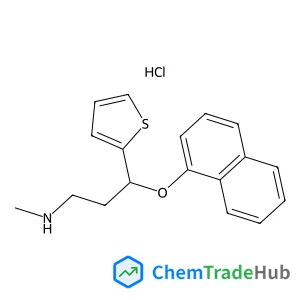
N-Methyl-3-(1-naphthyloxy)-3-(2-thienyl)-1-propanamine hydrochloride (1:1)
CAS Number:
1188266-11-6
Molecular Formula:
C18H20ClNOS
Recommended Suppliers




Disclaimer
This page provides academic journal information for reference and research purposes only. We are not affiliated with any journal publishers and do not handle publication submissions. For publication-related inquiries, please contact the respective journal publishers directly.
If you notice any inaccuracies in the information displayed, please contact us at support@chemtradehub.com. We will promptly review and address your concerns.