


![1-[6-(1H-Imidazol-1-yl)-3-pyridinyl]methanamine structure](https://static.chemtradehub.com/structs/914/914637-08-4-8825.webp "1-[6-(1H-Imidazol-1-yl)-3-pyridinyl]methanamine structure")
Salt-tolerant, scalable Janus fabric evaporators for desalination and multi-species wastewater purification
Literature Information
Publication Date
2023-06-29
DOI
10.1039/D3RE00205E
Impact Factor
4.239
Authors
Zhi-Jie Zhang, Zhi-Bo Zhang, Jun Zeng, Shan Ma, Min Chen, Dan Zhou, Yong Yan, Zhi Chen, Cong-Ming Tang, Jun-Qiang Xu
View Original
Abstract
Solar steam generation is a sustainable technology for efficient seawater desalination and wastewater purification. In this study, SA/PPy/C@CF Janus photothermal fabrics were obtained by loading carbonized corncob powder (C) onto hydrophilic cotton fabric (CF), polymerizing polypyrrole (PPy) in situ, and then spraying hydrophobic stearic acid (SA) on one side. The modification with the C powder gives the fabrics excellent broadband light absorption (∼96.84%), while the adhesion of PPy reduces carbon particle shedding and improves photothermal performance. This is combined with super-hydrophilic air-laid paper and polystyrene (PS) foam insulation to achieve suitable water transport and thermal positioning. The evaporator achieved an evaporation rate and solar energy conversion efficiency of 1.83 kg m−2 h−1 and 80.16%, respectively, under 1 sun, with similar results obtained when replacing the carbonized corncob with other biomass charcoal. The special Janus structure of the evaporator achieved high efficiency in desalination and prevented salt accumulation when applied to both indoor and outdoor desalination experiments. Additionally, the evaporator has shown excellent purification of dyes, heavy metal wastewater, and a variety of oil-in-water emulsions. This study provides new insights into the design of a multifunctional solar steam generator that is salt-tolerant and scalable, has excellent mechanical properties, and is easy to produce on a large scale.
Recommended Journals

Journal of Medicinal Chemistry

Proceedings of the National Academy of Sciences of the United States of America

Planta Medica

Journal of Organometallic Chemistry

Helvetica Chimica Acta

Journal of Catalysis

Science Progress

Organic Preparations and Procedures International

Journal of Physics and Chemistry of Solids

Journal of Heterocyclic Chemistry
Related Literature
An integrated self-powered 3D printed sample concentrator for highly sensitive molecular detection of HIV in whole blood at the point of care
Karteek Kadimisetty, Aoife M. Roche, Yanjie Yi, Frederic D. Bushman, Liang Feng
2021-03-30
Paper
DOI: 10.1039/D0AN02482A
Signal enhancement and low oxidation potentials for miniaturized ECL biosensors via N-butyldiethanolamine
Stefanie Kirschbaum-Harriman, Michael Mayer, Axel Duerkop, Thomas Hirsch
2017-05-15
Paper
DOI: 10.1039/C7AN00261K
An “off–on–off” fluorescence chemosensor for the sensitive detection of Cu2+ in aqueous solution based on multiple fluorescence emission mechanisms
Aimei Zhou, Shuhua Han
2021-02-12
Paper
DOI: 10.1039/D0AN02472D
Protein hydration in living cells probed by Fourier transform infrared (FT-IR) spectroscopic imaging
B. Turner, J. Mizukado, S. G. Kazarian
2017-05-15
Paper
DOI: 10.1039/C7AN00337D
Circumventing paclitaxel resistance in breast cancer cells using a nanoemulsion system and determining its efficacy via an impedance biosensor
Farnoosh Attari, Habibullah Hazim, Ashkan Zandi, Zeinab Mazarei, Hasan Rafati
2021-04-08
Paper
DOI: 10.1039/D0AN02013C
A metal–organic framework with multienzyme activity as a biosensing platform for real-time electrochemical detection of nitric oxide and hydrogen peroxide
Ping-hua Ling, Xiao-na Zang, Cai-hua Qian, Feng Gao
2021-03-02
Paper
DOI: 10.1039/D1AN00142F
A facile online multi-gear capacitively coupled contactless conductivity detector for an automatic and wide range monitoring of high salt in HPLC
Weiwen Liu, Ziqi Liang, Yuanyu Wang, Jun Cao, Qiang Zhang, Xiaoping Liu, Yuxing Wang
2021-12-27
Paper
DOI: 10.1039/D1AN02249K
A reusable, reagent-less free chlorine sensor using gold thin film electrode
Arif Ul Alam, Dennis Clyne
2021-03-03
Paper
DOI: 10.1039/D1AN00038A
High resolution magic angle spinning NMR as a tool for unveiling the molecular enantiorecognition of omeprazole by amylose-based chiral phase
Juliana Cristina Barreiro, Tiago de Campos Lourenço, Lorena Mara A. Silva, Tiago Venâncio, Quezia Bezerra Cass
2013-12-17
Paper
DOI: 10.1039/C3AN02029K
Design of mesoporous silica hybrid materials as sorbents for the selective recovery of rare earth metals
Xudong Zheng, Chun Wang, Jiangdong Dai, Weidong Shi, Yongsheng Yan
2015-04-03
Paper
DOI: 10.1039/C4TA06860B
You might also like
Compound Q&A
What is the market or research trend for N-(4-Methoxybenzyl)-2-pyridinamine (CAS: 52818-63-0)?
N-(4-Methoxybenzyl)-2-pyridinamine (CAS: 52818-63-0) is increasingly being used ...
52818-63-0N-(4-Methoxybenzyl)-...
Compound Q&A
What precautions should be taken when handling Ethyl 4-(2-chlorophenyl)-1,3-thiazole-2-carboxylate (CAS: 1050507-06-6)?
When handling Ethyl 4-(2-chlorophenyl)-1,3-thiazole-2-carboxylate, appropriate p...
1050507-06-6Ethyl 4-(2-chlorophe...
Compound Q&A
What regulatory guidelines apply to diethyldiselane (CAS: 628-39-7)?
Diethyldiselane (CAS: 628-39-7) is classified under the Globally Harmonized Syst...
628-39-7Diethyldiselane
Compound Q&A
What is the market or research trend for oxocopper (CAS: 12053-18-8)?
The market for oxocopper (CAS: 12053-18-8) is primarily driven by its use in cat...
12053-18-8oxocopper; oxo-(oxoc...
Compound Q&A
What is the market or research trend for 5-{[(2-Methyl-2-propanyl)oxy]carbonyl}-5-azaspiro[2.4]heptane-7-carboxylic acid?
The market for 5-{[(2-Methyl-2-propanyl)oxy]carbonyl}-5-azaspiro[2.4]heptane-7-c...
1268519-54-55-{[(2-Methyl-2-prop...
Compound Q&A
What is 2-(1-Pyrrolidinyl)-4-pyridinamine (CAS: 35981-63-6)?
2-(1-Pyrrolidinyl)-4-pyridinamine is a chemical compound with the CAS number 359...
35981-63-62-(1-Pyrrolidinyl)-4...
Compound Q&A
What are the physical and chemical properties of 2-(3-Pyridinyl)-1-azabicyclo[2.2.2]octane (CAS: 91556-75-1)?
2-(3-Pyridinyl)-1-azabicyclo[2.2.2]octane (CAS: 91556-75-1) is a crystalline sol...
91556-75-12-(3-Pyridinyl)-1-az...
Compound Q&A
How is (S)-Alpha-allyl-proline hydrochloride (CAS: 129704-91-2) typically synthesized?
(S)-Alpha-allyl-proline hydrochloride is usually synthesized via a Wittig reacti...
129704-91-2(S)-Alpha-allyl-prol...
Compound Q&A
What is 3-Methyl-1,2-oxazole-5-carboxylic acid (CAS: 4857-42-5)?
3-Methyl-1,2-oxazole-5-carboxylic acid (CAS: 4857-42-5) is an organic compound w...
4857-42-53-Methyl-1,2-oxazole...
Compound Q&A
How is Lys-SMCC-DM1 (CAS: 1281816-04-3) typically synthesized?
Lys-SMCC-DM1 is synthesized via a multi-step process involving the coupling of S...
1281816-04-3Lys-SMCC-DM1
Source Journal
Reaction Chemistry & Engineering

CiteScore:
0
Self-citation Rate:
8.8%
Articles per Year:
284
Reaction Chemistry & Engineering is an interdisciplinary journal reporting cutting-edge research focused on enhancing the understanding and efficiency of reactions. Reaction engineering leverages the interface where fundamental molecular chemistry meets chemical engineering and technology. Challenges in chemistry can be overcome by the application of new technologies, while engineers may find improved solutions for process development from the latest developments in reaction chemistry. Reaction Chemistry & Engineering is a unique forum for researchers whose interests span the broad areas of chemical engineering and chemical sciences to come together in solving problems of importance to wider society. All papers should be written to be approachable by readers across the engineering and chemical sciences. Papers that consider multiple scales, from the laboratory up to and including plant scale, are particularly encouraged.
Recommended Compounds
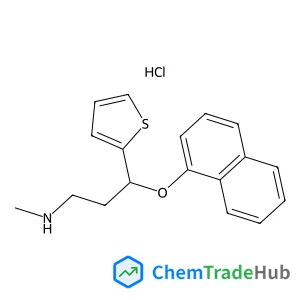
N-Methyl-3-(1-naphthyloxy)-3-(2-thienyl)-1-propanamine hydrochloride (1:1)
CAS Number:
1188266-11-6
Molecular Formula:
C18H20ClNOS
![N-{[(2-Methyl-2-propanyl)oxy]carbonyl}-L-methionylglycine structure](https://static.chemtradehub.com/structs/234/23446-03-9-e1e5.webp "N-{[(2-Methyl-2-propanyl)oxy]carbonyl}-L-methionylglycine structure")
N-{[(2-Methyl-2-propanyl)oxy]carbonyl}-L-methionylglycine
CAS Number:
23446-03-9
Molecular Formula:
C12H22N2O5S
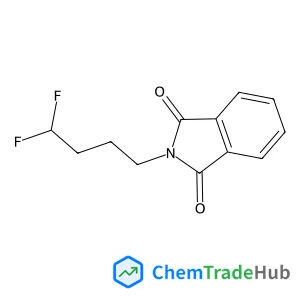
2-(4,4-Difluorobutyl)-1H-isoindole-1,3(2H)-dione
CAS Number:
1265341-14-7
Molecular Formula:
C12H11F2NO2
Recommended Suppliers




Disclaimer
This page provides academic journal information for reference and research purposes only. We are not affiliated with any journal publishers and do not handle publication submissions. For publication-related inquiries, please contact the respective journal publishers directly.
If you notice any inaccuracies in the information displayed, please contact us at support@chemtradehub.com. We will promptly review and address your concerns.