


An “off–on–off” fluorescence chemosensor for the sensitive detection of Cu2+ in aqueous solution based on multiple fluorescence emission mechanisms
Literature Information
Publication Date
2021-02-12
DOI
10.1039/D0AN02472D
Impact Factor
4.616
Authors
Aimei Zhou, Shuhua Han
View Original
Abstract
A new organosiloxane precursor ((E)-3-hydroxy-4-((2-(2-hydroxy-4-(3-(3-(triethoxysilyl)propyl)ureido)benzoyl)hydrazono)methyl)phenyl(3-(triethoxysilyl)propyl)carbamate, hereinafter referred to as AHBH-Si) and tetraethylorthosilicate (TEOS) were mixed as the mixed Si source, and bridged periodic mesoporous organic silica (AHBH-PMOs) nanoparticles were obtained through the co-condensation reaction. AHBH-PMO nanoparticles possess mechanisms of “Aggregation Induced Emission” (AIE) and “Intramolecular Charge Transfer” (ICT), which originate from the molecular structure of AHBH having “CN” bond, ortho hydroxyl groups, etc.. Therefore, the optical properties of AHBH are excellent with respect to the solvent effect and enhanced fluorescence. For hybrid materials, the silica framework provides a rigid environment that restricts the rotation of AHBH, thereby turning on the fluorescence of AHBH due to the regulation by the AIE effect. In particular, AHBH-PMOs are no longer restricted by organic solvents and could really achieve the response to Cu2+ with high sensitivity and selectivity in aqueous solutions of a wide pH range. In addition, the detection limit is as low as 3.26 × 10⁻⁹ M. Methods such as Fourier transform infrared spectroscopy, proton nuclear magnetic resonance spectroscopy, and high-resolution mass spectrometry have shown the coordination interaction between AHBH and Cu2+. The Gaussian 09 software of density functional theory to calculate the reducing changes of energy gaps among AHBH and AHBH-Si before and after the addition of Cu2+ showed that coordination interaction exists in the system. These results indicate that AHBH-PMO hybrid materials have potential applications in the field of environmental monitoring.
Recommended Journals

Journal of Heterocyclic Chemistry

Science Progress

Molecular Pharmacology

European Journal of Wood and Wood Products

Israel Journal of Chemistry

Helvetica Chimica Acta

Pure and Applied Chemistry

Proceedings of the National Academy of Sciences of the United States of America

Fibre Chemistry

Journal of Medicinal Chemistry
Related Literature
Nanomechanics of antimonene allotropes under tensile loading
Tanmay Sarkar Akash, Pritom Bose, Md Mahbubul Islam
2021-02-18
Paper
DOI: 10.1039/D0CP05563H
Strain-mediated bandgap engineering of straight and bent semiconductor nanowires
Bryan Lim, Xiang Yuan Cui, Simon P. Ringer
2021-02-24
Paper
DOI: 10.1039/D1CP00457C
Ab initio rate coefficients for reactions of 2,5-dimethylhexyl isomers with O2: temperature- and pressure-dependent branching ratios
2021-02-16
Paper
DOI: 10.1039/D0CP06562E
The primary photo-dissociation dynamics of lactate in aqueous solution: decarboxylation prevents dehydroxylation
Jan Thøgersen, Veronica Vaida, Mikkel Bregnhøj, Tobias Weidner, Frank Jensen
2021-02-16
Paper
DOI: 10.1039/D0CP05650B
Hydrogen adsorption on inorganic benzenes decorated with alkali metal cations: theoretical study
Igor K. Petrushenko, Holger F. Bettinger
2021-02-16
Paper
DOI: 10.1039/D1CP00025J
Nitrogen as a pnicogen?: evidence for π-hole driven novel pnicogen bonding interactions in nitromethane–ammonia aggregates using matrix isolation infrared spectroscopy and ab initio computations
Swaroop Chandra, B. Suryaprasad, N. Ramanathan, K. Sundararajan
2021-02-18
Paper
DOI: 10.1039/D0CP06273A
Mechanism and regio- and stereoselectivity in an NHC-catalyzed Mannich/lactamization domino reaction
Yan Li, Zhilin Li, Zhiqiang Zhang
2021-02-19
Paper
DOI: 10.1039/D1CP00369K
An analysis of electrophilic aromatic substitution: a “complex approach”
Nikola Stamenković, Nataša Poklar Ulrih, Janez Cerkovnik
2021-01-07
Perspective
DOI: 10.1039/D0CP05245K
Competition between electron transfer and base-induced elimination mechanisms in the gas-phase reactions of superoxide with alkyl hydroperoxides
Ezequiel Fragoso Vieira Leitão, Miguel Angelo Fonseca de Souza, Silmar Andrade do Monte, Elizete Ventura
2021-02-16
Paper
DOI: 10.1039/D0CP05761D
Simultaneous binding mechanism of multiple substrates for multidrug resistance transporter P-glycoprotein
Bo Zhang, Zhengzhong Kang, Junqiao Zhang, Yu Kang, Lijun Liang, Yingchun Liu, Qi Wang
2021-01-27
Paper
DOI: 10.1039/D0CP05910B
You might also like
Compound Q&A
What is the market or research trend for N-(4-Methoxybenzyl)-2-pyridinamine (CAS: 52818-63-0)?
N-(4-Methoxybenzyl)-2-pyridinamine (CAS: 52818-63-0) is increasingly being used ...
52818-63-0N-(4-Methoxybenzyl)-...
Compound Q&A
What precautions should be taken when handling Ethyl 4-(2-chlorophenyl)-1,3-thiazole-2-carboxylate (CAS: 1050507-06-6)?
When handling Ethyl 4-(2-chlorophenyl)-1,3-thiazole-2-carboxylate, appropriate p...
1050507-06-6Ethyl 4-(2-chlorophe...
Compound Q&A
What regulatory guidelines apply to diethyldiselane (CAS: 628-39-7)?
Diethyldiselane (CAS: 628-39-7) is classified under the Globally Harmonized Syst...
628-39-7Diethyldiselane
Compound Q&A
What is the market or research trend for oxocopper (CAS: 12053-18-8)?
The market for oxocopper (CAS: 12053-18-8) is primarily driven by its use in cat...
12053-18-8oxocopper; oxo-(oxoc...
Compound Q&A
What is the market or research trend for 5-{[(2-Methyl-2-propanyl)oxy]carbonyl}-5-azaspiro[2.4]heptane-7-carboxylic acid?
The market for 5-{[(2-Methyl-2-propanyl)oxy]carbonyl}-5-azaspiro[2.4]heptane-7-c...
1268519-54-55-{[(2-Methyl-2-prop...
Compound Q&A
What is 2-(1-Pyrrolidinyl)-4-pyridinamine (CAS: 35981-63-6)?
2-(1-Pyrrolidinyl)-4-pyridinamine is a chemical compound with the CAS number 359...
35981-63-62-(1-Pyrrolidinyl)-4...
Compound Q&A
What are the physical and chemical properties of 2-(3-Pyridinyl)-1-azabicyclo[2.2.2]octane (CAS: 91556-75-1)?
2-(3-Pyridinyl)-1-azabicyclo[2.2.2]octane (CAS: 91556-75-1) is a crystalline sol...
91556-75-12-(3-Pyridinyl)-1-az...
Compound Q&A
How is (S)-Alpha-allyl-proline hydrochloride (CAS: 129704-91-2) typically synthesized?
(S)-Alpha-allyl-proline hydrochloride is usually synthesized via a Wittig reacti...
129704-91-2(S)-Alpha-allyl-prol...
Compound Q&A
What is 3-Methyl-1,2-oxazole-5-carboxylic acid (CAS: 4857-42-5)?
3-Methyl-1,2-oxazole-5-carboxylic acid (CAS: 4857-42-5) is an organic compound w...
4857-42-53-Methyl-1,2-oxazole...
Compound Q&A
How is Lys-SMCC-DM1 (CAS: 1281816-04-3) typically synthesized?
Lys-SMCC-DM1 is synthesized via a multi-step process involving the coupling of S...
1281816-04-3Lys-SMCC-DM1
Source Journal
Analyst

CiteScore:
7.8
Self-citation Rate:
5.6%
Articles per Year:
653
Analyst publishes analytical and bioanalytical research that reports premier fundamental discoveries and inventions, and the applications of those discoveries, unconfined by traditional discipline barriers.
Recommended Compounds
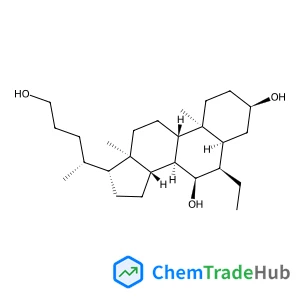
(3alpha,5beta,6alpha,7alpha)-6-Ethylcholane-3,7,24-triol
CAS Number:
1537866-49-1
Molecular Formula:
C26H46O3
![1-[6-(1H-Imidazol-1-yl)-3-pyridinyl]methanamine structure](https://static.chemtradehub.com/structs/914/914637-08-4-8825.webp "1-[6-(1H-Imidazol-1-yl)-3-pyridinyl]methanamine structure")
Recommended Suppliers





Disclaimer
This page provides academic journal information for reference and research purposes only. We are not affiliated with any journal publishers and do not handle publication submissions. For publication-related inquiries, please contact the respective journal publishers directly.
If you notice any inaccuracies in the information displayed, please contact us at support@chemtradehub.com. We will promptly review and address your concerns.