


Straight-chain ω-amino-α,β-unsaturated carbonyl compounds: versatile synthons for the synthesis of nitrogen-containing heterocycles via organocatalytic reactions
Literature Information
Publication Date
2023-11-30
DOI
10.1039/D3QO01734F
Impact Factor
5.281
Authors
Shuhui Li, Xiaoxuan Li, Hui Yao, Mengting Tan, Dan Xu, Nianyu Huang, Nengzhong Wang
View Original
Abstract
Straight-chain ω-amino-α,β-unsaturated carbonyl compounds have been recognized as versatile organic synthons participating in various organocatalytic reactions for the creation of five- and six-membered saturated nitrogen-containing heterocycles, which are important subunits in a broad range of naturally occurring compounds, biologically active molecules, and drugs. Consequently, these organic synthons have attracted significant interest from synthetic and pharmaceutical chemists, and a series of methodologies and strategies have been efficiently developed. In this review, we elaborate and discuss the recent applications of such versatile synthons according to the following organocatalytic reaction modes: (1) covalent catalysis (secondary amine catalysis, phosphine catalysis, and N-heterocyclic carbene catalysis), (2) non-covalent catalysis (Brønsted acid catalysis), and (3) bifunctional catalysis (bifunctional tertiary amine/primary amine catalysis, bifunctional tertiary amine/squaramide catalysis, and bifunctional tertiary amine/thiourea catalysis).
Recommended Journals

Angewandte Chemie International Edition

Mini-Reviews in Medicinal Chemistry

CrystEngComm

Faraday Discussions

Advanced Engineering Materials

Photochemical & Photobiological Sciences

Environmental Toxicology and Pharmacology

Molecules

Journal of Enzyme inhibition and Medicinal Chemistry

Contact Lens & Anterior Eye
Related Literature
Photodissociation of singlet oxygen in the UV region
Zahid Farooq, Dimitri A. Chestakov, Bin Yan, Gerrit C. Groenenboom, Wim J. van der Zande, David H. Parker
2013-12-16
Paper
DOI: 10.1039/C3CP54696A
Weak hydrogen bonding motifs of ethylamino neurotransmitter radical cations in a hydrophobic environment: infrared spectra of tryptamine+–(N2)n clusters (n ≤ 6)
Kenji Sakota, Markus Schütz, Matthias Schmies, Raphael Moritz, Aude Bouchet, Takamasa Ikeda, Yuuki Kouno, Hiroshi Sekiya, Otto Dopfer
2014-01-16
Paper
DOI: 10.1039/C3CP54127D
Electro-reduction of nitrogen on molybdenum nitride: structure, energetics, and vibrational spectra from DFT
Fernando H. Garzon, Neil J. Henson
2013-12-13
Paper
DOI: 10.1039/C3CP54559H
The benzoic acid–water complex: a potential atmospheric nucleation precursor studied using microwave spectroscopy and ab initio calculations
Elijah G. Schnitzler, Wolfgang Jäger
2013-11-28
Paper
DOI: 10.1039/C3CP54486A
Direct evidence of hydrogen-atom tunneling dynamics in the excited state hydrogen transfer (ESHT) reaction of phenol–ammonia clusters
J. D. Rodríguez, M. G. González, L. Rubio-Lago, L. Bañares
2013-12-13
Paper
DOI: 10.1039/C3CP54362E
Mapping the structure of amyloid nucleation precursors by protein engineering kinetic analysis
David Ruzafa, Lorena Varela, Ana I. Azuaga, Francisco Conejero-Lara, Bertrand Morel
2013-12-06
Paper
DOI: 10.1039/C3CP54383H
Electronic and magnetic structures of coronene-based graphitic nanoribbons
Aldilene Saraiva-Souza, Zachary Bullard, Dayvison Weber Maia, Antônio Gomes Souza Filho, Eduardo Costa Girão
2013-12-16
Paper
DOI: 10.1039/C3CP54496F
Dual fluorescence of excited state intra-molecular proton transfer of HBFO: mechanistic understanding, substituent and solvent effects
Wenjing Yang, Xuebo Chen
2014-01-07
Paper
DOI: 10.1039/C3CP54462A
Spectromicroscopic evidence of interstitial and substitutional dopants in association with oxygen vacancies in Sm-doped ceria nanoparticles
Shih-Yun Chen, Ren-Jie Chen, William Lee, Chung-Li Dong, Alexandre Gloter
2014-01-06
Paper
DOI: 10.1039/C3CP54613F
Modeling and simulation of the water gradient within a Nafion membrane
Masoumeh Ozmaian
2014-01-09
Paper
DOI: 10.1039/C3CP54015D
You might also like
Compound Q&A
What is the market or research trend for N-(4-Methoxybenzyl)-2-pyridinamine (CAS: 52818-63-0)?
N-(4-Methoxybenzyl)-2-pyridinamine (CAS: 52818-63-0) is increasingly being used ...
52818-63-0N-(4-Methoxybenzyl)-...
Compound Q&A
What precautions should be taken when handling Ethyl 4-(2-chlorophenyl)-1,3-thiazole-2-carboxylate (CAS: 1050507-06-6)?
When handling Ethyl 4-(2-chlorophenyl)-1,3-thiazole-2-carboxylate, appropriate p...
1050507-06-6Ethyl 4-(2-chlorophe...
Compound Q&A
What regulatory guidelines apply to diethyldiselane (CAS: 628-39-7)?
Diethyldiselane (CAS: 628-39-7) is classified under the Globally Harmonized Syst...
628-39-7Diethyldiselane
Compound Q&A
What is the market or research trend for oxocopper (CAS: 12053-18-8)?
The market for oxocopper (CAS: 12053-18-8) is primarily driven by its use in cat...
12053-18-8oxocopper; oxo-(oxoc...
Compound Q&A
What is the market or research trend for 5-{[(2-Methyl-2-propanyl)oxy]carbonyl}-5-azaspiro[2.4]heptane-7-carboxylic acid?
The market for 5-{[(2-Methyl-2-propanyl)oxy]carbonyl}-5-azaspiro[2.4]heptane-7-c...
1268519-54-55-{[(2-Methyl-2-prop...
Compound Q&A
What is 2-(1-Pyrrolidinyl)-4-pyridinamine (CAS: 35981-63-6)?
2-(1-Pyrrolidinyl)-4-pyridinamine is a chemical compound with the CAS number 359...
35981-63-62-(1-Pyrrolidinyl)-4...
Compound Q&A
What are the physical and chemical properties of 2-(3-Pyridinyl)-1-azabicyclo[2.2.2]octane (CAS: 91556-75-1)?
2-(3-Pyridinyl)-1-azabicyclo[2.2.2]octane (CAS: 91556-75-1) is a crystalline sol...
91556-75-12-(3-Pyridinyl)-1-az...
Compound Q&A
How is (S)-Alpha-allyl-proline hydrochloride (CAS: 129704-91-2) typically synthesized?
(S)-Alpha-allyl-proline hydrochloride is usually synthesized via a Wittig reacti...
129704-91-2(S)-Alpha-allyl-prol...
Compound Q&A
What is 3-Methyl-1,2-oxazole-5-carboxylic acid (CAS: 4857-42-5)?
3-Methyl-1,2-oxazole-5-carboxylic acid (CAS: 4857-42-5) is an organic compound w...
4857-42-53-Methyl-1,2-oxazole...
Compound Q&A
How is Lys-SMCC-DM1 (CAS: 1281816-04-3) typically synthesized?
Lys-SMCC-DM1 is synthesized via a multi-step process involving the coupling of S...
1281816-04-3Lys-SMCC-DM1
Source Journal
Organic Chemistry Frontiers

CiteScore:
7.8
Self-citation Rate:
8.7%
Articles per Year:
724
Organic Chemistry Frontiers publishes high-quality research from across organic chemistry. Emphases are placed on studies that make significant contributions to the field of organic chemistry by reporting either new or significantly improved protocols or methodologies. Topics include, but are not limited to the following: Organic synthesis Development of synthetic methodologies Catalysis Natural products Functional organic materials Supramolecular and macromolecular chemistry Physical and computational organic chemistry
Recommended Compounds
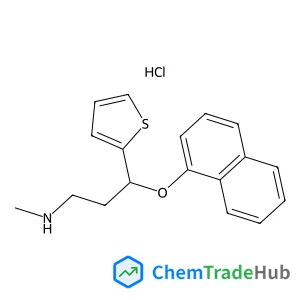
N-Methyl-3-(1-naphthyloxy)-3-(2-thienyl)-1-propanamine hydrochloride (1:1)
CAS Number:
1188266-11-6
Molecular Formula:
C18H20ClNOS
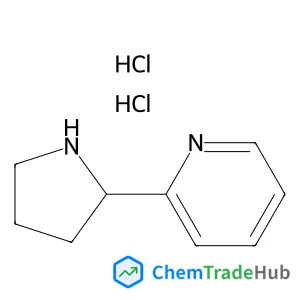

(2R)-2-(3-Bromophenyl)pyrrolidine hydrochloride (1:1)
CAS Number:
1391550-13-2
Molecular Formula:
C10H13BrClN
Recommended Suppliers



Disclaimer
This page provides academic journal information for reference and research purposes only. We are not affiliated with any journal publishers and do not handle publication submissions. For publication-related inquiries, please contact the respective journal publishers directly.
If you notice any inaccuracies in the information displayed, please contact us at support@chemtradehub.com. We will promptly review and address your concerns.