


Weak hydrogen bonding motifs of ethylamino neurotransmitter radical cations in a hydrophobic environment: infrared spectra of tryptamine+–(N2)n clusters (n ≤ 6)
Literature Information
Publication Date
2014-01-16
DOI
10.1039/C3CP54127D
Impact Factor
3.676
Authors
Kenji Sakota, Markus Schütz, Matthias Schmies, Raphael Moritz, Aude Bouchet, Takamasa Ikeda, Yuuki Kouno, Hiroshi Sekiya, Otto Dopfer
View Original
Abstract
Size-selected clusters of the tryptamine cation with N2 ligands, TRA+–(N2)n with n = 1–6, are investigated by infrared photodissociation (IRPD) spectroscopy in the hydride stretch range and quantum chemical calculations at the ωB97X-D/cc-pVTZ level to characterize the microsolvation of this prototypical aromatic ethylamino neurotransmitter radical cation in a nonpolar solvent. Two types of structural isomers exhibiting different interaction motifs are identified for the TRA+–N2 dimer, namely the TRA+–N2(H) global minimum, in which N2 forms a linear hydrogen bond (H-bond) to the indolic NH group, and the less stable TRA+–N2(π) local minima, in which N2 binds to the aromatic π electron system of the indolic pyrrole ring. The IRPD spectrum of TRA+–(N2)2 is consistent with contributions from two structural H-bound isomers with similar calculated stabilization energies. The first isomer, denoted as TRA+–(N2)2(2H), exhibits an asymmetric bifurcated planar H-bonding motif, in which both N2 ligands are attached to the indolic NH group in the aromatic plane via H-bonding and charge–quadrupole interactions. The second isomer, denoted as TRA+–(N2)2(H/π), has a single and nearly linear H-bond of the first N2 ligand to the indolic NH group, whereas the second ligand is π-bonded to the pyrrole ring. The natural bond orbital analysis of TRA+–(N2)2 reveals that the total stability of these types of clusters is not only controlled by the local H-bond strengths between the indolic NH group and the N2 ligands but also by a subtle balance between various contributing intermolecular interactions, including local H-bonds, charge–quadrupole and induction interactions, dispersion, and exchange repulsion. The systematic spectral shifts as a function of cluster size suggest that the larger TRA+–(N2)n clusters with n = 3–6 are composed of the strongly bound TRA+–(N2)2(2H) core ion to which further N2 ligands are weakly attached to either the π electron system or the indolic NH proton by stacking and charge–quadrupole forces.
Recommended Journals

Journal of Asian Natural Products Research

Heteroatom Chemistry

Colloid Journal

Journal of Chemical Sciences

Medicinal Chemistry Research

Critical Reviews in Solid State and Materials Sciences

Journal of the Indian Institute of Science

Bioorganic & Medicinal Chemistry Letters

Chinese Journal of Chemistry

Herald of the Russian Academy of Sciences
Related Literature
Amplified nitric oxide photorelease in DNA proximity
Fiorella L. Callari, Salvatore Sortino
2008-03-20
Communication
DOI: 10.1039/B800132D
Self-assembly of a peptide rod–coil: a polyproline rod and a cell-penetrating peptide Tat coil
You-Rim Yoon, Yong-beom Lim, Eunji Lee, Myongsoo Lee
2008-03-11
Communication
DOI: 10.1039/B719868J
Fluorescence microscopy coupled to electrochemistry: a powerful tool for the controlled electrochemical switch of fluorescent molecules
Fabien Miomandre, Rachel Meallet-Renault, Jean-Jacques Vachon, Robert Bernard Pansu, Pierre Audebert
2008-02-19
Communication
DOI: 10.1039/B718899D
A practical demonstration of electronic promotion in the reduction of ceria coated PGM catalysts
Shik Chi Tsang, Stan Golunski, Paul Collier
2008-02-18
Communication
DOI: 10.1039/B718956G
Stabilization of cobalt oxyhydrate superconductor
Zhi Ren, Cao Wang, Xiang-fan Xu, Guang-han Cao, Zhu-an Xu, Yu-heng Zhang
2008-03-03
Communication
DOI: 10.1039/B800378E
A simple method for the containment and purification of filled open-ended single wall carbon nanotubes using C60 molecules
Lidong Shao, Tsung-Wu Lin, Gerard Tobias, Malcolm L. H. Green
2008-03-05
Communication
DOI: 10.1039/B800881G
Unconventional thermodynamically stable cis isomer and trans to cis thermal isomerization in reversibly photoresponsive [0.0](3,3′)-azobenzenophane
Yasuo Norikane, Ryuzi Katoh, Nobuyuki Tamaoki
2008-03-03
Communication
DOI: 10.1039/B718813G
Pressure effects and Mössbauer spectroscopic studies on a 3D mixed-valence iron spin-crossover complex with NiAs topology
Yue-Ling Bai, Jun Tao, Rong-Bin Huang, Lan-Sun Zheng, Shao-Liang Zheng, Kazuyoshi Oshida, Yasuaki Einaga
2008-02-11
Communication
DOI: 10.1039/B718456E
Size matters—strong binding of the terephthalate dianion by thiourea functionalised fused [n]polynorbornane hosts
Adam J. Lowe, Frederick M. Pfeffer
2008-03-18
Communication
DOI: 10.1039/B801798K
You might also like
Compound Q&A
What is the market or research trend for N-(4-Methoxybenzyl)-2-pyridinamine (CAS: 52818-63-0)?
N-(4-Methoxybenzyl)-2-pyridinamine (CAS: 52818-63-0) is increasingly being used ...
52818-63-0N-(4-Methoxybenzyl)-...
Compound Q&A
What precautions should be taken when handling Ethyl 4-(2-chlorophenyl)-1,3-thiazole-2-carboxylate (CAS: 1050507-06-6)?
When handling Ethyl 4-(2-chlorophenyl)-1,3-thiazole-2-carboxylate, appropriate p...
1050507-06-6Ethyl 4-(2-chlorophe...
Compound Q&A
What regulatory guidelines apply to diethyldiselane (CAS: 628-39-7)?
Diethyldiselane (CAS: 628-39-7) is classified under the Globally Harmonized Syst...
628-39-7Diethyldiselane
Compound Q&A
What is the market or research trend for oxocopper (CAS: 12053-18-8)?
The market for oxocopper (CAS: 12053-18-8) is primarily driven by its use in cat...
12053-18-8oxocopper; oxo-(oxoc...
Compound Q&A
What is the market or research trend for 5-{[(2-Methyl-2-propanyl)oxy]carbonyl}-5-azaspiro[2.4]heptane-7-carboxylic acid?
The market for 5-{[(2-Methyl-2-propanyl)oxy]carbonyl}-5-azaspiro[2.4]heptane-7-c...
1268519-54-55-{[(2-Methyl-2-prop...
Compound Q&A
What is 2-(1-Pyrrolidinyl)-4-pyridinamine (CAS: 35981-63-6)?
2-(1-Pyrrolidinyl)-4-pyridinamine is a chemical compound with the CAS number 359...
35981-63-62-(1-Pyrrolidinyl)-4...
Compound Q&A
What are the physical and chemical properties of 2-(3-Pyridinyl)-1-azabicyclo[2.2.2]octane (CAS: 91556-75-1)?
2-(3-Pyridinyl)-1-azabicyclo[2.2.2]octane (CAS: 91556-75-1) is a crystalline sol...
91556-75-12-(3-Pyridinyl)-1-az...
Compound Q&A
How is (S)-Alpha-allyl-proline hydrochloride (CAS: 129704-91-2) typically synthesized?
(S)-Alpha-allyl-proline hydrochloride is usually synthesized via a Wittig reacti...
129704-91-2(S)-Alpha-allyl-prol...
Compound Q&A
What is 3-Methyl-1,2-oxazole-5-carboxylic acid (CAS: 4857-42-5)?
3-Methyl-1,2-oxazole-5-carboxylic acid (CAS: 4857-42-5) is an organic compound w...
4857-42-53-Methyl-1,2-oxazole...
Compound Q&A
How is Lys-SMCC-DM1 (CAS: 1281816-04-3) typically synthesized?
Lys-SMCC-DM1 is synthesized via a multi-step process involving the coupling of S...
1281816-04-3Lys-SMCC-DM1
Source Journal
Physical Chemistry Chemical Physics

CiteScore:
5.5
Self-citation Rate:
10.3%
Articles per Year:
3036
Physical Chemistry Chemical Physics (PCCP) is an international journal co-owned by 19 physical chemistry and physics societies from around the world. This journal publishes original, cutting-edge research in physical chemistry, chemical physics and biophysical chemistry. To be suitable for publication in PCCP, articles must include significant innovation and/or insight into physical chemistry; this is the most important criterion that reviewers and Editors will judge against when evaluating submissions. The journal has a broad scope and welcomes contributions spanning experiment, theory, computation and data science. Topical coverage includes spectroscopy, dynamics, kinetics, statistical mechanics, thermodynamics, electrochemistry, catalysis, surface science, quantum mechanics, quantum computing and machine learning. Interdisciplinary research areas such as polymers and soft matter, materials, nanoscience, energy, surfaces/interfaces, and biophysical chemistry are welcomed if they demonstrate significant innovation and/or insight into physical chemistry. Joined experimental/theoretical studies are particularly appreciated when complementary and based on up-to-date approaches.
Recommended Compounds
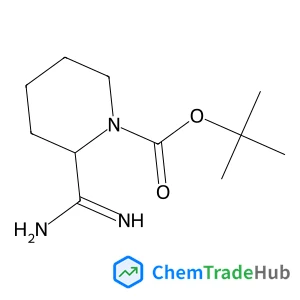
2-Methyl-2-propanyl 2-carbamimidoyl-1-piperidinecarboxylate
CAS Number:
1258640-98-0
Molecular Formula:
C11H21N3O2
![N-{15-[(2,5-Dioxo-1-pyrrolidinyl)oxy]-15-oxo-3,6,9,12-tetraoxapentadec-1-yl}-2-(2-propyn-1-yloxy)acetamide structure](https://static.chemtradehub.com/structs/210/2101206-92-0-2eb5.webp "N-{15-[(2,5-Dioxo-1-pyrrolidinyl)oxy]-15-oxo-3,6,9,12-tetraoxapentadec-1-yl}-2-(2-propyn-1-yloxy)acetamide structure")
N-{15-[(2,5-Dioxo-1-pyrrolidinyl)oxy]-15-oxo-3,6,9,12-tetraoxapentadec-1-yl}-2-(2-propyn-1-yloxy)acetamide
CAS Number:
2101206-92-0
Molecular Formula:
C20H30N2O10
Recommended Suppliers






Disclaimer
This page provides academic journal information for reference and research purposes only. We are not affiliated with any journal publishers and do not handle publication submissions. For publication-related inquiries, please contact the respective journal publishers directly.
If you notice any inaccuracies in the information displayed, please contact us at support@chemtradehub.com. We will promptly review and address your concerns.