


Regio- and stereoselective divergent cross-coupling of alkynes and disubstituted alkenes via photoredox cobalt dual catalysis
Literature Information
Publication Date
2023-10-28
DOI
10.1039/D3QO01281F
Impact Factor
5.281
Authors
Yan-Lin Li, Kun Cui, Zheng-Yang Gu, Hu He
View Original
Abstract
Achieving divergent synthesis from the same substrates quickly to generate different products remains an attractive objective in synthetic chemistry and the medicinal industry. Here, we report a discovery of highly selective divergent cross-coupling of alkynes and disubstituted alkenes by merging visible light photoredox and cobalt catalysis. Under otherwise identical conditions, the use of either a hemilabile P,N-ligand or a strong bidentate diphosphine ligand leads to ene-type coupling or reductive coupling of alkynes and Tulipalin A, producing stereodefined 1,4-diene or trisubstituted alkene products, respectively. The approaches feature considerable advantages for the straightforward synthesis of stereodefined multiple substituted alkenes, such as easily available substrates, low catalyst loading of an organophotocatalyst, excellent regio- and stereoselectivity, good functional group tolerance, and mild reaction conditions. Reasonable catalytic reaction pathways from the same cobaltacyclopentene intermediate have been proposed.
Recommended Journals

Contact Lens & Anterior Eye

Advanced Engineering Materials

European Journal of Organic Chemistry

Journal of Medical Biochemistry

Journal of Enzyme inhibition and Medicinal Chemistry

Coloration Technology

Molecular Diversity

Physical Chemistry Chemical Physics

Environmental Toxicology and Pharmacology

Nature Reviews Drug Discovery
Related Literature
The role of charge transfer in the energy level alignment at the pentacene/C60 interface
J. Beltrán, F. Flores, J. Ortega
2014-01-06
Paper
DOI: 10.1039/C3CP55004D
Diversification of EPR signatures in site directed spin labeling using a β-phosphorylated nitroxide
Nolwenn Le Breton, Marlène Martinho, Kuanysh Kabytaev, Jérémie Topin, Elisabetta Mileo, David Blocquel, Johnny Habchi, Sonia Longhi, Antal Rockenbauer, Jérôme Golebiowski, Bruno Guigliarelli, Sylvain R. A. Marque, Valérie Belle
2014-01-02
Paper
DOI: 10.1039/C3CP54816C
Improving O2 production of WO3 photoanodes with IrO2 in acidic aqueous electrolyte
Joshua M. Spurgeon, Jesus M. Velazquez, Matthew T. McDowell
2014-01-10
Paper
DOI: 10.1039/C3CP55527E
In situ IR spectroscopic studies of Ni surface segregation induced by CO adsorption on Cu–Ni/SiO2 bimetallic catalysts
Yunxi Yao, D. Wayne Goodman
2014-01-03
Paper
DOI: 10.1039/C3CP54997F
Electron impact induced anion production in acetylene
Ewelina Szymańska, Iztok Čadež, E. Krishnakumar, Nigel J. Mason
2013-11-27
Paper
DOI: 10.1039/C3CP54459A
The benzoic acid–water complex: a potential atmospheric nucleation precursor studied using microwave spectroscopy and ab initio calculations
Elijah G. Schnitzler, Wolfgang Jäger
2013-11-28
Paper
DOI: 10.1039/C3CP54486A
The quantum-chemical approach to calculations of thermodynamic and structural parameters of formation of fatty acid monolayers with hexagonal packing at the air/water interface
Yu. B. Vysotsky, E. A. Belyaeva, E. S. Fomina, D. Vollhardt, V. B. Fainerman, R. Miller
2013-12-19
Paper
DOI: 10.1039/C3CP54124J
Mapping the structure of amyloid nucleation precursors by protein engineering kinetic analysis
David Ruzafa, Lorena Varela, Ana I. Azuaga, Francisco Conejero-Lara, Bertrand Morel
2013-12-06
Paper
DOI: 10.1039/C3CP54383H
New insight into the potential energy landscape and relaxation pathways of photoexcited aniline from CASSCF and XMCQDPT2 electronic structure calculations
Matthieu Sala, Oliver M. Kirkby, Stéphane Guérin, Helen H. Fielding
2014-01-02
Paper
DOI: 10.1039/C3CP54418D
Photochemistry of a 1 : 1 hydrogen-bonded CH3CN : HCOOH complex under astrochemically-relevant conditions
2013-11-01
Paper
DOI: 10.1039/C3CP54041C
You might also like
Compound Q&A
What is the market or research trend for N-(4-Methoxybenzyl)-2-pyridinamine (CAS: 52818-63-0)?
N-(4-Methoxybenzyl)-2-pyridinamine (CAS: 52818-63-0) is increasingly being used ...
52818-63-0N-(4-Methoxybenzyl)-...
Compound Q&A
What precautions should be taken when handling Ethyl 4-(2-chlorophenyl)-1,3-thiazole-2-carboxylate (CAS: 1050507-06-6)?
When handling Ethyl 4-(2-chlorophenyl)-1,3-thiazole-2-carboxylate, appropriate p...
1050507-06-6Ethyl 4-(2-chlorophe...
Compound Q&A
What regulatory guidelines apply to diethyldiselane (CAS: 628-39-7)?
Diethyldiselane (CAS: 628-39-7) is classified under the Globally Harmonized Syst...
628-39-7Diethyldiselane
Compound Q&A
What is the market or research trend for oxocopper (CAS: 12053-18-8)?
The market for oxocopper (CAS: 12053-18-8) is primarily driven by its use in cat...
12053-18-8oxocopper; oxo-(oxoc...
Compound Q&A
What is the market or research trend for 5-{[(2-Methyl-2-propanyl)oxy]carbonyl}-5-azaspiro[2.4]heptane-7-carboxylic acid?
The market for 5-{[(2-Methyl-2-propanyl)oxy]carbonyl}-5-azaspiro[2.4]heptane-7-c...
1268519-54-55-{[(2-Methyl-2-prop...
Compound Q&A
What is 2-(1-Pyrrolidinyl)-4-pyridinamine (CAS: 35981-63-6)?
2-(1-Pyrrolidinyl)-4-pyridinamine is a chemical compound with the CAS number 359...
35981-63-62-(1-Pyrrolidinyl)-4...
Compound Q&A
What are the physical and chemical properties of 2-(3-Pyridinyl)-1-azabicyclo[2.2.2]octane (CAS: 91556-75-1)?
2-(3-Pyridinyl)-1-azabicyclo[2.2.2]octane (CAS: 91556-75-1) is a crystalline sol...
91556-75-12-(3-Pyridinyl)-1-az...
Compound Q&A
How is (S)-Alpha-allyl-proline hydrochloride (CAS: 129704-91-2) typically synthesized?
(S)-Alpha-allyl-proline hydrochloride is usually synthesized via a Wittig reacti...
129704-91-2(S)-Alpha-allyl-prol...
Compound Q&A
What is 3-Methyl-1,2-oxazole-5-carboxylic acid (CAS: 4857-42-5)?
3-Methyl-1,2-oxazole-5-carboxylic acid (CAS: 4857-42-5) is an organic compound w...
4857-42-53-Methyl-1,2-oxazole...
Compound Q&A
How is Lys-SMCC-DM1 (CAS: 1281816-04-3) typically synthesized?
Lys-SMCC-DM1 is synthesized via a multi-step process involving the coupling of S...
1281816-04-3Lys-SMCC-DM1
Source Journal
Organic Chemistry Frontiers

CiteScore:
7.8
Self-citation Rate:
8.7%
Articles per Year:
724
Organic Chemistry Frontiers publishes high-quality research from across organic chemistry. Emphases are placed on studies that make significant contributions to the field of organic chemistry by reporting either new or significantly improved protocols or methodologies. Topics include, but are not limited to the following: Organic synthesis Development of synthetic methodologies Catalysis Natural products Functional organic materials Supramolecular and macromolecular chemistry Physical and computational organic chemistry
Recommended Compounds
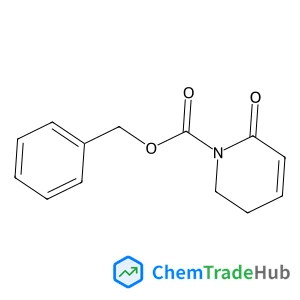
Benzyl 6-oxo-3,6-dihydro-1(2H)-pyridinecarboxylate
CAS Number:
725746-35-0
Molecular Formula:
C13H13NO3

Recommended Suppliers







Disclaimer
This page provides academic journal information for reference and research purposes only. We are not affiliated with any journal publishers and do not handle publication submissions. For publication-related inquiries, please contact the respective journal publishers directly.
If you notice any inaccuracies in the information displayed, please contact us at support@chemtradehub.com. We will promptly review and address your concerns.