












Improving O2 production of WO3 photoanodes with IrO2 in acidic aqueous electrolyte
Literature Information
Publication Date
2014-01-10
DOI
10.1039/C3CP55527E
Impact Factor
3.676
Authors
Joshua M. Spurgeon, Jesus M. Velazquez, Matthew T. McDowell
View Original
Abstract
WO3 is a promising candidate for a photoanode material in an acidic electrolyte, in which it is more stable than most metal oxides, but kinetic limitations combined with the large driving force available in the WO3 valence band for water oxidation make competing reactions such as the oxidation of the acid counterion a more favorable reaction. The incorporation of an oxygen evolving catalyst (OEC) on the WO3 surface can improve the kinetics for water oxidation and increase the branching ratio for O2 production. Ir-based OECs were attached to WO3 photoanodes by a variety of methods including sintering from metal salts, sputtering, drop-casting of particles, and electrodeposition to analyze how attachment strategies can affect photoelectrochemical oxygen production at WO3 photoanodes in 1 M H2SO4. High surface coverage of catalyst on the semiconductor was necessary to ensure that most minority-carrier holes contributed to water oxidation through an active catalyst site rather than a side-reaction through the WO3/electrolyte interface. Sputtering of IrO2 layers on WO3 did not detrimentally affect the energy-conversion behavior of the photoanode and improved the O2 yield at 1.2 V vs. RHE from ∼0% for bare WO3 to 50–70% for a thin, optically transparent catalyst layer to nearly 100% for thick, opaque catalyst layers. Measurements with a fast one-electron redox couple indicated ohmic behavior at the IrO2/WO3 junction, which provided a shunt pathway for electrocatalytic IrO2 behavior with the WO3 photoanode under reverse bias. Although other OECs were tested, only IrO2 displayed extended stability under the anodic operating conditions in acid as determined by XPS.
Related Literature
Isofagomine lactams, synthesis and enzyme inhibition
Vinni H. Lillelund, Huizhen Liu, Xifu Liang, Helmer Søhoel, Mikael Bols
2002-12-19
Paper
DOI: 10.1039/B208784G
Through-space interactions between face-to-face, center-to-edge oriented arenes: importance of polar–π effects
Franco Cozzi, Rita Annunziata, Maurizio Benaglia, Mauro Cinquini, Laura Raimondi, Kim K. Baldridge, Jay S. Siegel
2002-12-06
Paper
DOI: 10.1039/B208871A
Metal- and base-free synthesis of functionalized α,α-difluoroimines via electrophilic fluorination of N-substituted enamines
Fangyi Li, Changfu Qiu, Guangwei Yin, Chunhua Wang, Zheng Li
2018-09-13
Communication
DOI: 10.1039/C8OB01941J
Iron-catalysed carbene-transfer reactions of diazo acetonitrile
Claire Empel, Katharina J. Hock, Rene M. Koenigs
2018-09-20
Communication
DOI: 10.1039/C8OB01991F
An effective preparation of both 1,3-diketones and nitriles from alkynones with oximes as hydroxide sources
Pei Chen, Qian-Qian Zhang, Jia Guo, Lu-Lu Chen, Yan-Bo Wang, Xiao Zhang
2018-09-03
Paper
DOI: 10.1039/C8OB01861H
Correction: Synthesis of highly substituted 2-spiropiperidines
Samuel D. Griggs, Nathan Thompson, Daniel T. Tape, Marie Fabre, Paul A. Clarke
2018-08-10
Correction
DOI: 10.1039/C8OB90117A
Metal-free synthesis of fulleropyrrolidin-2-ols: a novel reaction of [60]fullerene with amines and 2,2-disubstituted acetaldehydes
Gang Huang, Meng Zhang, Hui-Juan Wang, Fa-Bao Li, Fei Yang, Li Liu, Chao-Yang Liu, Abdullah M. Asiri, Khalid A. Alamry
2018-09-27
Paper
DOI: 10.1039/C8OB01903G
Asymmetric fluorination of indanone-2-carboxylates using a polystyrene-supported diphenylamine-linked bis(oxazoline) complex
Biao Wang, Yifeng Wang, Yidong Jiang, Mingming Chu, Suosuo Qi, Wanzhen Ju, Danqian Xu
2018-09-28
Paper
DOI: 10.1039/C8OB01943F
Promoting laccase activity towards non-phenolic substrates: a mechanistic investigation with some laccase–mediator systems
Paola Baiocco, Anna Maria Barreca, Maura Fabbrini, Carlo Galli, Patrizia Gentili
2002-11-29
Paper
DOI: 10.1039/B208951C
Organic dye-photocatalyzed fluoroalkylation of heteroarene-N-oxide derivatives
Beatriz Lantaño, Sebastián Barata-Vallejo, Al Postigo
2018-08-29
Paper
DOI: 10.1039/C8OB01653D
You might also like
Compound Q&A
What is the market or research trend for N-(4-Methoxybenzyl)-2-pyridinamine (CAS: 52818-63-0)?
N-(4-Methoxybenzyl)-2-pyridinamine (CAS: 52818-63-0) is increasingly being used ...
52818-63-0N-(4-Methoxybenzyl)-...
Compound Q&A
What precautions should be taken when handling Ethyl 4-(2-chlorophenyl)-1,3-thiazole-2-carboxylate (CAS: 1050507-06-6)?
When handling Ethyl 4-(2-chlorophenyl)-1,3-thiazole-2-carboxylate, appropriate p...
1050507-06-6Ethyl 4-(2-chlorophe...
Compound Q&A
What regulatory guidelines apply to diethyldiselane (CAS: 628-39-7)?
Diethyldiselane (CAS: 628-39-7) is classified under the Globally Harmonized Syst...
628-39-7Diethyldiselane
Compound Q&A
What is the market or research trend for oxocopper (CAS: 12053-18-8)?
The market for oxocopper (CAS: 12053-18-8) is primarily driven by its use in cat...
12053-18-8oxocopper; oxo-(oxoc...
Compound Q&A
What is the market or research trend for 5-{[(2-Methyl-2-propanyl)oxy]carbonyl}-5-azaspiro[2.4]heptane-7-carboxylic acid?
The market for 5-{[(2-Methyl-2-propanyl)oxy]carbonyl}-5-azaspiro[2.4]heptane-7-c...
1268519-54-55-{[(2-Methyl-2-prop...
Compound Q&A
What is 2-(1-Pyrrolidinyl)-4-pyridinamine (CAS: 35981-63-6)?
2-(1-Pyrrolidinyl)-4-pyridinamine is a chemical compound with the CAS number 359...
35981-63-62-(1-Pyrrolidinyl)-4...
Compound Q&A
What are the physical and chemical properties of 2-(3-Pyridinyl)-1-azabicyclo[2.2.2]octane (CAS: 91556-75-1)?
2-(3-Pyridinyl)-1-azabicyclo[2.2.2]octane (CAS: 91556-75-1) is a crystalline sol...
91556-75-12-(3-Pyridinyl)-1-az...
Compound Q&A
How is (S)-Alpha-allyl-proline hydrochloride (CAS: 129704-91-2) typically synthesized?
(S)-Alpha-allyl-proline hydrochloride is usually synthesized via a Wittig reacti...
129704-91-2(S)-Alpha-allyl-prol...
Compound Q&A
What is 3-Methyl-1,2-oxazole-5-carboxylic acid (CAS: 4857-42-5)?
3-Methyl-1,2-oxazole-5-carboxylic acid (CAS: 4857-42-5) is an organic compound w...
4857-42-53-Methyl-1,2-oxazole...
Compound Q&A
How is Lys-SMCC-DM1 (CAS: 1281816-04-3) typically synthesized?
Lys-SMCC-DM1 is synthesized via a multi-step process involving the coupling of S...
1281816-04-3Lys-SMCC-DM1
Source Journal
Physical Chemistry Chemical Physics

CiteScore:
5.5
Self-citation Rate:
10.3%
Articles per Year:
3036
Physical Chemistry Chemical Physics (PCCP) is an international journal co-owned by 19 physical chemistry and physics societies from around the world. This journal publishes original, cutting-edge research in physical chemistry, chemical physics and biophysical chemistry. To be suitable for publication in PCCP, articles must include significant innovation and/or insight into physical chemistry; this is the most important criterion that reviewers and Editors will judge against when evaluating submissions. The journal has a broad scope and welcomes contributions spanning experiment, theory, computation and data science. Topical coverage includes spectroscopy, dynamics, kinetics, statistical mechanics, thermodynamics, electrochemistry, catalysis, surface science, quantum mechanics, quantum computing and machine learning. Interdisciplinary research areas such as polymers and soft matter, materials, nanoscience, energy, surfaces/interfaces, and biophysical chemistry are welcomed if they demonstrate significant innovation and/or insight into physical chemistry. Joined experimental/theoretical studies are particularly appreciated when complementary and based on up-to-date approaches.
Recommended Compounds
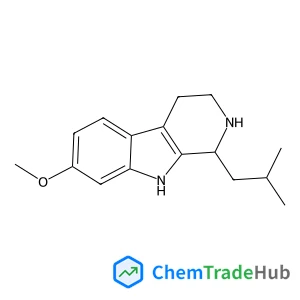
1-Isobutyl-7-methoxy-2,3,4,9-tetrahydro-1H-beta-carboline
CAS Number:
175975-76-5
Molecular Formula:
C16H22N2O
![1-{3-[4-Amino-3-(4-phenoxyphenyl)-1H-pyrazolo[3,4-d]pyrimidin-1-yl]-1-piperidinyl}-2,3-dihydroxy-1-propanone structure](https://static.chemtradehub.com/structs/122/1226872-27-0-e037.webp "1-{3-[4-Amino-3-(4-phenoxyphenyl)-1H-pyrazolo[3,4-d]pyrimidin-1-yl]-1-piperidinyl}-2,3-dihydroxy-1-propanone structure")
1-{3-[4-Amino-3-(4-phenoxyphenyl)-1H-pyrazolo[3,4-d]pyrimidin-1-yl]-1-piperidinyl}-2,3-dihydroxy-1-propanone
CAS Number:
1226872-27-0
Molecular Formula:
C25H26N6O4
Recommended Suppliers




Disclaimer
This page provides academic journal information for reference and research purposes only. We are not affiliated with any journal publishers and do not handle publication submissions. For publication-related inquiries, please contact the respective journal publishers directly.
If you notice any inaccuracies in the information displayed, please contact us at support@chemtradehub.com. We will promptly review and address your concerns.